AS the world prepares to converge at the United Nations High-Level Meeting on Tuberculosis (TB), Zimbabwe has launched the Accountability Report Of TB-Affected Communities & Civil Society: which prioritizes closing the Deadly Divide.
By Michael Gwarisa in Chinhoyi
The United Nations General Assembly will hold the second high-level meeting on the fight against tuberculosis on 22 September 2023 under the theme “Advancing science, finance and innovation, and their benefits, to urgently end the global tuberculosis epidemic, in particular, by ensuring equitable access to prevention, testing, treatment and care.”
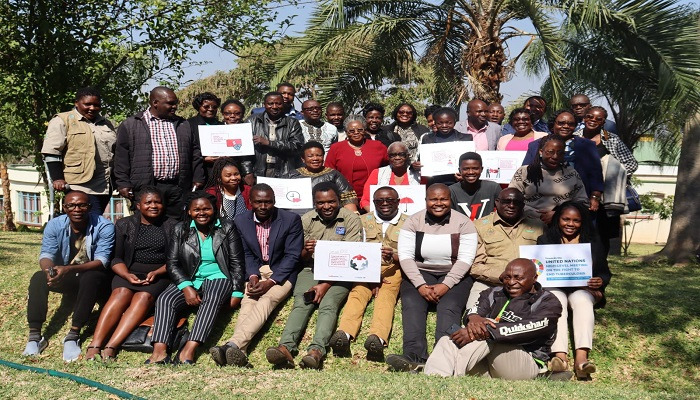
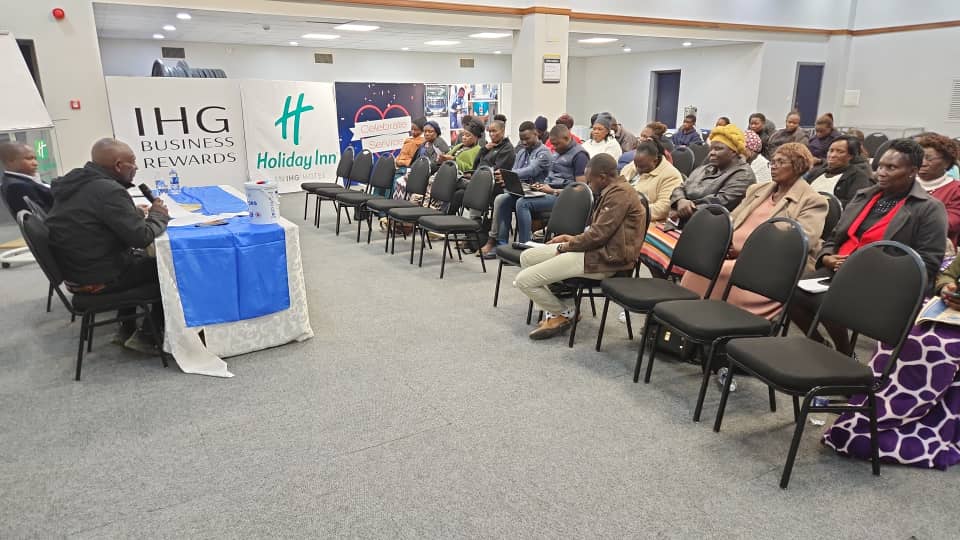
Speaking at the National Level United Nations High-Level Meeting (UNHLM) dialogue in Chonhoyi which also coincided with the launch of an Accountability report of TB-Affected communities & civil society that was hosted by the Stop TB Partnership Zimbabwe, Dr Donald Tobaiwa, the Jointed Hands Welfare Organisation (JHWO) Executive Director said the report sets out recommendations for policymakers across six areas for action, which must be reflected within the UNHLM on TB political declaration, national policy frameworks, and investments.
Affected communities and civil society want to see action to close gaps in TB prevention, diagnosis, treatment and care by reaching all people with TB, focusing on the most vulnerable and marginalized and getting the basics right,” said Dr Tobaiwa.
He added that the affected communities want the TB response to be equitable, gender-responsive, rights-based, and stigma-free, with TB-affected communities and civil society at the center by 2025.
“There is need to accelerate the development, rollout of and access to essential new tools. by championing needs-based innovation, coordinating research, and planning for equitable, rapid roll-out from the start of the research process.
“Invest the funds necessary to end TB by prioritizing public investment in health, leveraging synergies between different agendas, building new partnerships and mobilizing new funding streams.”
Following the devastation and disruption of TB services by the COVID-19, Dr Tobaiwa said affected communities were demanding for the Prioritize TB in pandemic prevention, preparedness and response (PPPR), antimicrobial resistance (AMR), and universal health coverage (UHC) by ensuring alignment between policy frameworks, funding streams and accountability mechanisms. He also said there is need to commit to multisectoral action, decisive leadership and accountability through high-level attendance at the UNHLM on TB on September 22, 2023, ambitious policy reforms and robust accountability involving TB affected communities.
The UN HLM on TB was the fifth time the UN has called for a high-level meeting devoted to a health issue, the first being the 2001 Special Session on HIV/AIDS, followed by UN HLMs on Non-communicable Diseases, Ebola, and Antimicrobial Resistance.
Dr Mkhokheli Ngwenya, The World Health Organisation Zimbabwe TB Focal point said, “The aim of the meeting is to accelerate progress towards End TB; securing concrete commitments for first time from highest level government leaders for: People reached with TB and MDRTB care and prevention within frame of UHC and leaving no one behind Increased financing (especially from domestic sources). Intensified research & innovation with new tools. Accountability for multisectoral response, using WHO framework.”
Meanwhile, Ministry of Health and Child Care (MoHCC), Acting Director, TB and Leposry Department, Dr Fungai Kavenga said, “Country is making progress- Declining TB Incidence There is need for; scaling up best practices, innovations and highly, sensitive tools, strengthening community TB systems and CLM, maintaining ambitious targets and focusing on neglected risk groups and provision of TB prevention interventions.”
He added that there is need for more innovation at implementation level to reduce stigma, create demand, reduce the proportion of missed cases and improve treatment outcomes and pulling together through joint multi-sectoral accountability, leaving no one behind, will END TB in Zimbabwe.
CIVIL society organisations (CSOs) across Africa have said community participation is key in budget advocacy processes as a reminder to governments on the continent as they make budgetary plans for the coming year.
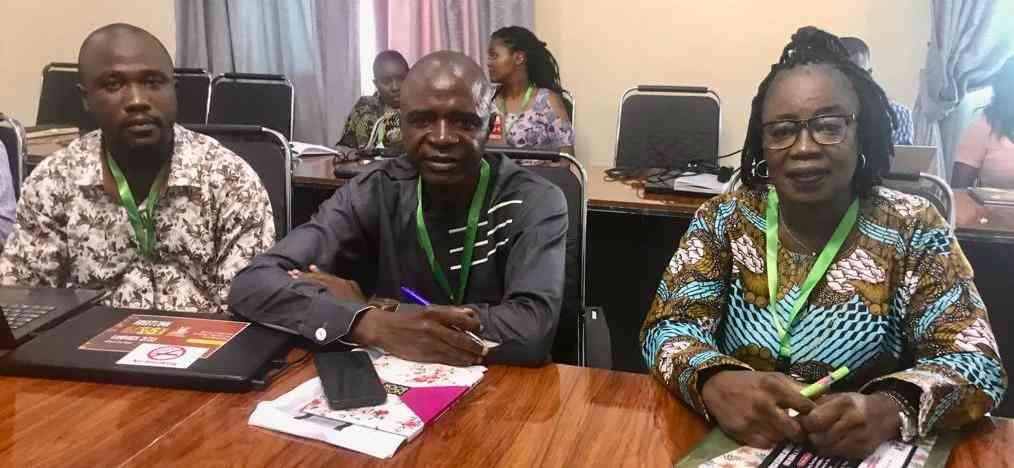
During the just-ended African Regional Advocacy Summit for NGOs and Media in Nigeria, CSOs said the community remained an important stakeholder in influencing budgetary outcomes.
Zimbabwean team leader Nonjabulo Mahlangu said communities provided valuable local knowledge and first-hand experiences that can contribute to the budget process.
“Communities can give a human face to the issues that they face, and share their experiences as far as access to health is concerned. They can share stories on the availability, affordability, appropriability and accessibility of the services,” Mahlangu said.
“This will assist in identifying gaps that need to be closed. There are various platforms where communities can participate, both at community and national levels. CSOs can raise awareness on existing spaces where communities can participate or create platforms for participation, bringing leaders to the communities.”
Project officer for the Africa Health Budget Network Health Security project, Health Alert Sierra Leone, David Joseph Allieu said community engagement in the budget process started from the community itself.
“We have the responsibility to add our voice to the budget process. It helps identify and prioritise needs as aligned to specific areas. Communities can provide feedback on services, programmes and infrastructure projects that can inform the allocation of resources in a way that reflects real needs,” Allieu said.
CSO stakeholders and media from eight countries which met at the summit also discussed the way forward in improving budgetary allocations to the health sector.
African countries’ health delivery systems are currently on their knees, including in Zimbabwe, where shortages of medicines and life-saving equipment are prevalent
THE Africa Health Budget Network (AHBN) has urged African countries to take the issue of health security seriously as the continent struggle to recover from the COVID-19 aftershocks.
African countries’ health delivery systems are currently on their knees, including in Zimbabwe where shortages of medicines and life-saving equipment are prevalent.
Officially opening the first African Regional Advocacy Summit for NGOs and Media in Nigeria on Tuesday, AHBN co-chairperson, Muhammad Usman said COVID-19 was a reminder of the need to invest in the health sector.
“We need to take the issue of health security in Africa seriously,” Usman said.
“Let us use opportunities and experiences from past events that have affected the health sector so that a positive attitude is embedded within us. We need to focus around what we need to do to ensure that we engender accountability in our health sectors. We need to take the COVID-19 experience to advance health security in Africa.”
Community Working Group on Health executive director, Itai Rusike said raising domestic public funds was essential for universal health coverage.
“Health is recognised as a fundamental right in the Zimbabwe Constitution,” Rusike said.
“This, therefore, implies that everyone should have access to the health services they need, when and where they need them, without suffering financial hardship. Currently only about 7% of Zimbabweans have access to medical insurance and this number is insufficient to ensure decent public healthcare. No country can prosper without a healthy citizenry.
“The current health financing model also remains unsustainable as it heavily relies on external financing as well as out-of-pocket financing. In spite of the huge external support from development partners, there is still a huge financing gap in the health sector in the country which calls for greater innovation and commitment by the government to sustainably address it.”
Non-governmental organisations and the media from eight targeted countries of Sierra Leone, Nigeria, Senegal, Uganda, Zimbabwe, Malawi, Kenya and Cameroon, with funding from Ford Foundation and COPASAH are attending the four-day summit.
“Veld fires start from glowing ash: The numbers dismissed today as small, can offset the gains made in the national HIV response in the near future.”
By Catherine Murombedzi
(Internews Health Journalism Network, Mercury Phoenix Trust HIV/AIDS 2023 Fellowship)
ZIMBABWE should set aside domestic financial resources to deal with the rising number of people living with HIV (PLHIV) resistant to the treatment of first resort, commonly known as the first line treatment.
Donors do not fund second and third line treatment drugs, making this a key health priority for the country. There is no fourth line treatment: If the third line treatment fails, one develops full-blown Aids and, eventually, dies.
Nationally, those on third line on June 30, 2022 were 499, as of June 2023, a total of 533 an increase of 34. In 2018, only 36 patients were on third line treatment.
In June 2023, the second line treatment had 48 937, a decrease from 49 946. A total of 1009 could have died or did not come for resupply or lost to follow up.
The second and third line regimens are purchased using domestic funding. Will my country be able to cater for us if the numbers in need keep growing? I am tired of hunting (for medication) from one clinic to the other because of frequent stockouts,” says Evelyn Chamisa, an HIV patient on second line treatment speaking for many.
The most common reason for changing from first line to second or third line treatment is if the first line treatment fails. Diagnosing HIV is relatively simple these days, yet determining treatment failure is a bit more complex because of different testing methods, challenges patients face in accessing testing centres, and availability of electricity. With an estimated 1.2 million PLHIV – in a population of 15 million – there are concerns over, hence, calls for prompt delivery of viral load testing results.
Viral load testing for HIV is a method that determines the concentration levels of the HIV virus in a person’s blood. The test is used for diagnosis, care, and monitoring a patient’s response to treatment. It may be used to determine whether to keep a patient on first line treatment or to move the patient to second or third lines.
The World Health Organisation (WHO) guidelines recommend that PLHIV take a viral load test twice a year. For many in Zimbabwe, however, a different method – the CD4 count is what they have accessed prior the introductionof viral load testing. CD4 Count measures the damage caused to a person’s protective cells by a virus, bacteria or germ. And this too has been adversely affected over the past three years by the COVID 19 pandemic.
Although the viral load testing method is now available nationally, the results for some patients are never delivered.
Juliet Sanga complains that she has had blood drawn for testing on three occasions, and no results were ever given.
“I have had three tests, and no results were given. I am no longer interested (in further tests),” she says.
Because of Zimbabwe’s frequent electricity shortages, hospitals’ abilities to function properly, including preserving blood samples drawn for tests, are adversely affected. Blood spoils easily, and spoilt blood can not be processed.
Fortunately, the UNDP, financed by the Global Fund, has embarked on a project to power clinics and district hospitals. The project, dubbed “Solar for Health”, has powered 1,047 health centres out of more than 4,000 centres that require electricity.
Mandimika Blander, 51, was luckier than Sanga. After a number of tests, treatment failure was detected, and she was put on second line treatment, which is now working well.
“My health was restored (after I was placed on second line treatment. I got a new lease of life. My life got back to normal). I am now fit, and I have regained weight,” says Mandimika, whose weight had dropped from 110kg to 67kg before treatment failure was detected and reversed through second line treatment.
Still, the shortage of second line treatment drugs is a constant worry for many. Chamisa has, at times, been asked to go drug-hunting when drugs run out in the health facilities. This worries her as she becomes a treatment beggar for her lifeline treatment.
“I had severe side effects when I was on the first line treatment. At one time, I was admitted at Sally Mugabe Central Hospital and tests detected treatment failure. I was placed on the second line. My health improved, and I gained weight. However, the treatment is always in short supply, and when not in stock, I have to (hunt for and) buy, it is very expensive.”
Further, the COVID 19 pandemic added a layer of complications to the lives of PLHIV, heightening fears of treatment failure occurring. For one, access to treatment – whether first line, second line, or third line – was adversely affected as police demanded to see a travel permission note. PLHIV were stigmatized as evidence of travel permission meant disclosure of their HIV status. Many people opted to stay at home rather than face the stigma of public display of their status and drugs. Non-adherence to drugs is a key cause of drug resistance and treatment failure. Speculatively, therefore, the numbers of patients on second – and third line treatment might have been spurred by the COVID 19 pandemic.
Linda, who prefers to use her first name only, had a forced treatment break during the COVID 19 pandemic. She worked as a house help for a middle-class family in Zimbabwe’s capital, Harare.
“When President Emmerson Mnangagwa announced a national lockdown on March 24, 2020, I had three months’ (worth of drugs) supply. I assumed that the lockdown would be lifted before I ran out of doses. This was not to be. I asked my employer for permission to go for a restock. She told me that I was free to collect my medication but never to return. She was afraid I would come back with the COVID-19 virus.”
Between non-adherence due to disruptions caused by COVID 19, being restocked by an activist good Samaritan (Gumisayi Bonzo), joining a WhatsApp support group, losing her job anyway regardless of not leaving the home of her employer, and the official end of COVID 19 as a public health emergency of international concern (PHEIC), Linda was diagnosed with treatment failure and had to be put on second line treatment.
Gumisayi is a founding member and Director of Transmart, an organisation championing the cause of the marginalized transgender community in Zimbabwe. Gumisayi took humanitarian drug-delivery service to people living with HIV during lockdowns triggered by the pandemic in Zimbabwe.
“By January 2023, I had massive weight loss. After different tests – liver function, kidneys, full blood count, CD4 count, viral load test, cervical cancer screening, and tuberculosis (TB) – I was told I had treatment failure and would be moved to the second line treatment. The medical officials emphasized the need to adhere to treatment religiously,” Linda says.
In her own view, this widow with children in high school and an aged mother to take care of, was back to square one, if not worse.
Dr Enerst Chikwati, Country Programme Manager, Aids Healthcare Foundation (AHF) says the rising treatment failure numbers could be attributed to many reasons: From missed doses (non-adherence), to lack of or poor or non-use of effective diagnostic tools to a shortage of health personnel.
“There has been an increase in the number of patients needing third line treatment,” says Dr Chikwati adding, “however, this could be due to increased availability of viral load testing, which has made us see more patients with a high viral load. Also, the on-going training of health care workers has increased coverage of testing services and discovery of drug resistance and, therefore, increased demand.”
Dr Chikwati acknowledges that the main cause of treatment failure is drug resistance as a consequence of poor adherence over the years. “But other factors such as under-dosing in children, drug-to-drug interactions, and other structural factors come into play,” he adds.
He points out that when children’s doses are out of stock, centres issue adult doses, informing parents and guardians to break the tablets before administration. This is risky as it could result in either overdosing or under-dosing and, eventually, treatment failure.
Dr Chikwati emphasizes the need for treatment literacy among patients.
“Educate patients well so that they understand the importance of adhering to the lifelong treatment. Empower health-care workers so that they are better able to manage patients at all levels and detect early treatment failure and intervene. Also, strengthen enhanced adherence counselling to patients,” emphasises Dr Chikwati.
AHF runs five centres of excellence as partners to Zimbabwe’s Ministry of Health and Child Care (MoHCC), offering comprehensive diagnosis, treatment, care, and support reaching 280 PLHIV.
Dr Cleopas Chimbetete, an HIV and Aids specialist at Newlands Clinic, Harare, a centre of excellence in HIV care with over a decade of service, concurs that poor adherence is the reason for the majority who are moved from the first line treatment for the second and third lines: “The only other way that one can have treatment failure, yet they have never missed a dose, is when they get re-infected, cross-infection can cause treatment failure. We urge PLHIV to always use protection. If they get a drug-resistant strain from a partner during sexual intercourse, it means the treatment in force will not work. So always condomize,” advices Dr Chimbetete.
But he emphasises adherence as well as avoiding substance abuse.
“We need to address the issue of poor adherence. About 90 percent of people on second and third line treatment missed their doses of the first line regimen. Young people, especially, struggle to take drugs as prescribed. Substance and drug misuse is also a contributor to lack of adherence. With mutoriro (chrystal meth) misuse, for instance, we notice a rise in young people failing to adhere to treatment,” he says.
Jordan Jani, a drug addict , agrees. He says, “I did not deliberately miss taking my treatment, I was drunk. I blame my friend who had me addicted to mutoriro after high school. I am trying to adhere to treatment now because I am on third line.” He looks forward to a long-acting HIV treatment injectable (as it reduces daily adherence pressures). “If it delays,” he adds despairingly, “we, the youth, are surely going to die.”
Substance abuse is a growing public health concern in Zimbabwe with young people using anything from cough syrup, a powder from light bulbs, fermenting foods, and extracting a substance from disposed diapers.
According to Dr Nemache Mawere, the Chief Executive Officer at Ingutsheni Psychiatric Hospital, substance abuse has repercussions beyond causing non-adherence to HIV treatment: “For every 12 mental health admissions at our centre, nine are a result of substance abuse. Majority of the users are young people.”
Besides substance abuse, there are other causes of non-adherence, and therefore, treatment failure. A doctor at Sally Mugabe Referral Hospital, Harare, speaking on condition of anonymity as he is not authorised to speak to the media, says belief in faith healing is also to blame for treatment failure.
“I have worked in a public hospital for 15 years. The greatest reason for missed doses stems from faith beliefs, with Pentecostal churches taking the lead. The majority of treatment failure admissions we see wear arm bands inscribed with their leaders’ mantra: ‘By your faith you are healed’.”
The National AIDS Council (NAC), in partnership with the Ministry of Health and Child Care (MoHCC), and partners, run awareness training for all sectors. The faith sector, especially the Apostolic sub-sector, is warming up and beginning to seek health care. In the past, this was not the case; faith healing reigned.
However, Martha Tholanah, a key populations advocate through Making Waves Network, cautions that the one-size-fits-all approach should be discarded. She advocates for treatment that is tailored to individual needs according to circumstances.
“Some people who fail treatment don’t miss doses. Everyone is started on the same regimen. No tests are done to assess if the treatment is suitable. Periodical testing to determine if the treatment an individual is receiving is still appropriate is not done. For example, some council clinics and government hospitals now focus on annual viral load testing and no longer carry out the CD4 Count tests. Yet, if a CD4 Count and other tests were still regularly carried out, together with the viral load testing, one could be moved to other options in the first line before being switched to second line,” Martha says adding, “Veld fires start from glowing ash: The numbers dismissed today as small can offset the gains made in the national HIV response in future.”
Dr Owen Mugurungi, National Director, Aids and TB programme, MoHCC, downplayed the numbers on second and third line treatment, saying it was normal considering the population size.
“A total 499 out of 1.2 million is not worrisome. We have to increase our domestic funding, though, even for our first line regimen.”
NAC Chief Executive, Dr Bernard Madzima, had promised to respond to questions sent to him by email. However, by the time of publishing this article, he had not.
To date, Zimbabwe has contributed US$3.11 million to the Global Fund (GF), from a pledge of US$4.16 million. The country pledged US$1 million for the Global Fund’s Sixth Replenishment, covering 2020-2022. Zimbabwe is both a donor to the Global Fund and an implementer of the Global Fund-supported programmes.
The Aids Levy, which is the domestic funding of 3 percent of a formally employed worker’s taxable income, at its peak, harvested US$38 million in 2013 when the country had dollarised during the Government of National Unity. Since then, the home kitty bag has been waning as the use of the local currency was reintroduced. With the second and third line treatment being funded by the AIDS Levy, the increasing numbers are a cause of concern.
With the average cost per patient annually ranging from US$68 for first line to US$1,000 for second and third lines, the growing numbers on these regimens could give Zimbabwe a headache in the future.
Zimbabwe has 10 provincial hospitals in 10 provinces, with two main referral hospitals. All district hospitals now have state-of-the-art laboratory facilities. Zimbabwe has 59 districts, and currently, 27 districts have hospitals, with five under construction.
A stitch in time saves nine. If Zimbabwe paid attention to the increasing numbers of PLHIV on second and third line treatment, a crisis could be averted!




Recent Comments