Cholera spreads unabated in Zim

on October 24, 2023 in News
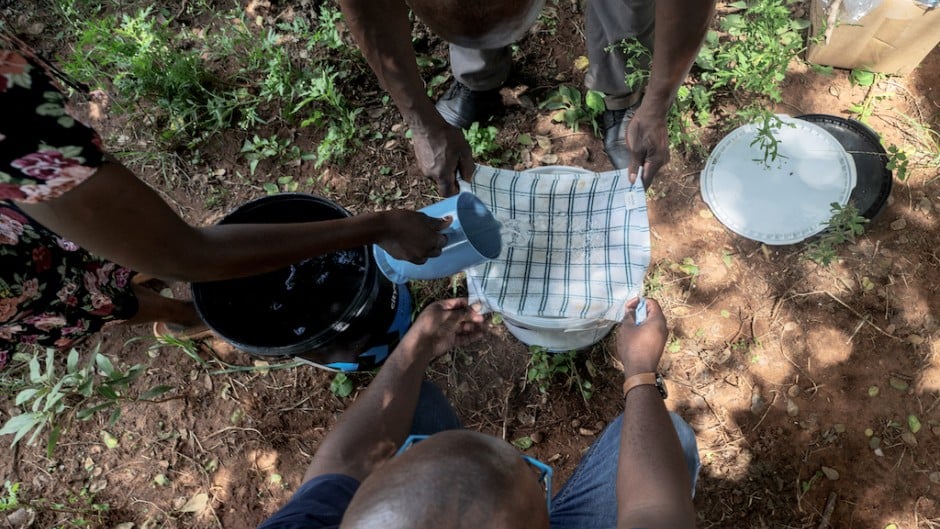
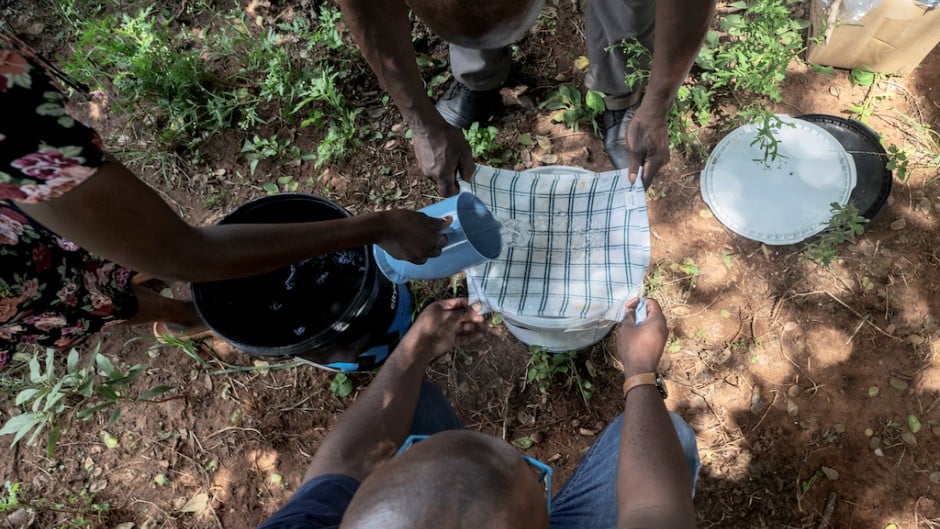
Residents filtrate water before boiling it so that they can consume it

Zimbabwe is struggling to contain a cholera outbreak as infections pass the 5,000 mark.

Over 400 new cases were recorded over the past week.

There have been 115 deaths since February.

Government blames a lack of basic hygiene and, surprisingly, some religious groups.

This week 402 new cholera cases were recorded countrywide, with the capital, Harare, and Buhera rural district in Manicaland province being hotspots.

Zimbabwe health minister Douglas Mombeshora said, “there is any element of some religious objectors who don’t seek medical attention, who don’t really send their children to school.”

“So their knowledge is slightly less as compared to other districts; that’s why it was a bit difficult in Buhera when the epidemic erupted in Buhera district.”

“Basic hygiene that is what we are encouraging now in all provinces to scale up awareness in the communities through traditional leaders through church leaders.”

But health experts have a different explanation.

Itai Rusike from the Community Working Group on Health said, “public health fundamentals or the cause of cholera have never been properly addressed since the cholera outbreak of 2008 and 2009 which I think was a marker for the government to invest in water and sanitation infrastructure.”

“Now we are seeing cholera being reported in rural settings which is very worrying mainly because people in those rural areas are also competing for unsafe sources of water with their animals “

In a bid to curb the spread of cholera, the government has ordered that funerals, burials and other gatherings must be supervised by health officials.

SOURCE:: eNCA via link https://www.enca.com/news/cholera-spreads-unabated-zimbabwe
Zim struggles to contain spread of cholera outbreak

on October 24, 2023 in News

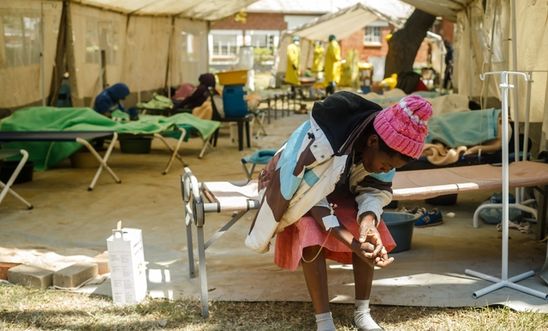
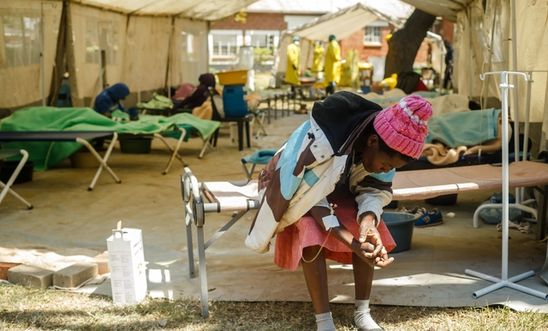
A cholera patient receiving treatment at a government hospital in Harare, Zimbabwe

Zimbabwe has been struggling to contain spread of cholera outbreak, with the government announcing measures amid fears of a repeat of its 2008 outbreak that sparked a “national emergency”.

Cholera cases span all 10 of Zimbabwe’s provinces, with the most alarming spikes in the south-eastern provinces of Masvingo and Manicaland, the epicentre of the crisis.

Cholera outbreak has killed more than 100 people and infected 5,000 since February, according to government estimates.

To curb the spread, the government has imposed restrictions in vulnerable areas, limiting funerals to 50 people and forbidding attendees from shaking hands or serving food at the gatherings.

Authorities are also discouraging people from frequenting open-air markets, unlicensed vendors, or outdoor church camps where sanitation is scarce.

Cholera, a water-borne disease caused by ingesting contaminated food or water, often spreads quickly throughout Zimbabwe because of its poor sanitation infrastructure and limited clean water.

Many Zimbabweans, especially in remote villages, stay without tap water for months at a time, forcing them to draw from unsafe wells or rivers. Raw sewage spilling from busted pipes and heaps of lingering refuse increase the risk of the disease spreading.

The cholera problem is not new

Zimbabweans say their struggles to access clean water or water-purification supplies have recently intensified, putting them at greater risk of catching the disease.

“The cholera problem is not new. We’ve had it for a while but …There used to be health workers who would move around communities distributing water purification tablets that we could use to treat open wells. That isn’t happening anymore,” Answer Nyamukondiwa, a resident of Buhera, the hardest-hit city 250km (155 miles) away from the capital, told Al Jazeera TV.

Other residents lamented the deterioration of safe boreholes, which are narrow water wells that some 38 percent of the population relies on for water.

“We do not have enough boreholes,” one woman in the eastern town of Murambinda told Al Jazeera TV. “There is so much pressure on the few boreholes serving big villages. When these boreholes break down, people have no option [other] than to fetch water in the contaminated rivers. We need more boreholes. We are getting cholera when we drink contaminated water from the rivers.”

Zimbabwean President Emmerson Mnangagwa has acknowledged the country’s infrastructure shortcomings and announced plans to drill more boreholes for each of the country’s 35,000 villages in the next year.

Zimbabwe’s current cholera crisis is the worst since 2008, when some 4,000 civilians died in a nationwide outbreak that the government declared a “national emergency”.

Cholera is also a recurring problem in other nearby southern African states, including Malawi, South Africa, and Mozambique. Together, these countries and Zimbabwe have seen 1,000 of their citizens die from the disease since late 2022.

SOURCE:: Al Jazeera via link https://www.aljazeera.com/news/2023/10/22/zimbabwe-struggles-to-contain-spread-of-cholera-outbreak