
Cholera spreads to 58 of Zimbabwe’s 64 districts, situation ‘bad’ in Chiredzi

on January 17, 2024 in News

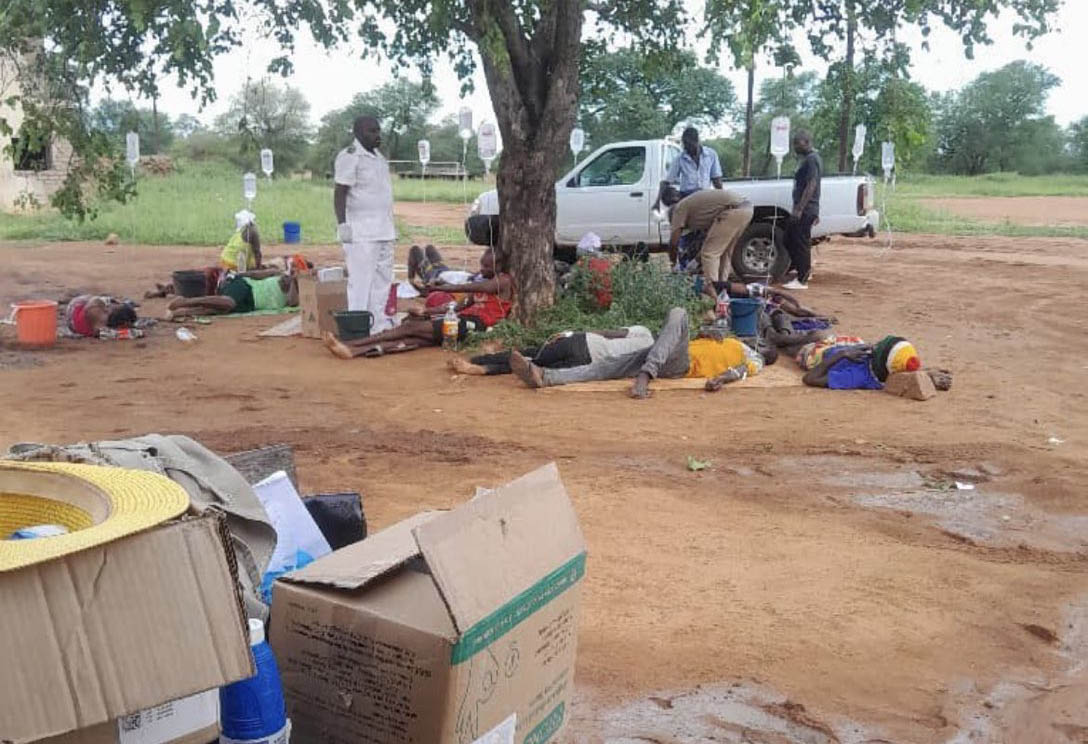
Government swats criticism over its ‘community rehydration centres’ after viral picture of a dozen patients sprawled on the ground receiving intravenous therapy
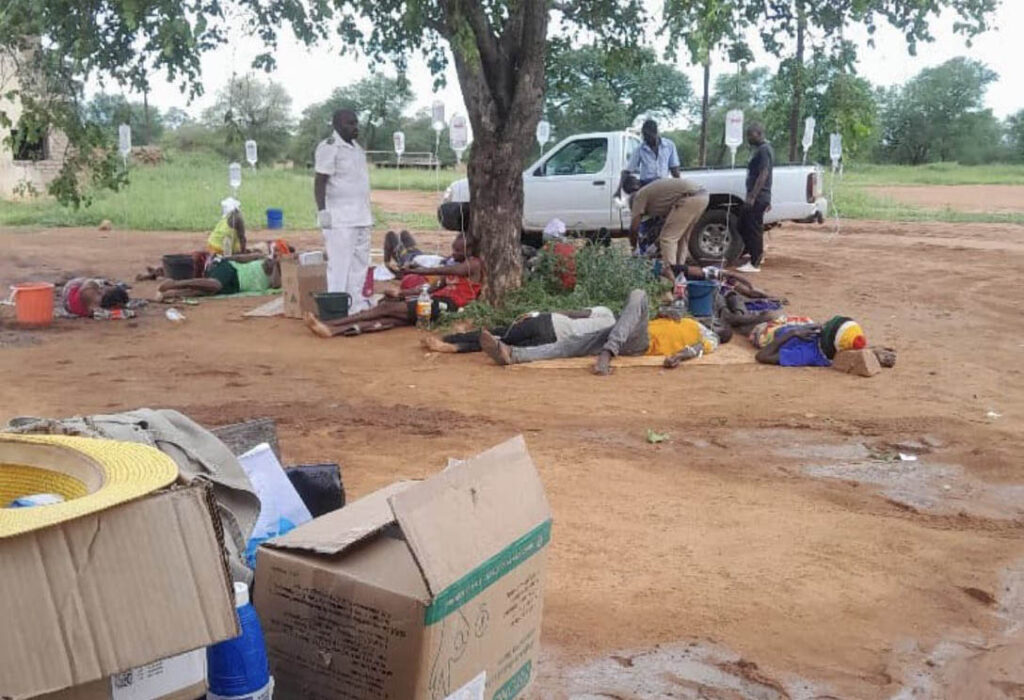
Situation critical … A picture posted online on January 14, 2024, allegedly shows health workers treating cholera patients in Mapanza, Chiredzi, out in the open

HARARE – The cholera outbreak has spread to 58 of Zimbabwe’s 64 districts, the health ministry said on Sunday as a shock picture was published online showing health workers administering drip on patients under a tree in Chiredzi.

Over 200 people have died from cholera since February 2023, according to the ministry of health, and over 16,000 people have contacted health facilities with symptoms.

Dr Aspect Maunganidze, the health ministry secretary, said there had been “a surge in cases” during the Christmas holidays. The latest districts reporting cases of cholera are Uzumba Maramba-Pfungwe, Mazowe, Mbire, Centenary, Kariba and Zvimba.

Cholera is spread by ingesting contaminated food or water, and while it often causes mild symptoms or none at all, serious cases cause acute diarrhoea and kill within hours if untreated. Access to safe water and sanitation are important to stop the disease, as well as vaccination and speedy treatment.

“Cholera has spread to 58 districts across the country following a surge in cases over the festive period as people were moving to and from the affected areas as well as floods caused by the rains,” Maunganidze said.

“The ministry continues to set up cholera treatment centres in areas where cases are being reported and setting up oral rehydration centres in the community.”

He urged Zimbabweans to exercise prevention measures such as washing hands before handling food and after visiting the toilet.

“We are also encouraging people not to use unsafe water from flooded and shallow wells, and also to boil all untreated water they use for domestic purposes including for drinking,” he added.

Zimbabweans reacted with outrage on Sunday after a picture was published showing health workers at one of the so-called “community rehydration centres” at Mapanza in Chiredzi administering intravenous therapy to a dozen patients sprawled on the ground under a tree. The drip was suspended from the tree branches.

Locals described the situation in Chiredzi’s Mkwasine area as “bad” and “terrible.” Red Cross workers were reportedly moving to the area on Sunday.

President Emmerson Mnangagwa’s spokesman George Charamba said there was nothing irregular with the community-based treatment, swatting away criticism that the government had failed to invest in a functioning health service.

He wrote on X: “By the way, who bought the life-saving saline fluid? Who employed and meets salaries of the hard-working staff? The vehicle which ferried them to the affected areas?

“We thank the medical staff for creative field remedial intervention. Residents of never-never ivory towers stupidly would rather you had lost precious time ferrying distressed patients to a building called a clinic or hospital instead of this life-saving, prompt intervention.”

SOURCE:: ZimLive via link https://www.zimlive.com/cholera-spreads-to-58-of-zimbabwes-64-districts-situation-bad-in-chiredzi/
Tight vaccine supplies isn’t helping a regional cholera outbreak… with new cases in SA

on January 17, 2024 in News

  • Cholera vaccine supplies are tight as Southern Africa’s outbreak crosses into SA.
  • Two cholera cases linked to Zimbabwe have been detected in Limpopo.
  • The Red Cross is looking for R88 million in funding to promote access to clean water in cholera-hit areas of Zambia.

A multi-country cholera outbreak covering Zimbabwe, Malawi and Zambia – with isolated cases now detected in South Africa – could be hard to contain thanks to a shortage of vaccine supplies.

According to Gavi, the Vaccine Alliance, there are doses of cholera vaccines to meet immediate demand, but a sharp rise in emergencies is making things harder, and problems could persist until the end of next year.

Preliminary data indicate that the number of cholera cases reported in 2023 has exceeded that of 2022, with over 667 000 cases and 4 000 deaths globally.

According to the World Health Organisation (WHO), cholera’s resurgence in 2021 was linked to climate change issues such as flooding, coupled with poor sanitation and bad infrastructure in some countries, and was classified as a Grade 3 emergency, requiring top priority attention.

Outbreak statistics “must be interpreted with caution given the varying surveillance systems and capacity across countries, which means that 2023 data are not directly comparable to reports from previous years”, WHO said in a statement.

It has since asked its partners and governments to double their efforts in countering cholera, and that money is urgently needed to execute this mission.

“As cholera cases surge, there is a need to redouble efforts, with every citizen, organisation, and authority playing their part in turning this tide. Increased funding and unwavering collaboration are now indispensable weapons in the fight against this preventable disease. Only through a unified effort, bolstered by adequate resources, can we curb the spread of cholera,” WHO said.

THE SPREAD

In December, South Africa ramped up efforts to screen people returning from Zimbabwe, one of the countries hardest hit by the outbreak.

But cholera cases linked to Zimbabwe have since been recorded in South Africa. 

In a statement this week, Limpopo health department spokesperson Thilivhali Muavha said two suspected cholera cases in the province had been detected in Zimbabweans.

“The patients, both Zimbabwean men, aged 43 and 27, who upon their return from the festivities presented to Musina and Hellen Franz Hospitals, respectively, with cholera-like symptoms,” she added.

Harare, Zimbabwe’s capital city, is the hardest hit by cholera in the country.

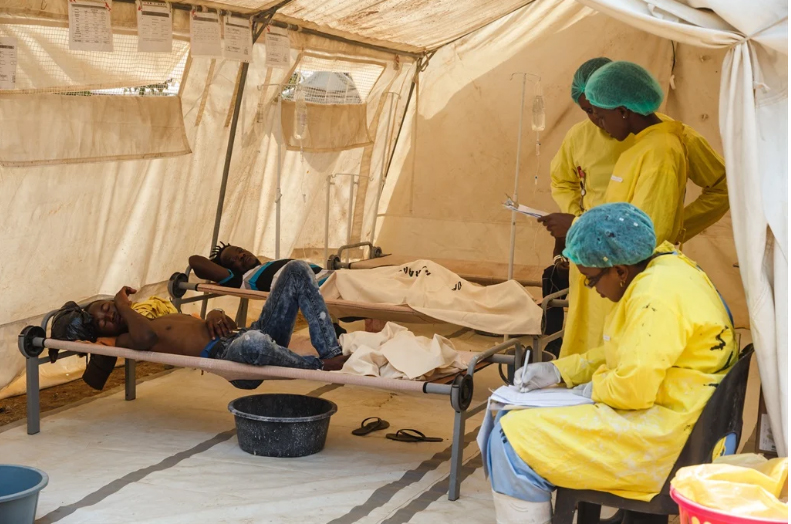
With the help of health partners such as WHO, in a bid to contain a spread that has become countrywide, cholera treatment centres have been decentralised.

The centres are located near affected communities so that those infected don’t have to walk long distances, which risks spreading the disease.

“By prioritising accessibility and community engagement, the decentralisation of treatment centres offers a promising solution for curbing the spread of the disease, reducing mortality, and ensuring the well-being of Zimbabweans,” said professor Jean-Marie Dangou, the WHO representative in Zimbabwe.

Zimbabwean presidential spokesperson George Charamba told journalists that “investigations by our health officials have revealed that most victims of the current wave of cholera in the Chiredzi irrigation zones helped themselves to untreated water in canals meant for irrigation. People should avoid taking such raw water; it is contaminated and thus deadly”.

The count in Zimbabwe as of Monday stood at 15 137 suspected cholera cases, 1 959 confirmed cases, 14 578 recoveries, 67 confirmed deaths, and 266 suspected deaths.

In Zambia, President Hakiande Hichilema cut short his holiday to attend to a cholera crisis that was first detected in October last year in peri-urban areas around Lusaka, putting an estimated 10 million people at risk.

There are more than 9 500 cholera cases and 374 deaths registered in Zambia, with a case fatality rate of 3.9%.

The International Federation of Red Cross and Red Crescent Societies (IFRC) has since launched an R88-million emergency appeal to address the cholera outbreak in Zambia.

The money would be channeled towards the provision of clean water. 

“To ensure no more lives are lost, we must prioritise access to clean and safe water. With the waterborne disease spreading rapidly, we are deeply concerned about the situation unfolding. The IFRC and Zambia Red Cross Society are seeking resources to contribute to activities that can support stopping the spread and its transmission,” said John Roche, IFRC Head of Delegation Country Cluster for Zimbabwe, Zambia and Malawi.

Between 2022-23, Malawi faced one of its worst cholera outbreaks which led to the highest number of cholera deaths in a single country in 2023, a World Health Organisation (WHO) report shows.

As of August 2023, there were 58 982 cholera cases in Malawi, with 1 768 deaths reported. While things have subsided a bit, new cases of cholera in Malawi are linked to neighbouring countries.

On Sunday, a truck driver was admitted to Bwaila Hospital in Lilongwe due to cholera suspected to have been imported from Zambia.

Late last year in the DRC,  increased conflict and displacement in the eastern part of the country pushed children into the worst cholera crisis since 2017.

SOURCE:: News24 via link https://www.news24.com/news24/africa/news/tight-vaccine-supplies-isnt-helping-a-regional-cholera-outbreak-with-new-cases-in-sa-20240117