
IMMUNISATION: KEEPING CHILDREN SAFE FROM POLIO IN ZIM
on January 31, 2024 in News
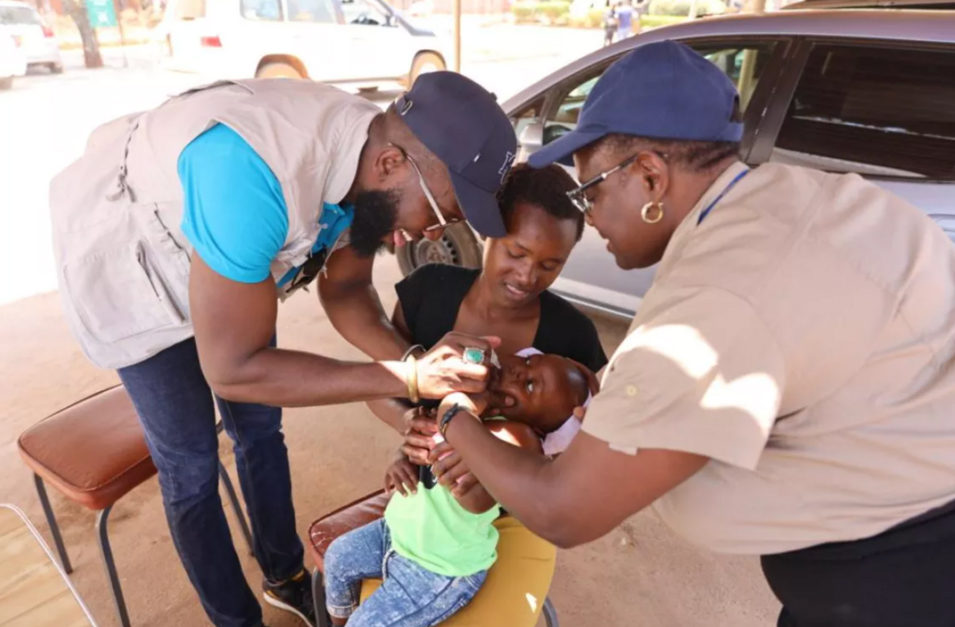
UNICEF works with Zimbabwe’s Ministry of Health and Child Care and partners including Rotary International to implement polio vaccination campaigns.
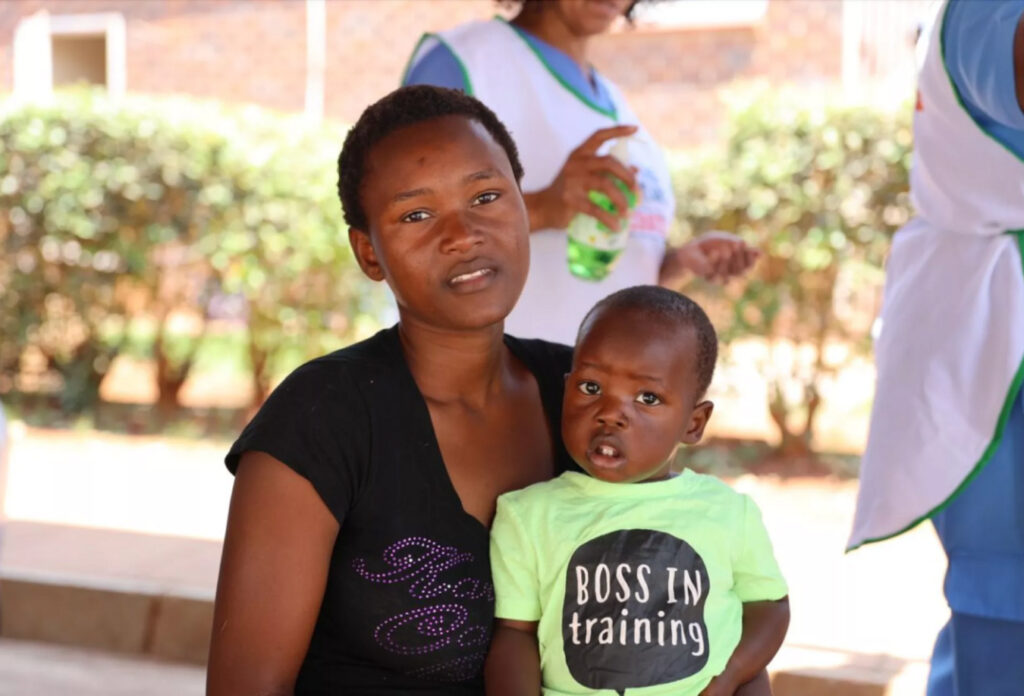
What began as an ordinary morning for Whyy Mutumbunzou, 21, with routine household chores and caring for her only child, 1-year-old Ryan, took an unexpected turn when she turned on the radio.
A broadcast message from Zimbabwe’s Ministry of Health and Child Care (MoHCC) encouraged all mothers and caregivers to bring their children under 5 for the fourth round of a polio vaccination campaign.
Despite not knowing what polio was, Whyy enthusiastically gathered her belongings and walked briskly with her son to the nearest clinic, Hatcliffe Family Health Services.
For Whyy, the choice was clear, guided by her unwavering commitment to her son’s well-being.
“The health of my child is most important. If children are healthy, the country thrives,” she says with conviction.
“The health of my child is most important. If children are healthy, the country thrives.” — Whyy Mutumbunzou, 21, Zimbabwe
Poliomyelitis, commonly known as polio, is a highly contagious viral disease that attacks the body’s nervous system.
In severe cases, it can lead to a loss of use of the limbs. Polio can also paralyze the muscles used for breathing and swallowing, leading to death. There is no cure; the primary prevention is the polio vaccine.
Nearby countries reported cases of polio in 2022, putting children under 5 in Zimbabwe at high risk of contracting the disease.
To protect all children under 5, the government, through the MoHCC, conducts periodic rounds of polio vaccination countrywide to increase immunity against the disease until the threat is over.
The first round started in October 2022, with the fourth round completed in October 2023.
All children under 5 who received vaccinations in previous rounds continue to be protected with recommended supplementary polio vaccine doses during subsequent campaigns as long as they are still below 5 years of age.
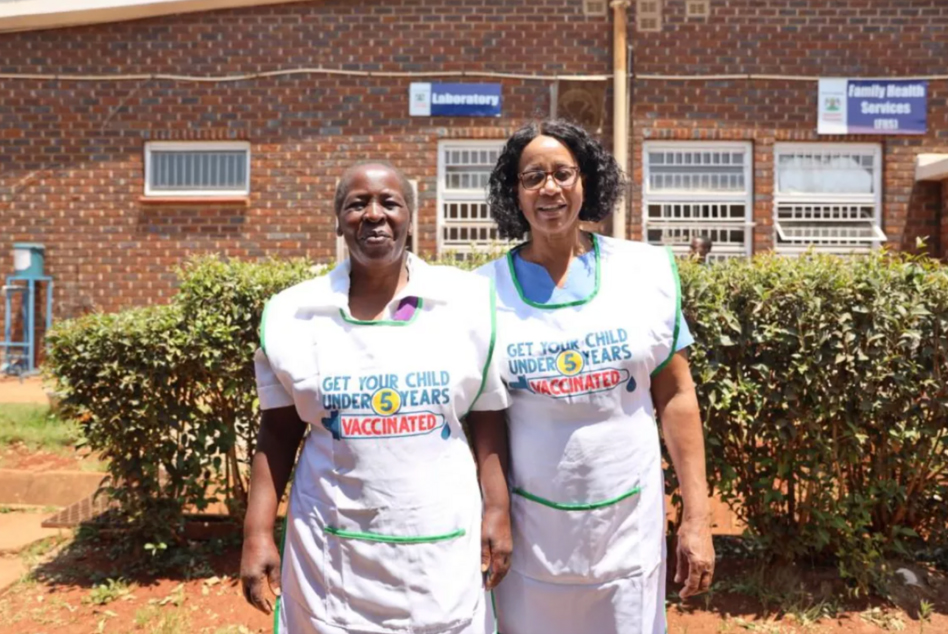
Two health care workers from the Hatcliffe Family Health Services Clinic were part of a team that administered polio vaccinations to children under age 5. © Rutendo Bamhare
Dr. Alex Adjagba, Chief of Health and Nutrition for UNICEF in Zimbabwe reminisced about his days working in pediatrics and emphasised the irreplaceable value of the polio vaccine during a recent visit to Hatcliffe Family Health Services. He commended the government for its strong leadership and collaborative efforts.
“I am pleased to witness the ongoing polio vaccination campaign; the only way to protect children is through vaccination, he said. “Under the leadership of the Ministry of Health and Child Care and in collaboration with our partners, we’ve successfully administered polio vaccinations nationwide.”
UNICEF supported the MoHCC in Zimbabwe to launch the fourth round of the nationwide polio campaign, which ran from October 10 to October 13, 2023, aiming to reach over 2,6 million children under 5.
The campaign strategy also included house-to-house visits to ensure all eligible children received the vaccine.
Millions of children across Zimbabwe have received the polio vaccination from MoHCC with support from UNICEF and partners including Gavi, the Vaccine Alliance; Global Polio Eradication Initiative (GPEI); the Health Resilience Fund; the European Union; Ireland; Japan; Rotary International and the United Kingdom.
Dr Alex Adjagba, Chief of Health and Nutrition and Health Specialist Egnes Makwabarara administers a polio vaccination at the Hatcliff Family Health Services Clinic. © Rutendo Bamhare
At a site near Hatcliffe Family Health Services, a dedicated team of health workers worked diligently to reach their daily target of 300 polio immunisations.
This health promotion tactic proved instrumental in reaching and addressing vaccine-resistant mothers and caregivers, including those unable to travel to health centers.
Whyy’s commitment to prioritizing her son’s health was not a decision made lightly. It began during her pregnancy with Ryan, after facing complications in her final trimester.
Despite being registered at Hatcliffe Family Health Services, Whyy was advised to opt for a home delivery with traditional midwives.
Reluctantly, she declined this offer and proceeded to go to the clinic.
Her positive experience during Ryan’s birth instilled a deep trust in the clinic, assuring her that bringing Ryan for his polio vaccination was the only choice.
Today, Ryan is a healthy and charismatic little boy who captured the attention of everyone at the clinic after eagerly agreeing to receive his first polio vaccination with a bright and infectious smile.
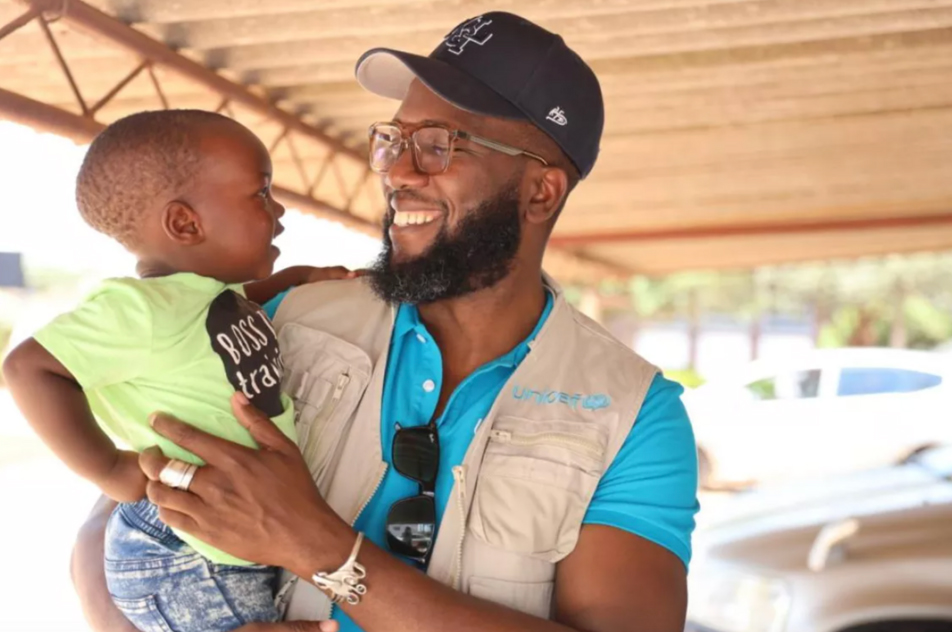
Dr Alex Adjagba, Chief of Health and Nutrition with 1-year-old Ryan after his first polio vaccination at the Hatcliff Family Health Services Clinic. © Rutendo Bamhare




Recent Comments