UNICEF supports Zim’s Integrated Approach in the Battle Against Cholera

on February 9, 2024 in Cholera, News, Press Statements

Empowering Communities: Ensuring access to safe water and promoting public awareness on cholera prevention
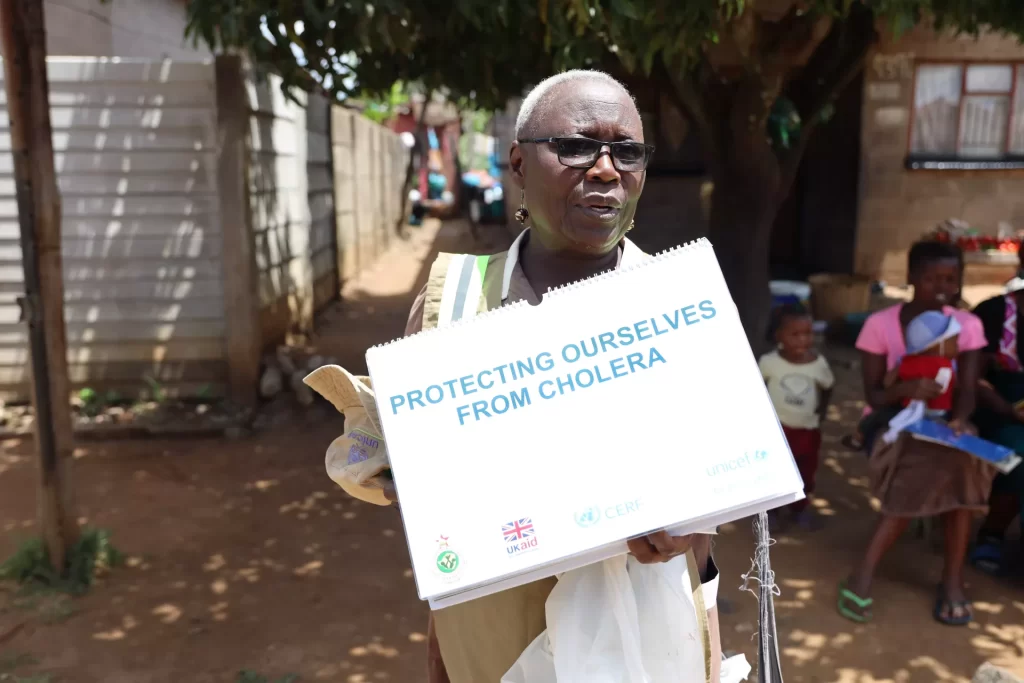
Zimbabwe is currently grappling with a cholera outbreak, with more than 22,000 recorded cases and over 500 suspected and confirmed deaths.

The widespread impact of the outbreak has touched every corner of the country.

UNICEF is actively supporting the government-led response to the cholera crisis on multiple fronts, treatment of cholera-infected people, initiatives to provide access to safe water, disseminating preventive messages, and advocating for seeking medical support in case of infection.

To address the urgent needs of affected communities, UNICEF supplies critical items such as water purification tablets, hygiene kits, soap, and water containers.

These essentials play a crucial role in ensuring communities have access to clean water and can uphold proper sanitation practices.

Additionally, UNICEF is actively involved in the cholera vaccination campaign and the implementation of public awareness activities, designed to inform communities about cholera’s causes, preventive measures, and the significance of hygiene practices.

Emphasising community participation, UNICEF collaborates with local leaders, influencers, and health workers to effectively communicate key messages and engage communities in the prevention and response efforts against cholera.
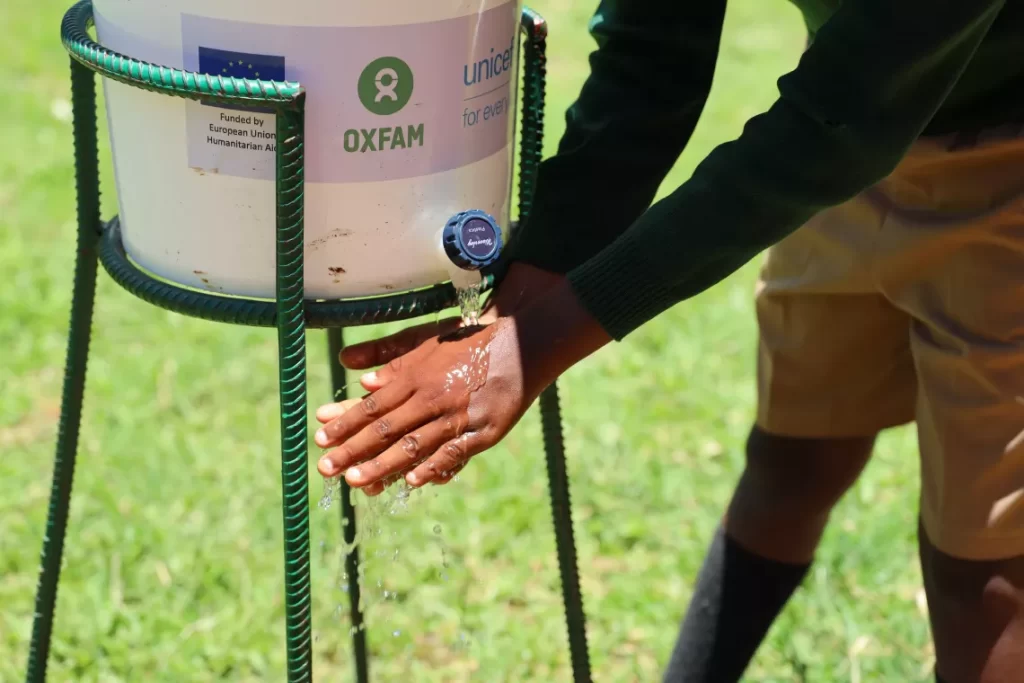
A Learner from Glen View 7 primary school in school in one of the cholera hotspots in Harare is washing their hands using UNICEF supported handwashing station

More than 260,000 people have been reached with critical WASH [water, sanitation and hygiene] supplies, including the distribution of over 1,200 handwashing stations in schools in hotspot areas as part of the back-to-school campaign.

The supply of non-food items (NFIs) ensures that children learn in a safe environment to promote access to quality education.

A learner from Glen View 7 Primary School, in school in one of the cholera hotspots in Harare, standing beside UNICEF supported handwashing station

As part of the back-to-school campaign over 10,000 school children were the recipients of key hygiene messages on cholera and its prevention via Rapid-Pro.
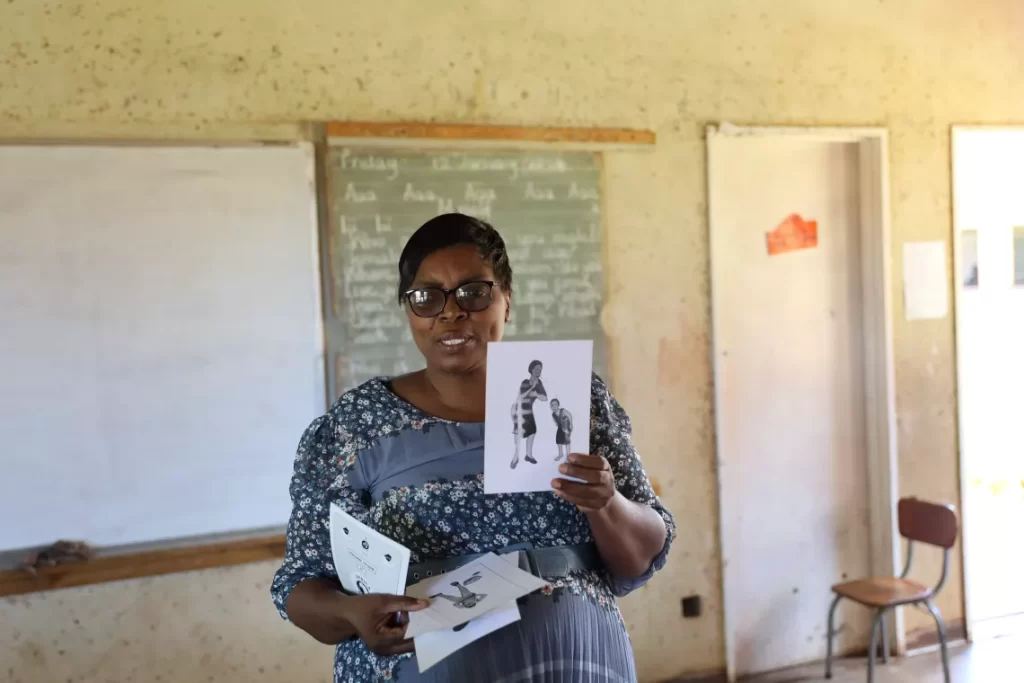
Priscilla Chimbwanda (56), School Health Coordinator uses visual cards to deliver key messages on hygiene messages and Cholera prevention to a classroom full of students

School Health Coordinators have been integral to the back-to-school activities, trained by UNICEF and partners in collaboration with the Ministry of Primary and Secondary Education on essential hygiene messages for cholera prevention.

This ensures a comprehensive approach to addressing cholera within the school environment.
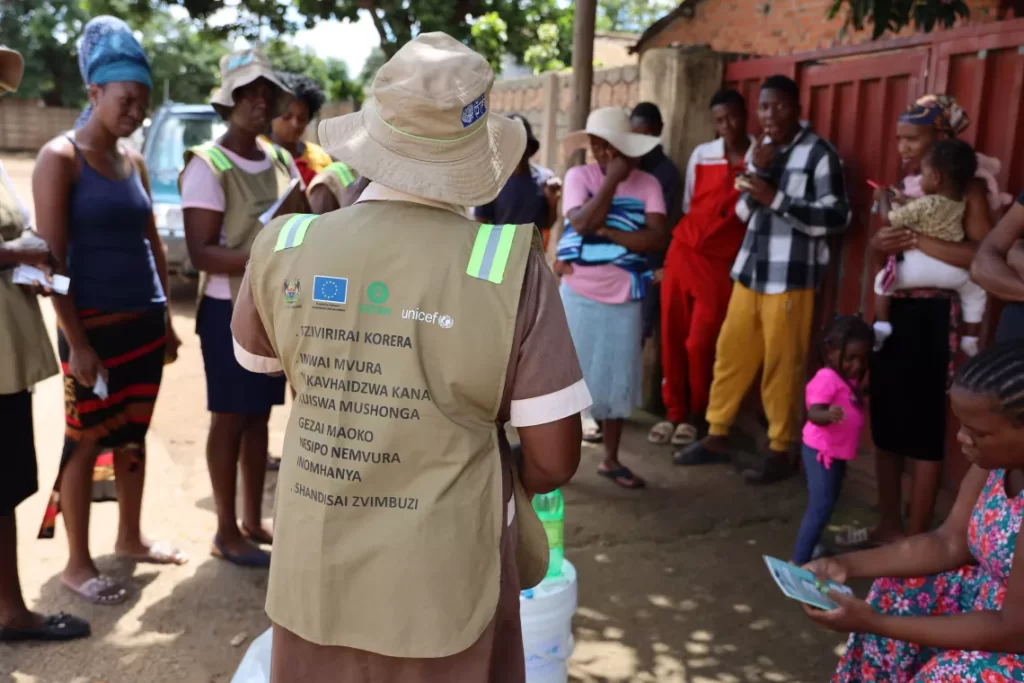
A Community Health Promoter from Glen View, a cholera hotspot area in Harare, delivers door-to-door campaign to deliver key hygiene and cholera prevention messages and the distribution of critical supplies

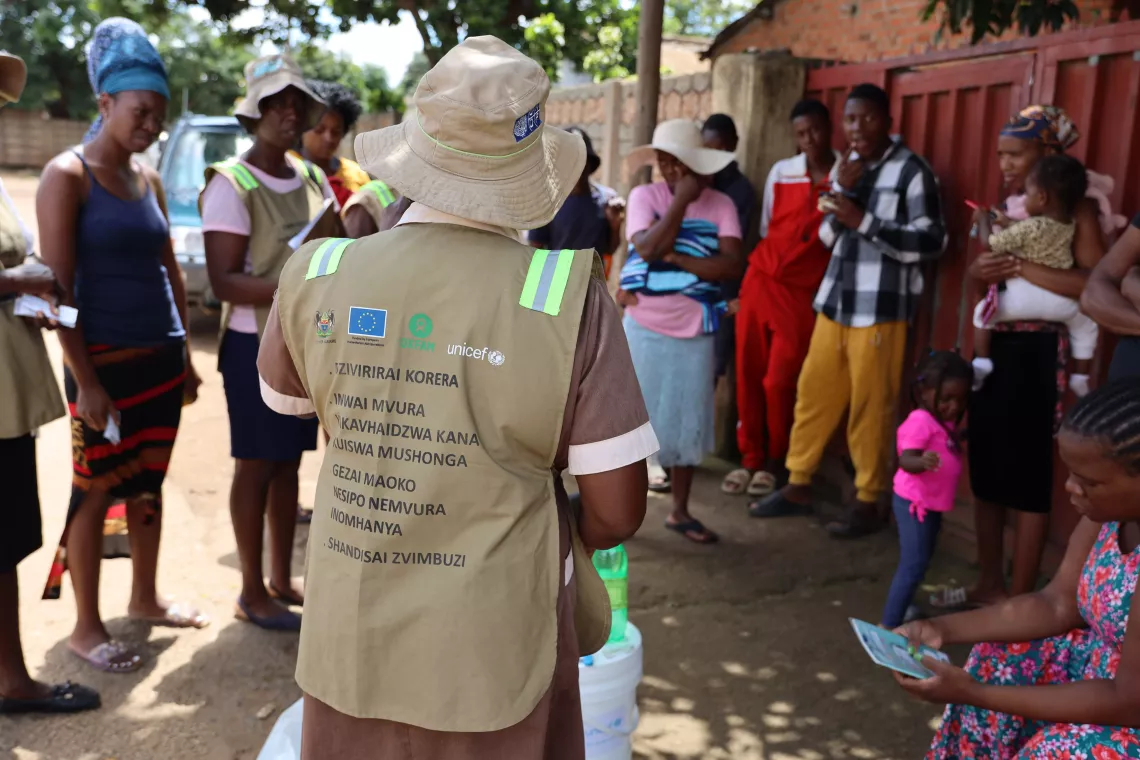
Community Health Promoters are conducting door-to-door campaigns delivering key hygiene and Cholera prevention messages and the distribution of critical supplies.

UNICEF in collaboration with the Ministry of Health and Child Care, trained over 2,2200 health workers, including Community Health Promoters on household case management, community disease surveillance and treatment of patients.

Health workers play a crucial role as a link between the community and the ongoing efforts.
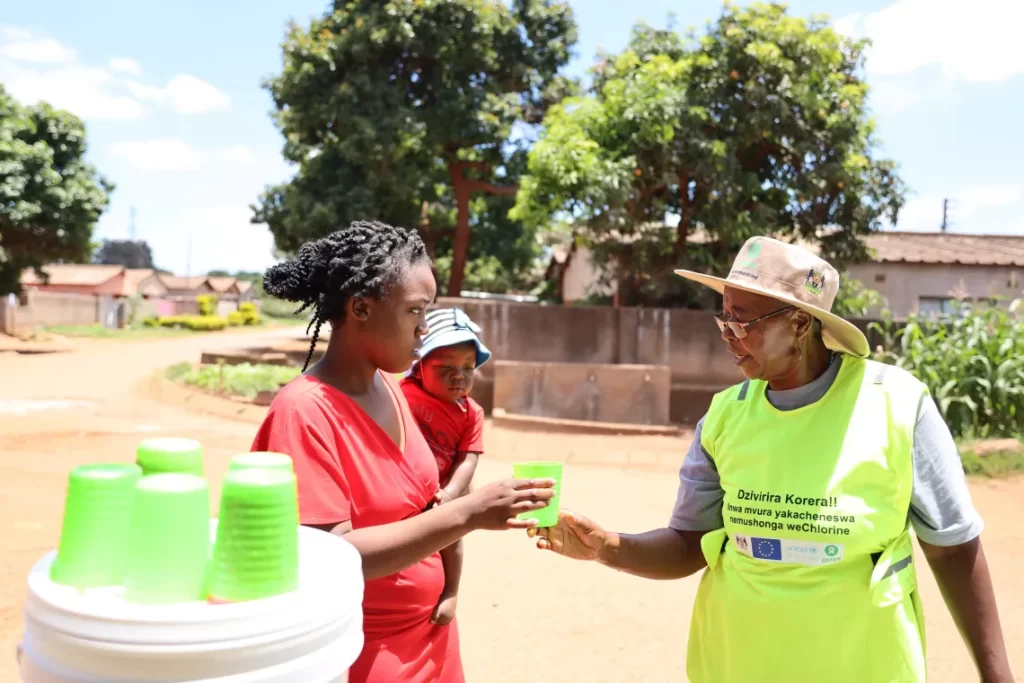
Pepukai Moyo (21) receives Oral Rehydration Solution (ORS) for her 9-month-old son from Oral Rehydration Point in Kuwadzana, a Cholera Hotspot area in Harare.

The Ministry of Health and Childcare, UNICEF and partners established more than 90 oral rehydration points in hotspot communities nationwide, for rehydration of suspected cholera cases to reduce fatality.

Mothers and their small children, pregnant women, people with disabilities, the elderly, and the chronically ill can now readily interact with facility in community.
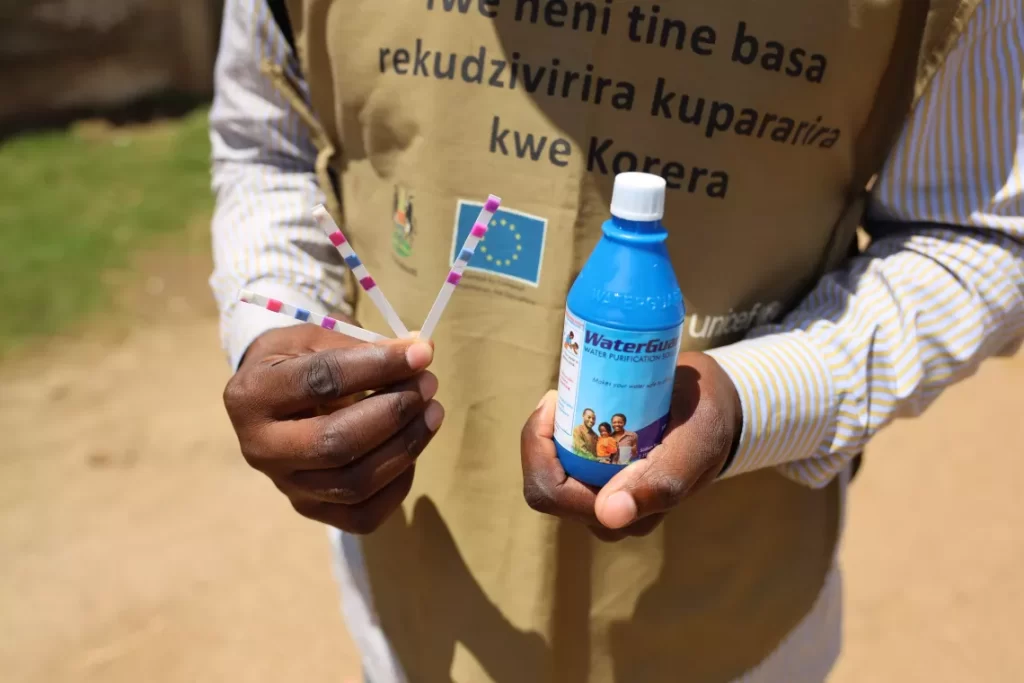
Community Health Promoter holding water guard chlorination and litmus paper to conduct testing of household water chlorination levels.

As part of ongoing efforts in the Cholera response, UNICEF and partners capacitated and equipped Community Health Promoters to conduct free residual chlorine testing.

UNICEF is promoting household chlorination to increase access to safe water.
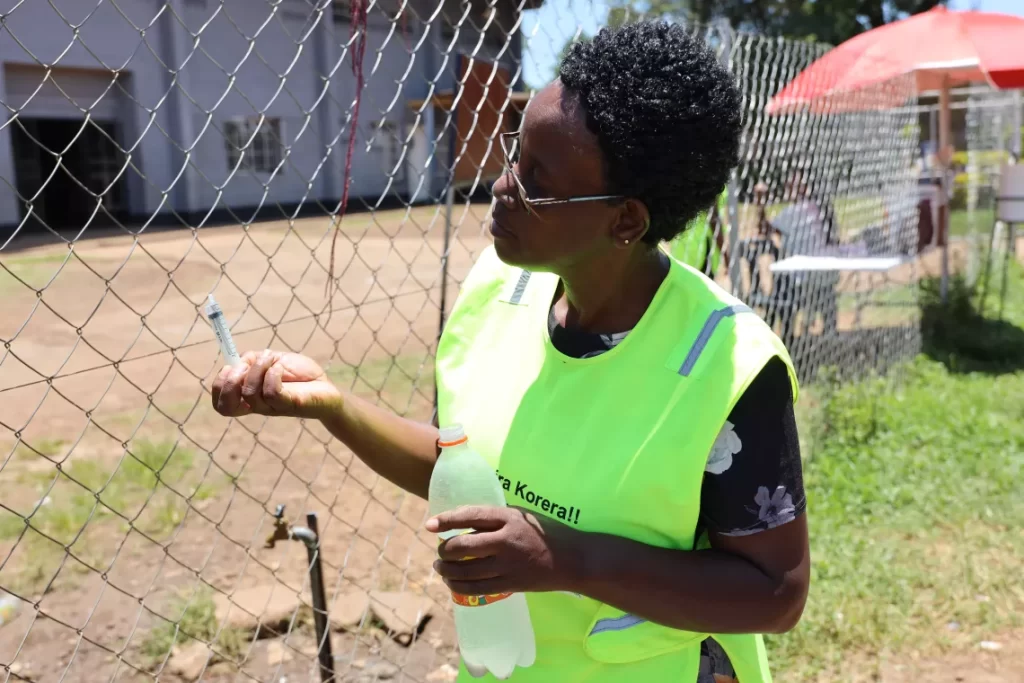
Community Health Promoter, Perpetua Maposa (60) from Kuwadzana, a Cholera hotspot area in Harare, conducts bucket chlorination at a community borehole.

To promote access to safe water, UNICEF has facilitated chlorination of water being collected at community boreholes through Community Health Workers. 

More than 200 000 litres of water collected at community boreholes in cholera hotspot suburbs in Harare was made safe through the bucket chlorination approach.
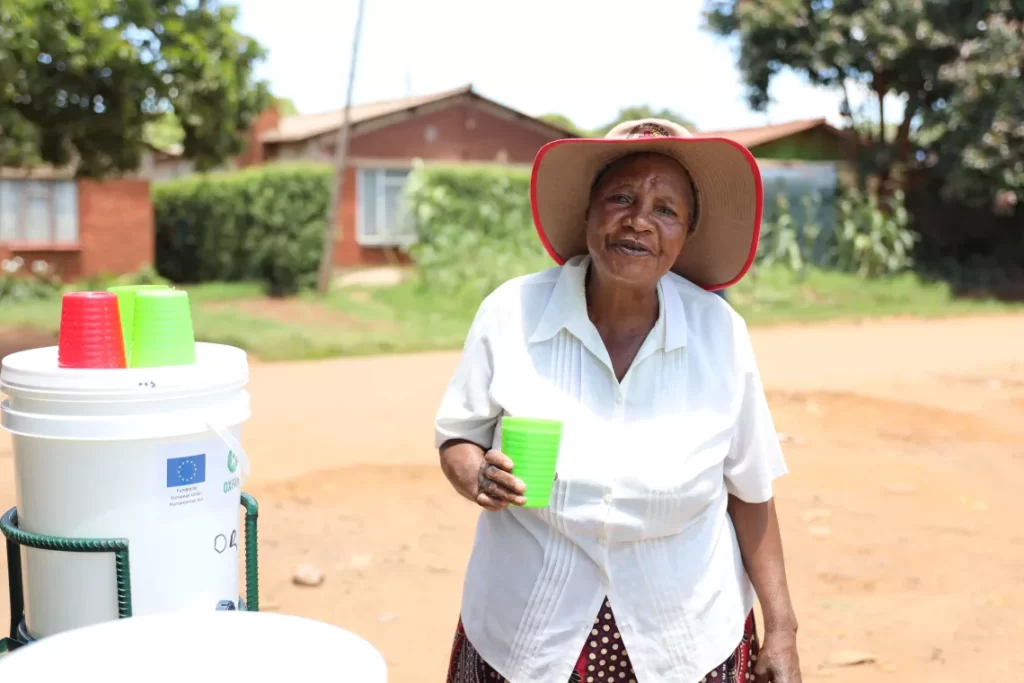
Yvonne Mataranyika (73) receives oral rehydration solution at the Oral Rehydration Point (ORP) in Kuwadzana, a Cholera hotspot area in Harare

UNICEF’s cholera response is funded by multiple donors, including the Centre for Disease Control and Prevention (CDC); the European Civil Protection and Humanitarian Aid Operations (ECHO); the Health Resilience Fund (HRF), a Zimbabwean pooled fund supported by the Governments of Ireland, the United Kingdom, the European Union, and GAVI, the Vaccine Alliance; Japan; the UN Central Emergency Response Fund (CERF) and UNICEF Global Humanitarian Funding, and with in-kind support from private sector partners such as Alliance Media & JCDecaux for digital billboards, and Cash-In-Kind logistics support for commodities from Universal Postal Services (UPS).

SOURCE:: Unicef via https://www.unicef.org/zimbabwe/stories/unicef-supports-zimbabwes-integrated-approach-battle-against-cholera
Zimbabwe’s Village Health Workers Persist in Cholera Battle

on February 9, 2024 in Cholera, News

The southern African nation is still battling an outbreak that began a year ago

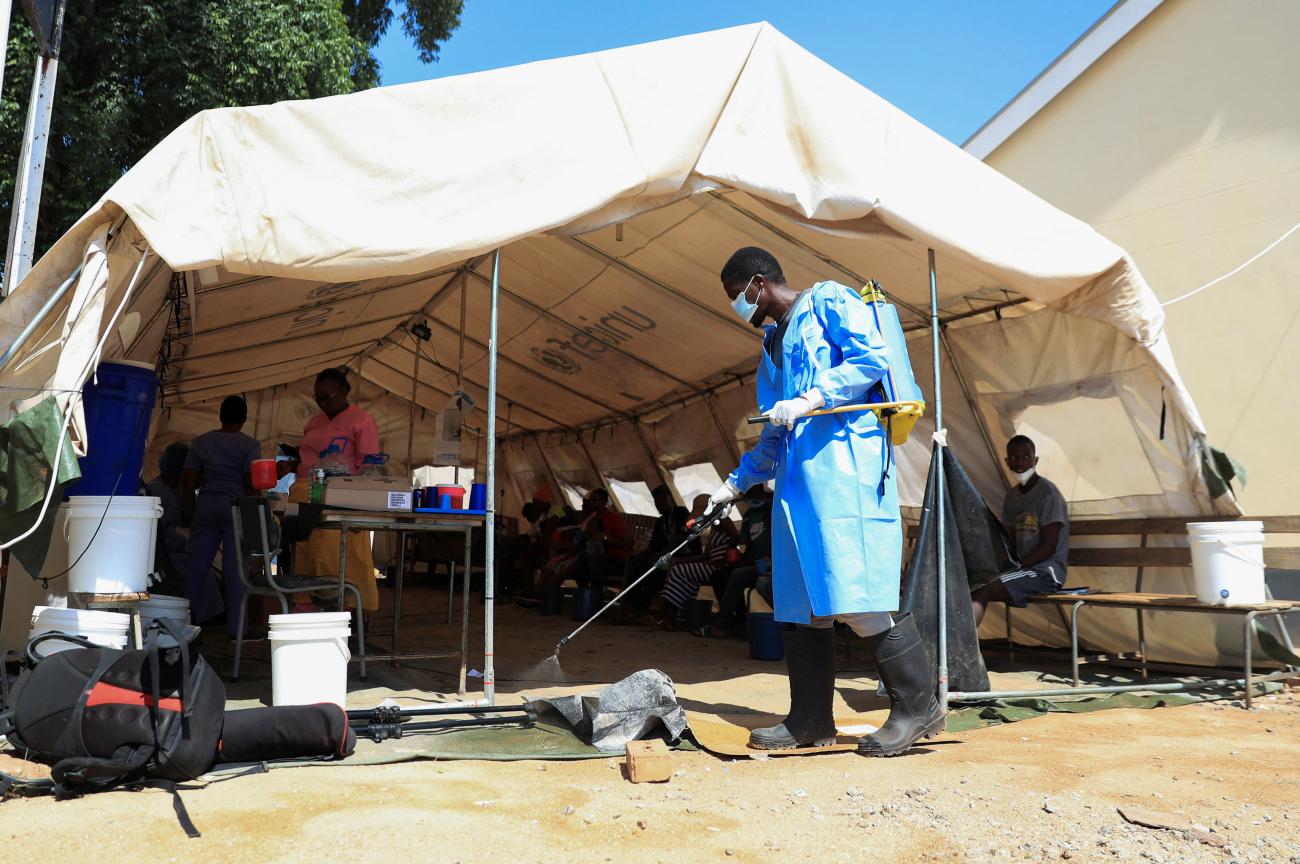
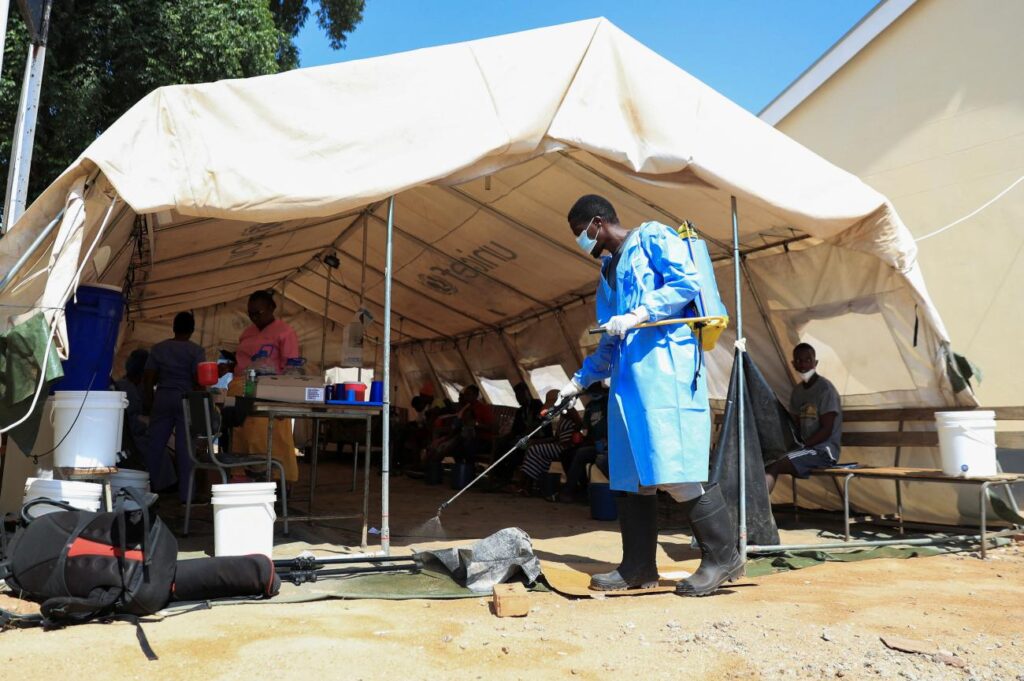
A health worker disinfects a cholera tent at Kuwadzana Polyclinic. in Harare, Zimbabwe, on November 24, 2023. REUTERS/Philimon Bulawayo

Every day patients trickle into the waiting area of an oral rehydration point manned by village health worker Sibongile Mukwananzi in Nyamadzawo village, a part of the Marange region, which lies about 183 miles (294 kilometers) from Zimbabwe’s capital, Harare. 

Here, patients showing cholera symptoms drink a homemade sugar-salt rehydration solution while waiting for transport to the Zvipiripiri clinic, the nearest treatment center for the acute diarrheal illness caused by a Vibrio cholerae bacteria infection of the intestine. 

The southern African nation has been battling a cholera outbreak since February 2023, ​​recording 22,790 suspected infections and 430 suspected deaths as of February 5, 2024, according to the country’s health ministry.

The Marange area and Buhera district, located in Manicaland Province, have been among the epicenters. 

Although the country’s response has involved all stakeholders, village health workers such as Mukwananzi are on the front lines.

Armed with training from professional medical practitioners, village health workers guide communities on how to prevent and contain the spread of the disease.

They are responsible for alerting the authorities when new cases emerge.

These workers have also taken on the roles of becoming trusted messengers to combat the area’s religion-fueled hesitancy toward medicine.  

Forty-two-year-old Mukwananzi had her first encounter with a cholera patient about two months into the outbreak.

Despite being a village health worker since 2020, she had no idea that the illness was cholera.  

“I attended to a patient who was vomiting and ferried him to the clinic where nurses told me the patient was infected by cholera,” Mukwananzi tells Think Global Health, seated on a rainy afternoon inside a retail store turned into an oral rehydration point.

“A few weeks later, people gathered for a funeral triggering multiple cholera suspected deaths.” 

The waterborne disease is caused by ingesting contaminated food or water.

Health workers say that it spreads easily in areas such as Marange and Buhera because of lack of access to clean water and resulting poor hygiene.   

Nyamadzawo village and its surrounding areas are home to people of the Apostolic sect, whose religious beliefs advocate against seeking health care.

Many people in this community are polygamous, one man having sired more than 100 children with 16 wives.  

“The majority of these people do not believe in science but rather that a sick person can be healed by prayers,” says Mukwananzi who is a mother of four and comes from the village.

“Of which that is not true.” 

Mildred Makore, a country director at the humanitarian organization Mercy Corps Zimbabwe, says that village health workers sensitise the community by promoting hygiene at funeral gatherings and by conducting active surveillance. 

“Activities at funerals include ensuring the provision of hand washing stations at strategic points and food safety during preparation. Above all, giving health education to the mourners, emphasizing avoiding hand shaking and rituals such as cleaning of the corpse,” says Makore, whose organisation is supporting efforts of village health workers in Marange. 

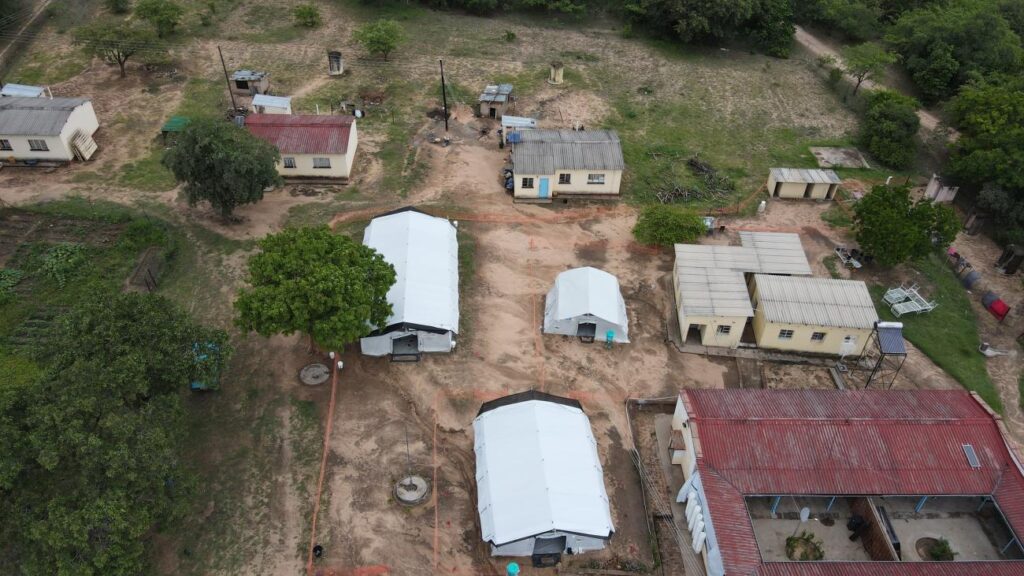
An aerial view of a cholera treatment center at Zvipiripiri clinic, in Marange, Zimbabwe, on January 19, 2024. Farai Shawn Matiashe

Bridging the Information Gap 

This is not the first time that Zimbabwe has been hit by a deadly cholera outbreak.​

From 2008 to 2009, more than 4,000 people died from cholera and nearly 100,000 people were infected across the country, according to the ​World Health Organization

Makore says that early response in affected areas to reduce the spread is one thing being done differently from the 2008 outbreak.

“Risk communication and community engagement are one of the strategies used in the response involving the participation of community members, village health workers, and religious and traditional leaders,” she says. 

“Awareness raising now uses technology like social media, radios, and television to disseminate information on the disease. Most of the rural areas now have community radios that disseminate information in local languages.”

Mukwananzi, who receives cholera updates and other critical information from nurses on a WhatsApp group, says that she will keep sensitising the community despite the risk of infecting her own family.

She also conducts door-to-door campaigns raising cholera prevention and treatment awareness. 

“I encourage them to visit the clinic for treatment, practice good hygiene, and make use of a WaterGuard to treat water or boil it,” she says.

WaterGuard, made of sodium hypochlorite solution, is used to treat water fetched from wells, rivers, and boreholes, making it safe for drinking in cholera hotspot areas.  

Mukwananzi works daily at the oral rehydration point but is always ready to assist her fellow villagers at night.

She says people are gradually becoming less hesitant and visiting the clinic when infected.

“The majority of cholera patients who agree to be admitted at the clinic survive,” she says. 

Itai Rusike, executive director at Community Working Group on Health, says that village health workers are the glue that connects Zimbabwe’s health-care system to communities.

“They are critical to health promotion, disease prevention, early diagnosis and referral, and helping people to stay on treatment and stay healthy,” he says.

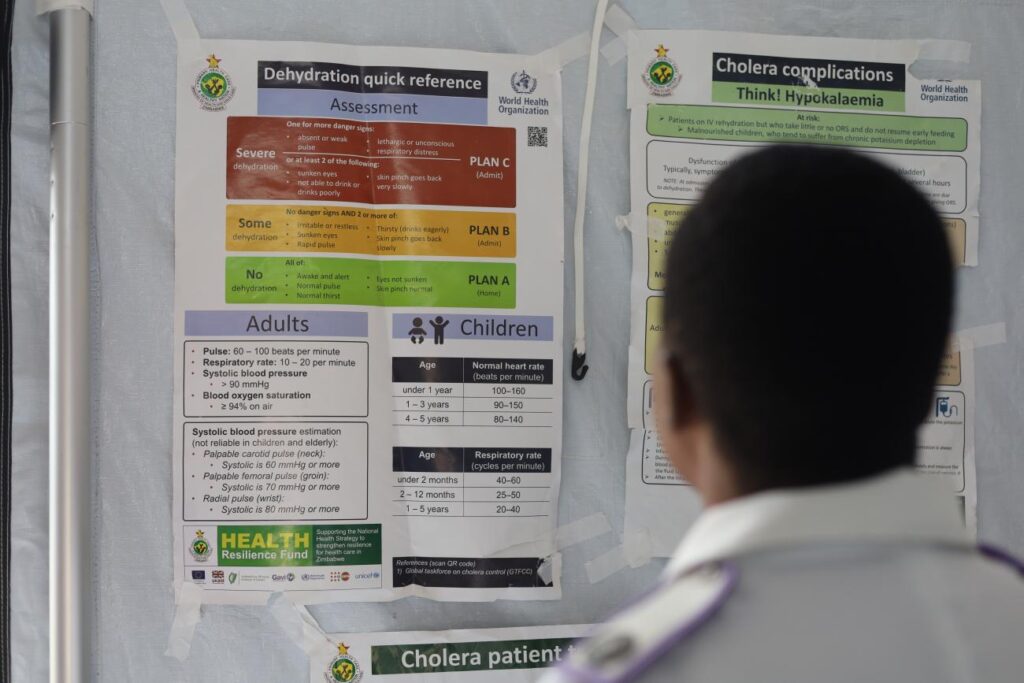
A nurse looking at a protocol management chat in one of the wards at Zvipiripiri clinic, in Marange, Zimbabwe, on January 19, 2024. Farai Shawn Matiashe

Nyasha Pukai, a village health worker, from Taguta village in Marange, says it is heartbreaking to see his neighbors succumbing to preventable and treatable diseases such as cholera.

“There is a family here that lost nearly 30 people in December last year. We have lost so many lives,” says Pukai, who is a member of an apostolic sect who was encouraged by his congregation to become a village health worker to get assistance from someone they trust. 

Both Pukai and Mukwananzi refer patients to the Zvipiripiri clinic for tests, diagnosis, admission, and treatment. At the clinic, patients are given antibiotics and intravenous liquids. They are expected to recover within 72 hours. 

Tajudeen Oyewale, a United Nations Children’s Fund (UNICEF) representative, says his organisation encourages community participation and engagement in cholera prevention and response.  

“This involves working with community leaders and local health workers to spread key messages about cholera prevention,” says Oyewale, whose organisation has provided supplies to 40 cholera treatment centers for the treatment of patients across the country as well as training, allowances, and bicycles for village health workers.  

In late January, the government began rolling out oral cholera vaccines as a temporary measure to affected communities in hotspots, including Manicaland province. 

“Hopefully, our loved ones will not die from cholera in the future,” Mukwananzi says. 

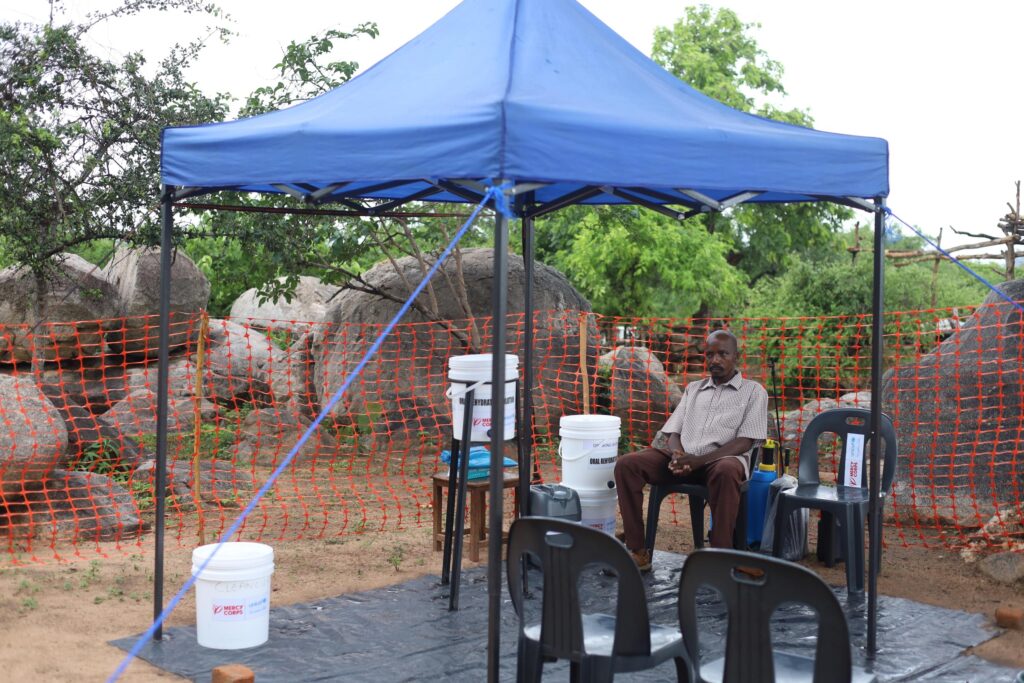
Nyasha Pukai, a village health worker, seated at one of the oral rehydration points in, Marange, Zimbabwe, on January 18, 2024. Farai Shawn Matiashe

SOURCE:: Think Global Health via link https://www.thinkglobalhealth.org/article/zimbabwes-village-health-workers-persist-cholera-battle