
Faith leaders in Zimbabwe set aside differences to fight cholera and polio
on April 8, 2024 in Cholera, News, Polio
“If we can convince people to partake in prayers, then surely we can convince them to change their mindsets regarding these diseases.”

MUTARE, Zimbabwe – A traditional healer since 1985, Casemore Darare is all too familiar with medicinal herbs. His services are highly sought after in his neighbourhood of Dora Dombo, a rural area on the outskirts of Mutare city.
But regarding cholera or polio, the 54-year-old has a robust solution: he encourages his community and faith members to strictly get vaccinated, maintain good hygiene, and seek modern medicines at the local clinic when symptoms show.

Casemore Darare, a traditional healer, addresses a meeting of interfaith leaders held in Mutare to discuss cholera mitigation measures
“That’s the most effective solution. There is nothing better, trust me,” he said to loud cheers from participants at a March meeting to develop community-led solutions to address the behavioural and social drivers of cholera and polio.
Darare, the provincial secretary of the Zimbabwe National Traditional Healers Association for Manicaland Province, speaks from experience.
A recent outbreak of cholera that struck him forced Darare to change his thinking about how best to tackle the disease.
After showing symptoms of cholera, Darare said he resorted to what he knew best – traditional medicine.
“I dug up all the herbs I thought could help and mixed some concoctions. I did all the spiritual things I thought would ease my condition. It only got worse,” he said.
Eventually, neighbours put him in a wheelbarrow and rushed him to the nearest clinic, where he received medication from nurses.
“I survived to tell the story. Many people who tried the traditional herbs and spiritual ways were not so fortunate,” said Darare, who enrolled in essential community health training after the ordeal.
Darare is still a traditional healer. But he has also taken up another task of becoming a community champion to encourage people to rely on modern medicines, safe water, sanitation, and hygiene practices to fight diseases such as cholera and polio.
He also encourages fellow traditional healers in his area to immediately refer cholera patients to a medical facility for treatment.
In March, Darare was among the interfaith leaders who gathered in Mutare city to collaborate on how best to fight cholera and polio.
Organised by Apostolic Women Empowerment Trust (AWET) and supported by UNICEF, the gathering brought together traditional healers, leaders of various Christian denominations, and the Muslim faith to collaborate and devise ways to use their influence to drive behaviour change.
Despite their different spiritual doctrines, they agreed on one overarching message of promoting the uptake of vaccines and other modern medicines and practices to combat cholera and polio.
“Cholera and polio do not discriminate. They affect all of us the same. So, we must work together to deliver the message to the people we lead. Some behaviours must change, and we should lead that campaign,” said Sheik Ishmail Duwa, president of the Supreme Council of Islamic Affairs in Zimbabwe.
The meeting timing was critical as the country grapples with the twin outbreaks of cholera and polio, often affecting poor sanitation and hygiene areas.
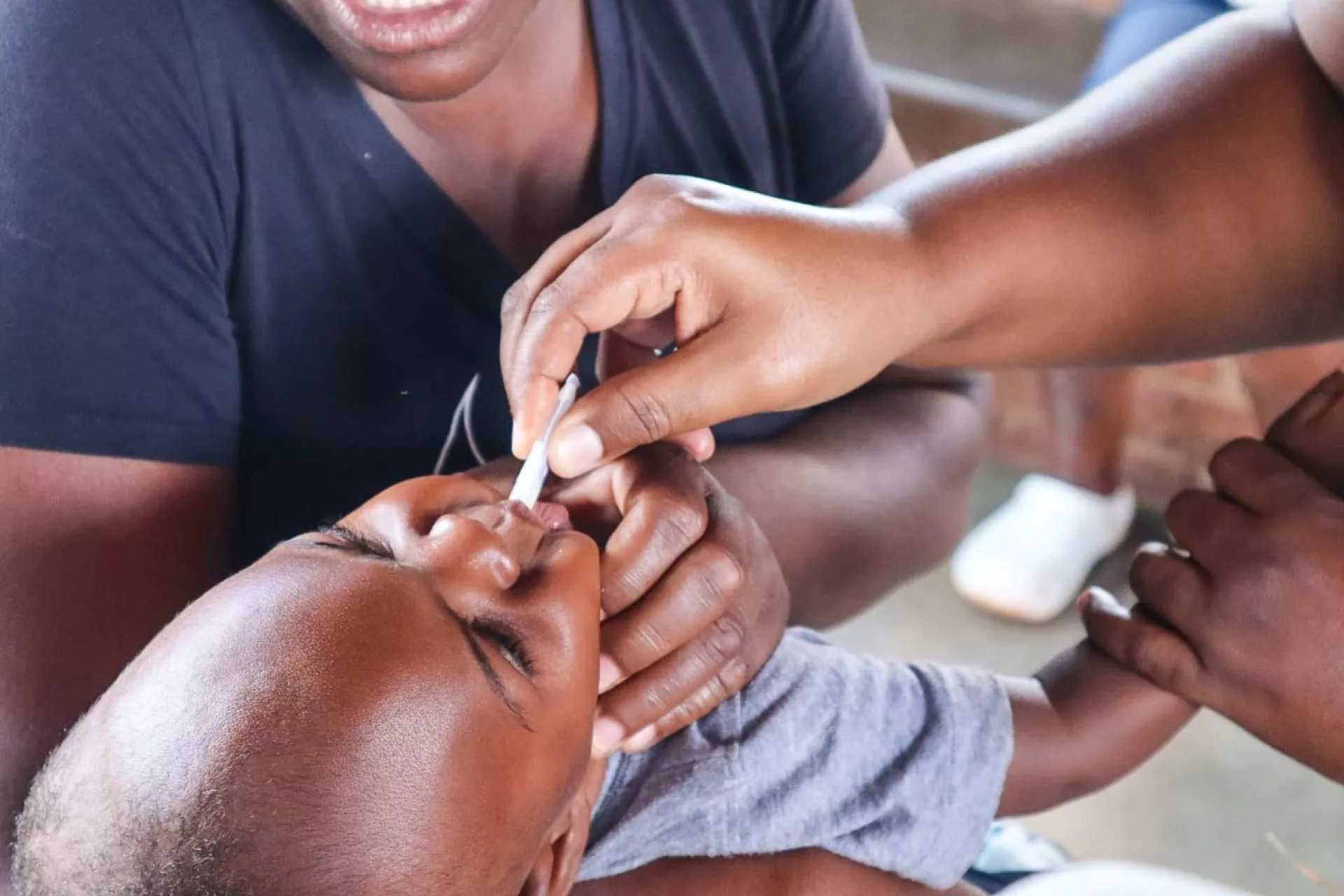
The meeting also came as Zimbabwe prepared to roll out a second round of mass polio vaccination of children aged ten years and below following a successful first round of polio vaccinations targeting 4.6 million children.
Leaders of apostolic sects present at the meeting pledged to campaign amongst their members to allow children to get vaccinated and for people to embrace modern medicines.
The desire among the interfaith leaders to work together was palpable during the meeting.
They sometimes broke into various small interfaith groups to discuss the causes of cholera and polio, the main drivers, such as open gatherings with no sanitation and hygiene and traditional funeral rites, and how best to address the situation.

Interfaith leaders recently in Mutare to discuss cholera mitigation measures
A Roman Catholic sister stood beside a female traditional healer and Muslim youth leader in one group. A Pentecostal pastor took notes on a flip chart as they engaged in rigorous debate to develop a common position.
Representatives of the groups then presented their findings to a plenary before drawing up a joint action plan that put vaccination, modern medicines and safe water, sanitation, and hygiene practices at the centre of the fight against cholera and polio.
“This kind of interfaith dialogue helps build trust. By learning from each other, we remove the barriers that stop us from collaborating. Cholera and polio don’t need us to follow the old ways of doing things; we must be dynamic and assist the authorities,” said Brian Nemakanga, a leader with the hugely popular Johanne Marange Mafararikwa apostolic sect.
Belinda Magida, a traditional healer, added, “Together, we can influence millions of people in all the hard-to-reach places where we have followers. If we can convince people to partake in prayers and believe in God, we can surely convince them to change their mindsets regarding these diseases. Let’s take the information to the people; let’s positively use our influence. It is a duty we owe to the nation as responsible leaders. Education is key, and knowledge is power.”
UNICEF and WHO, in collaboration with the Ministry of Health and Child Care and funded by the Government of Japan, the multi-donor Health Resilient Fund (comprising contributions from the UK Government, Irish Aid, European Union, and Gavi), and with implementation support from the Apostolic Women Empowerment Trust (AWET), are jointly spearheading diverse Risk Communication and Community Engagement (RCCE) initiatives to address multi-hazards, encompassing efforts against polio and cholera outbreaks.
SOURCE:: Unicef via link https://www.unicef.org/zimbabwe/stories/faith-leaders-zimbabwe-set-aside-differences-fight-cholera-and-polio




Recent Comments