

Village Health Workers: Frontline Heroes in Zimbabwe’s Fight Against Nutrition Crisis
on October 12, 2024 in Health and Wellbeing, News, Women and Maternal Health
The care group model, promoted by the Ministry of Health and Child Care, serves as a community-based strategy to share vital health information and empower mothers to take an active role in their families’ well-being
In Mhlotshana village, Mangwe district, village health workers like Sibongile Ncube are on the frontline in the fight against all forms of malnutrition.
Six months after Zimbabwe declared a disaster due to the El Niño-induced drought, village health workers are helping families access vital health and nutrition services.
Located in the country’s southwestern part, Mangwe is one of the 29 districts most severely impacted by the ongoing drought, grappling with food and water shortages. In this critical time, village health workers have become even more integral.
They play a vital role in the early detection and referral of children for treatment of acute malnutrition, conducting active screening, distributing micronutrient supplements, and supporting the Family-Led MUAC initiative, which trains caregivers to measure their children’s Mid-Upper Arm Circumference (MUAC) to screen for acute malnutrition.
Sibongile describes the harsh realities families face because of the drought.
“The impact has been devastating. Mothers are walking long distances to fetch water, and many families are down to just one meal a day,” she says. “I’m doing my best to support these mothers and children, ensuring they get the care and help they need.
One such mother is Musa Sibanda, a young mother of 1-year-old twin boys Bekimuzi and Bekinkosi. During her regular home visits, Sibongile noticed Bekinkosi’s MUAC measurement was dropping below the normal range. Concerned and in line with her guidelines, she immediately referred Musa to the nearest clinic, where he was diagnosed with moderate acute malnutrition and placed on a ready-to-use therapeutic food (RUTF) treatment plan.
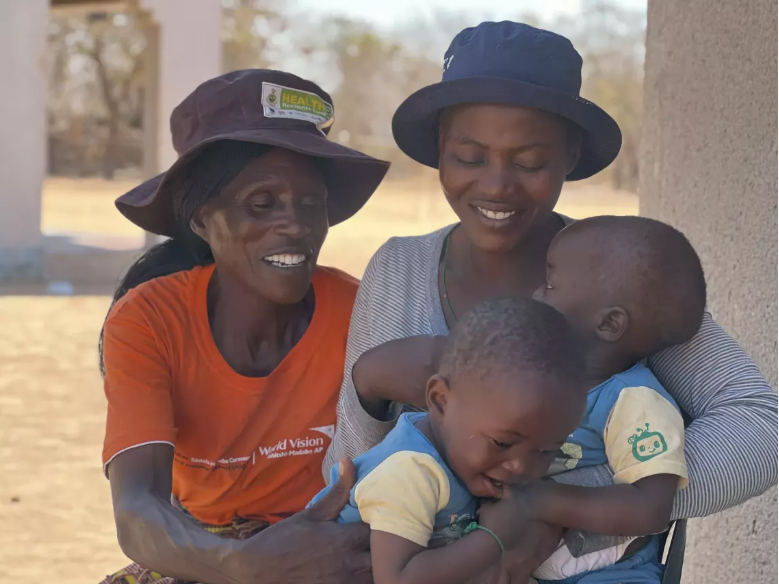
Sibongile Ncube, a village health worker, with Musa Sibanda and her children at their homestead during a growth monitoring visit in Mangwe.
According to a recent UNICEF report, approximately 580,000 young children in Zimbabwe are living in severe food poverty, making them vulnerable to malnutrition. The number is set to rise with the ongoing El Nino induced drought.
Sibongile’s support for mothers in the community goes beyond MUAC screening for acute malnutrition.
She leads a care group where mothers come together to learn about optimal infant and young child feeding practices, and hygiene.
The care group model, promoted by the Ministry of Health and Child Care, serves as a community-based strategy to share vital health information and empower mothers to take an active role in their families’ well-being.
Musa is part of a care group led by Sibongile, and joining the care group was eye-opening.
“Before, I thought my children’s nutritional status was satisfactory because we had more than one meal daily. But through the care group, I learned about the importance of a balanced diet, especially for young children.”
Beyond the life-saving nutrition education, the care group has empowered Musa and other women in the village. Together, they started a small project baking bread buns to sell locally.
This has provided them a chance to earn an income, which they use to buy fresh vegetables and other nutritious foods for their families.
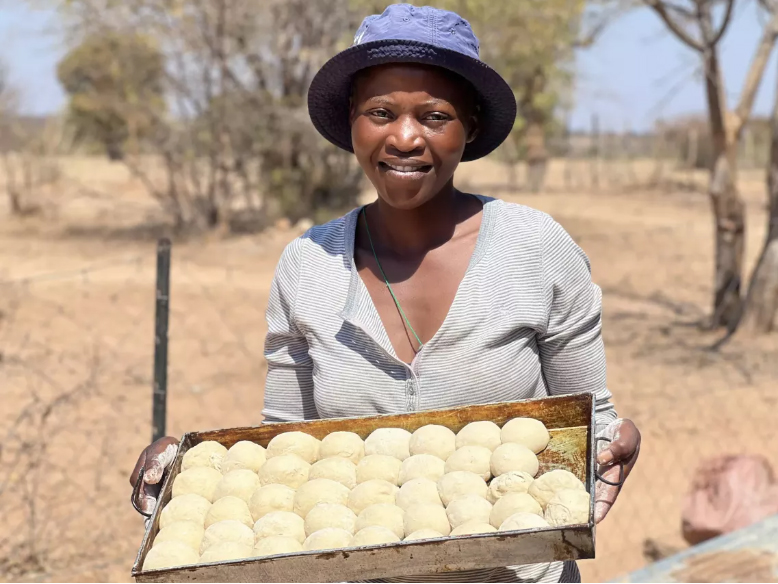
Musa Sibanda holds a batch of bread buns, part of her CareGroup project aimed at helping mothers achieve economic independence
The government is scaling up efforts nationwide with various initiatives to deliver crucial health services to hard-to-reach and remote areas, where access to clinics and hospitals is limited.
Claudia Gwatidzo, the Nutrition Assistant for Mangwe District, commends the Ministry of Health for its outreach programs, emphasizing that they have been essential for identifying malnutrition cases in communities.
“Most households need to travel quite a distance to reach the nearest clinic; this poses a significant challenge for many families,” she notes.
“This discourages regular check-ups, especially for children and pregnant women, who of often need consistent health services. Many can’t afford the time or cost of travelling distances, so the outreach services are vital in bridging that gap.”
With support from UNICEF and UN Central Emergency Response Fund (CERF), the Ministry of Health and Child Care is scaling up community-based MUAC screening and expanding nutrition services across Zimbabwe’s drought-affected regions.
These efforts focus on providing nutrition education and improving access to quality diets for the most vulnerable groups, which include children under five, pregnant and lactating women, and adolescents.
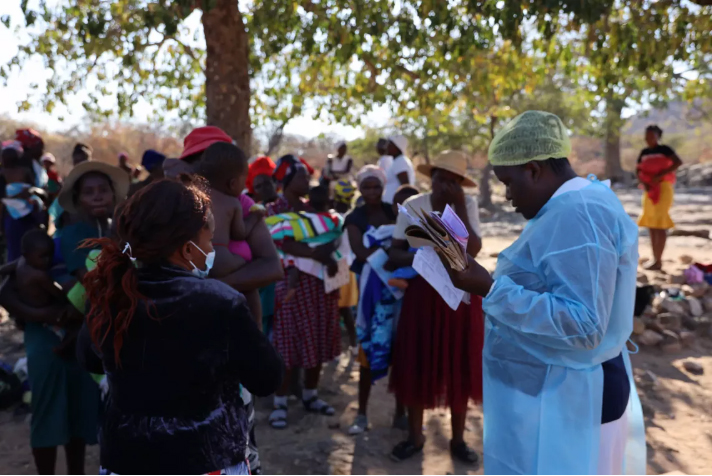
Mothers and caregivers with their children during an outreach in Mangwe District
Through a coordinated approach, UNICEF is working closely with partners to support the government of Zimbabwe in addressing the nutrition emergency caused by the El Niño-induced drought.
As families continue to navigate the challenges brought by the drought, village health workers like Sibongile are vital to ensuring no child is left behind.
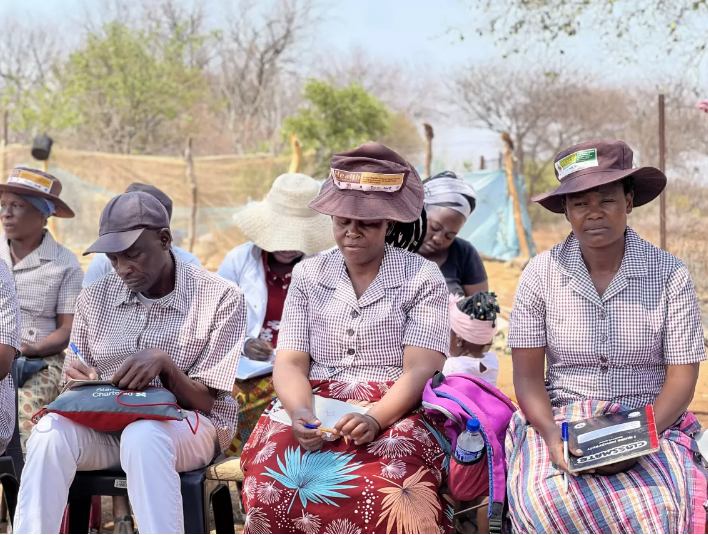
Village health workers in the Mangwe district at training on scaling up nutrition emergency response efforts
SOURCE:: Unicef via link https://www.unicef.org/zimbabwe/stories/village-health-workers-frontline-heroes-zimbabwes-fight-against-nutrition-crisis



Recent Comments