UNICEF supports Zim’s Integrated Approach in the Battle Against Cholera
By Doctors For Human Rights on February 9, 2024 in Cholera, News, Press Statements
Empowering Communities: Ensuring access to safe water and promoting public awareness on cholera prevention
Zimbabwe is currently grappling with a cholera outbreak, with more than 22,000 recorded cases and over 500 suspected and confirmed deaths.
The widespread impact of the outbreak has touched every corner of the country.
UNICEF is actively supporting the government-led response to the cholera crisis on multiple fronts, treatment of cholera-infected people, initiatives to provide access to safe water, disseminating preventive messages, and advocating for seeking medical support in case of infection.
To address the urgent needs of affected communities, UNICEF supplies critical items such as water purification tablets, hygiene kits, soap, and water containers.
These essentials play a crucial role in ensuring communities have access to clean water and can uphold proper sanitation practices.
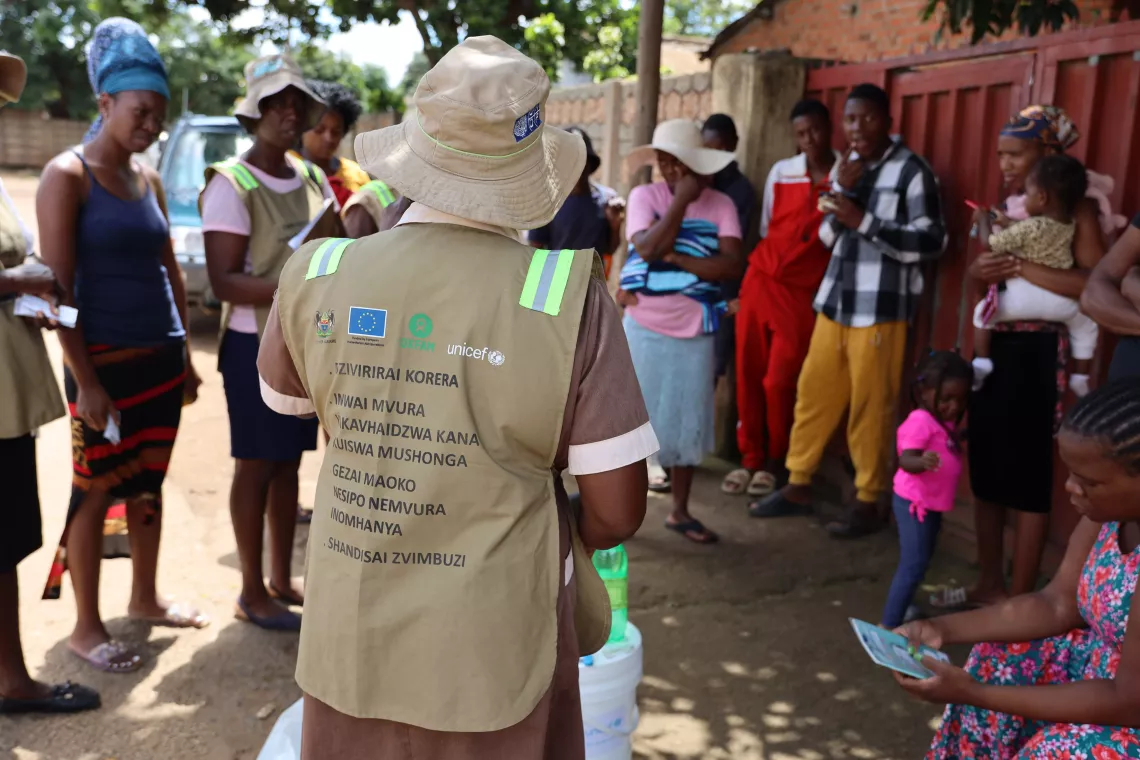
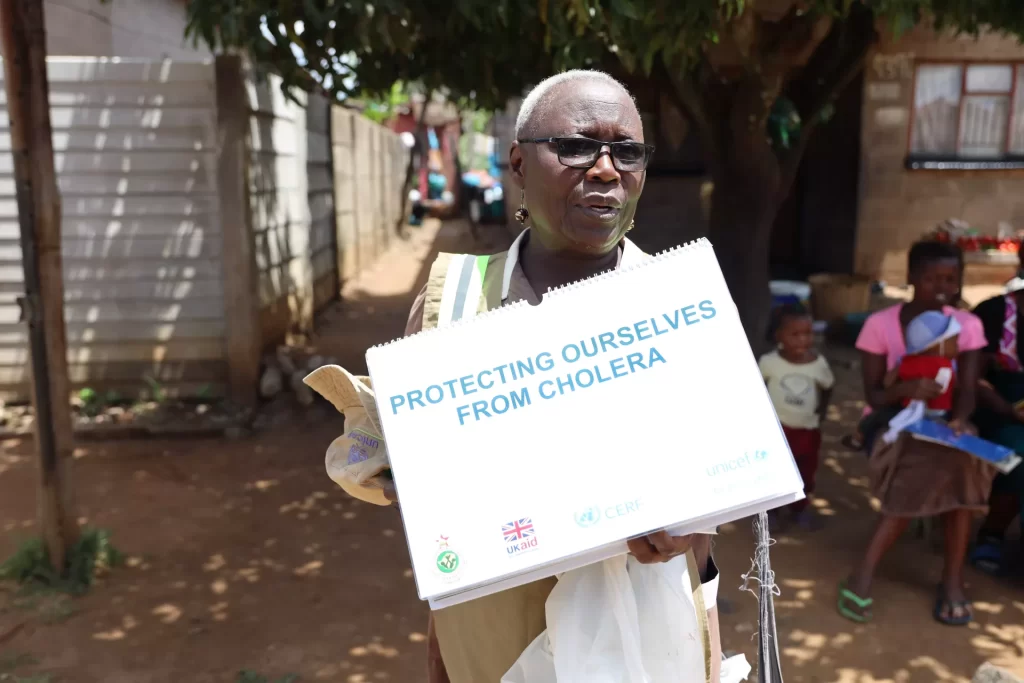
Additionally, UNICEF is actively involved in the cholera vaccination campaign and the implementation of public awareness activities, designed to inform communities about cholera’s causes, preventive measures, and the significance of hygiene practices.
Emphasising community participation, UNICEF collaborates with local leaders, influencers, and health workers to effectively communicate key messages and engage communities in the prevention and response efforts against cholera.
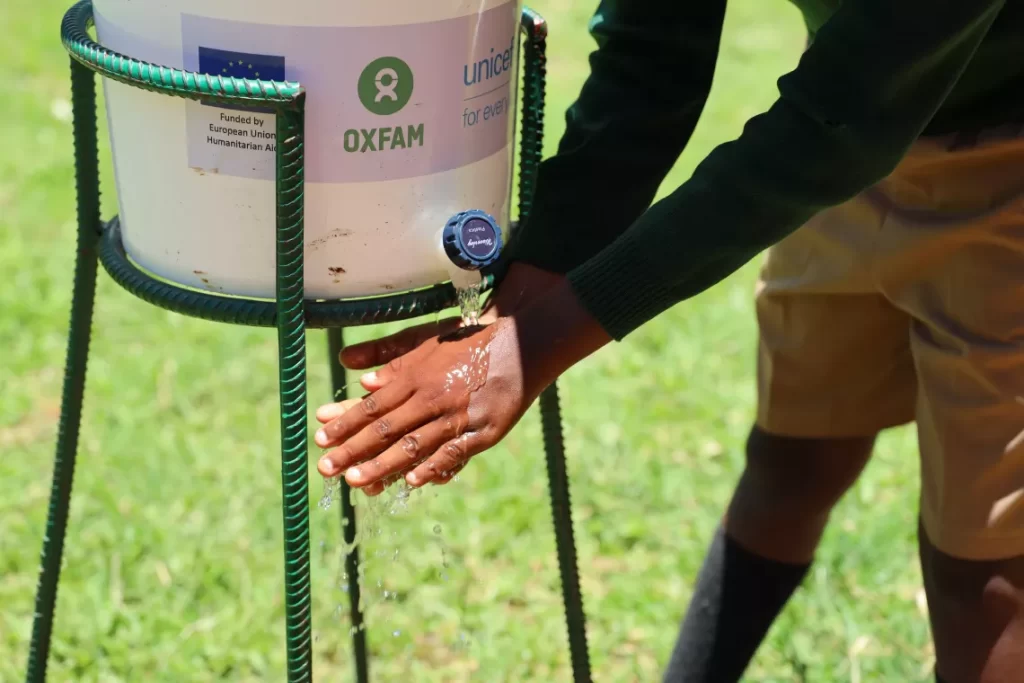
A Learner from Glen View 7 primary school in school in one of the cholera hotspots in Harare is washing their hands using UNICEF supported handwashing station
More than 260,000 people have been reached with critical WASH [water, sanitation and hygiene] supplies, including the distribution of over 1,200 handwashing stations in schools in hotspot areas as part of the back-to-school campaign.
The supply of non-food items (NFIs) ensures that children learn in a safe environment to promote access to quality education.
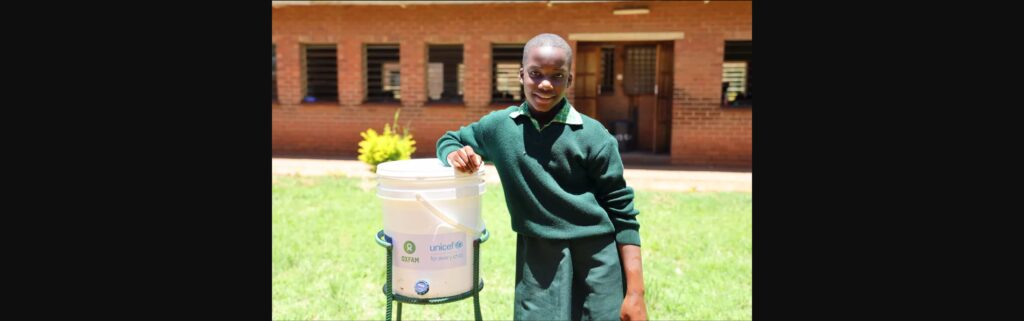
A learner from Glen View 7 Primary School, in school in one of the cholera hotspots in Harare, standing beside UNICEF supported handwashing station
As part of the back-to-school campaign over 10,000 school children were the recipients of key hygiene messages on cholera and its prevention via Rapid-Pro.
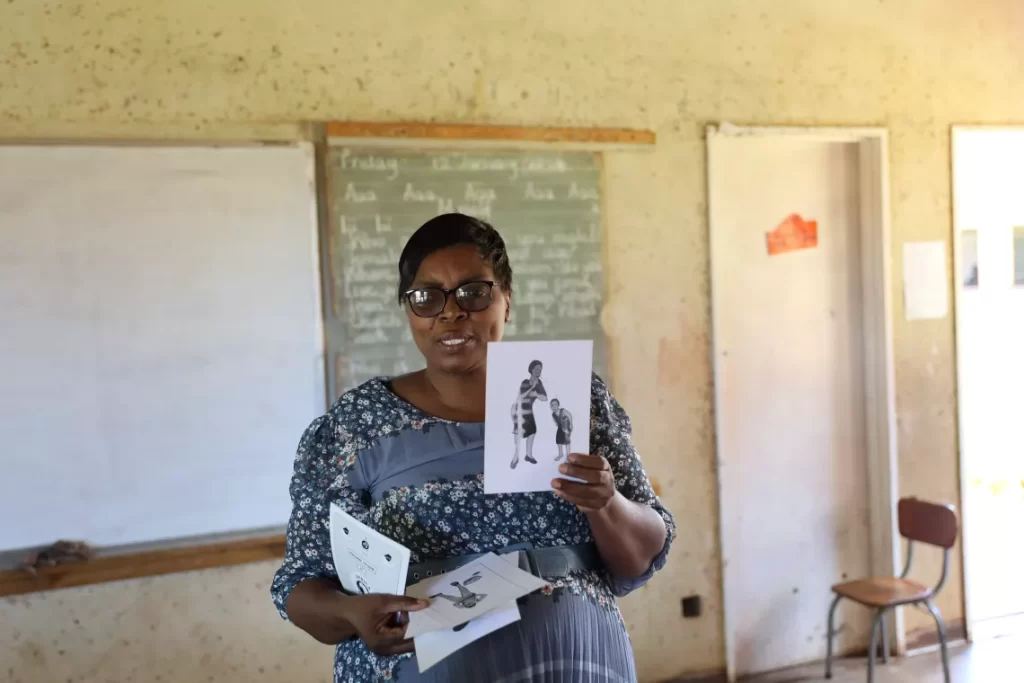
Priscilla Chimbwanda (56), School Health Coordinator uses visual cards to deliver key messages on hygiene messages and Cholera prevention to a classroom full of students
School Health Coordinators have been integral to the back-to-school activities, trained by UNICEF and partners in collaboration with the Ministry of Primary and Secondary Education on essential hygiene messages for cholera prevention.
This ensures a comprehensive approach to addressing cholera within the school environment.
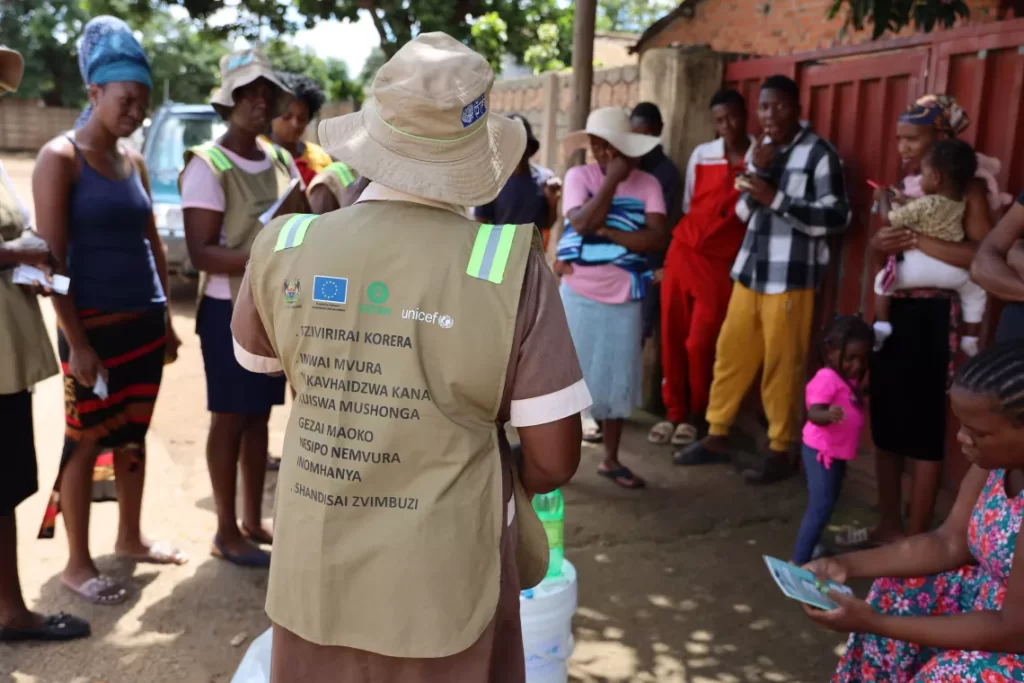
A Community Health Promoter from Glen View, a cholera hotspot area in Harare, delivers door-to-door campaign to deliver key hygiene and cholera prevention messages and the distribution of critical supplies
Community Health Promoters are conducting door-to-door campaigns delivering key hygiene and Cholera prevention messages and the distribution of critical supplies.
UNICEF in collaboration with the Ministry of Health and Child Care, trained over 2,2200 health workers, including Community Health Promoters on household case management, community disease surveillance and treatment of patients.
Health workers play a crucial role as a link between the community and the ongoing efforts.
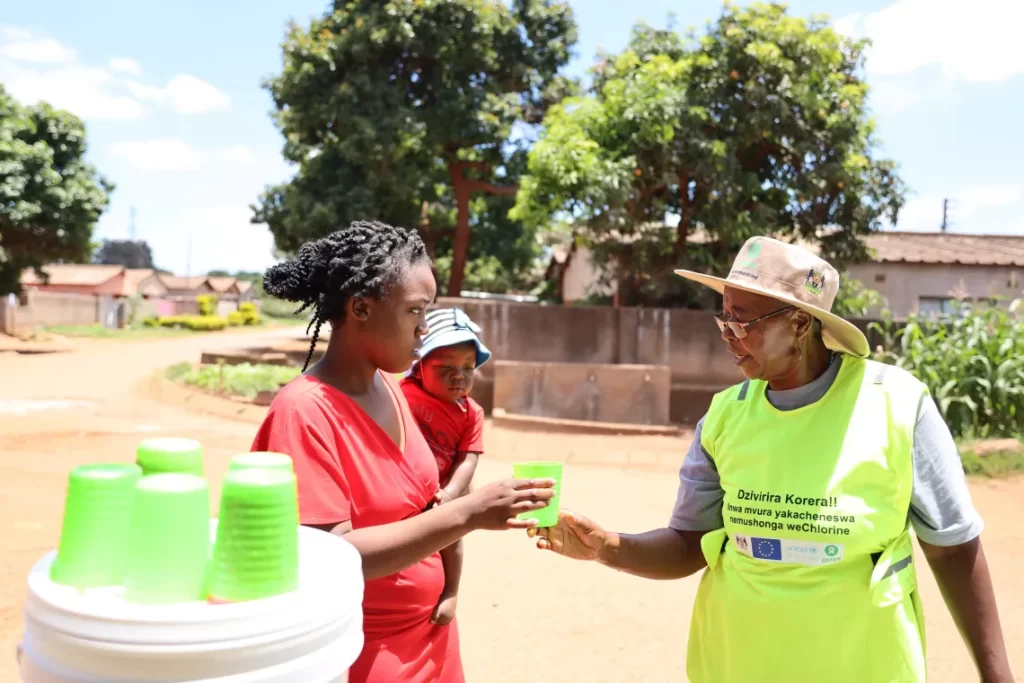
Pepukai Moyo (21) receives Oral Rehydration Solution (ORS) for her 9-month-old son from Oral Rehydration Point in Kuwadzana, a Cholera Hotspot area in Harare.
The Ministry of Health and Childcare, UNICEF and partners established more than 90 oral rehydration points in hotspot communities nationwide, for rehydration of suspected cholera cases to reduce fatality.
Mothers and their small children, pregnant women, people with disabilities, the elderly, and the chronically ill can now readily interact with facility in community.
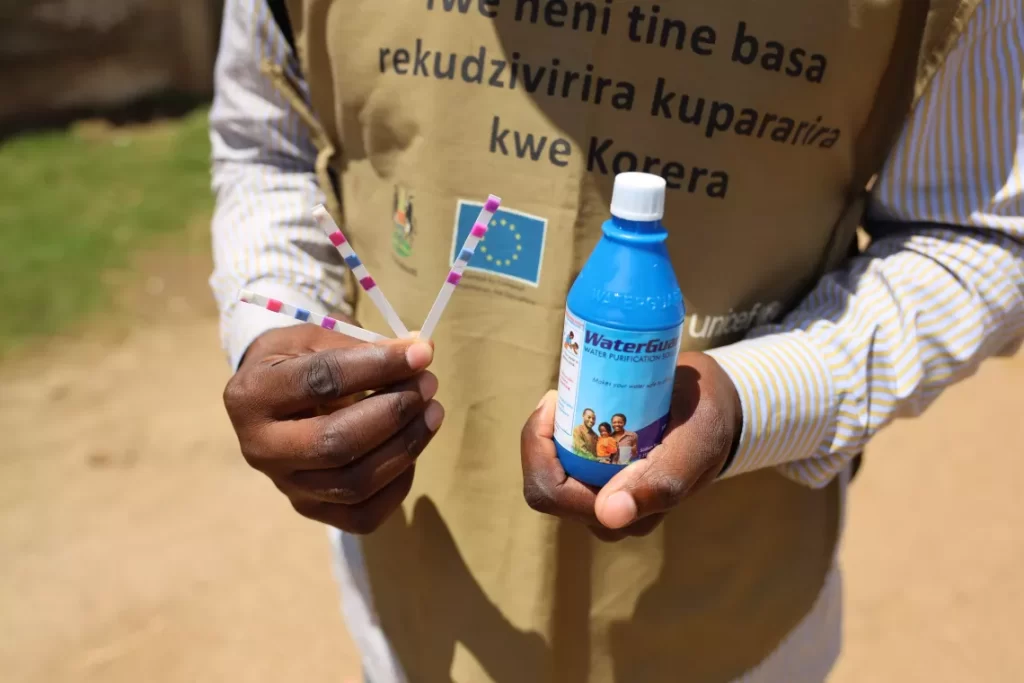
Community Health Promoter holding water guard chlorination and litmus paper to conduct testing of household water chlorination levels.
As part of ongoing efforts in the Cholera response, UNICEF and partners capacitated and equipped Community Health Promoters to conduct free residual chlorine testing.
UNICEF is promoting household chlorination to increase access to safe water.
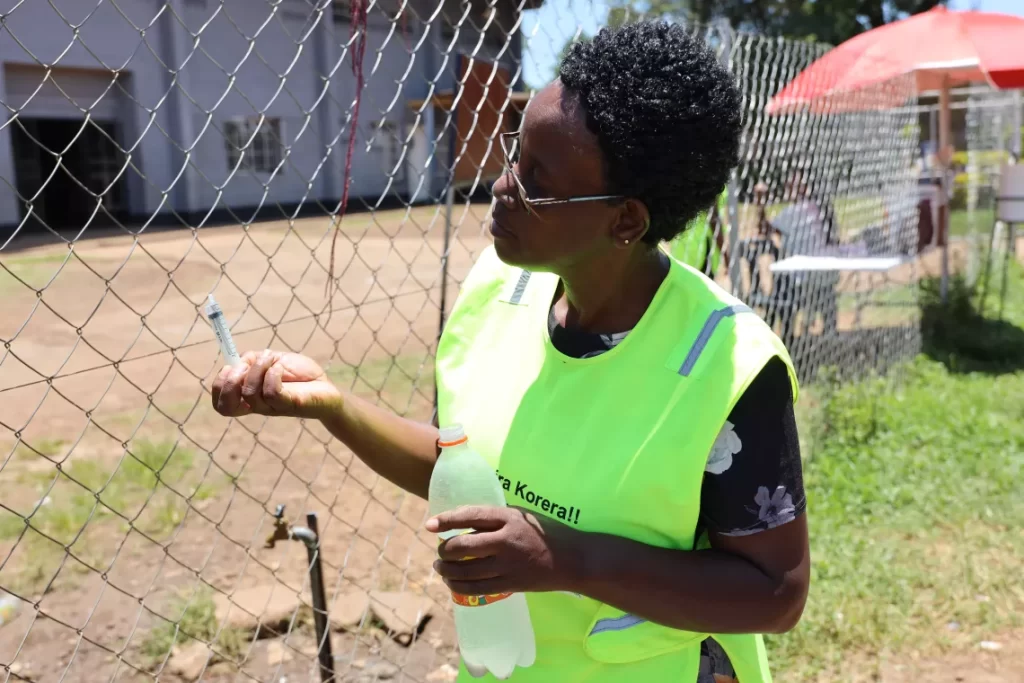
Community Health Promoter, Perpetua Maposa (60) from Kuwadzana, a Cholera hotspot area in Harare, conducts bucket chlorination at a community borehole.
To promote access to safe water, UNICEF has facilitated chlorination of water being collected at community boreholes through Community Health Workers.
More than 200 000 litres of water collected at community boreholes in cholera hotspot suburbs in Harare was made safe through the bucket chlorination approach.
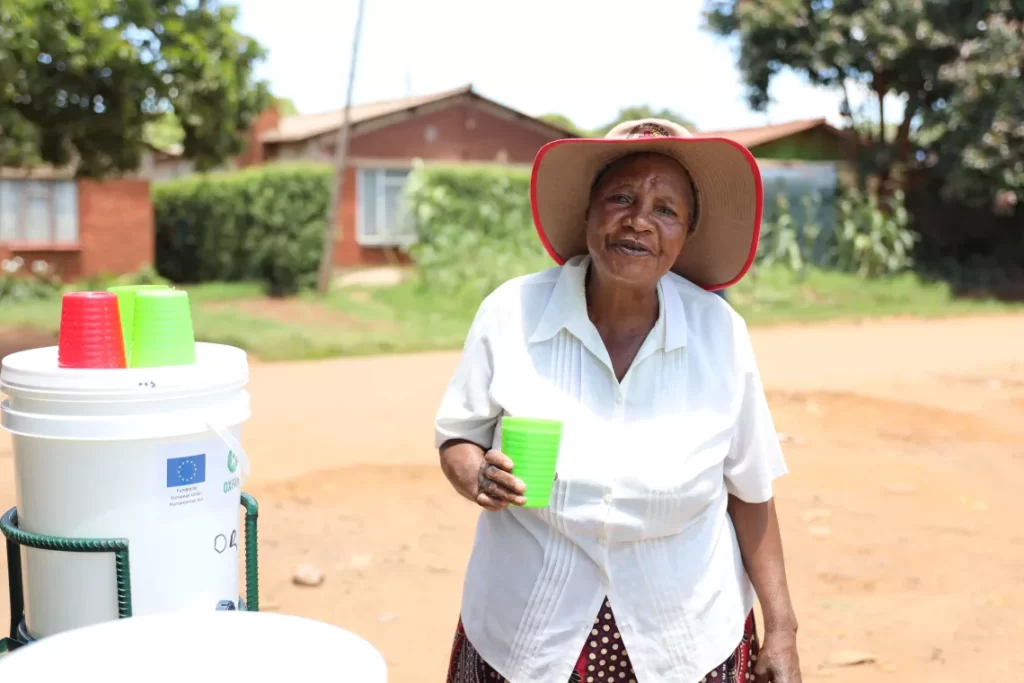
Yvonne Mataranyika (73) receives oral rehydration solution at the Oral Rehydration Point (ORP) in Kuwadzana, a Cholera hotspot area in Harare
UNICEF’s cholera response is funded by multiple donors, including the Centre for Disease Control and Prevention (CDC); the European Civil Protection and Humanitarian Aid Operations (ECHO); the Health Resilience Fund (HRF), a Zimbabwean pooled fund supported by the Governments of Ireland, the United Kingdom, the European Union, and GAVI, the Vaccine Alliance; Japan; the UN Central Emergency Response Fund (CERF) and UNICEF Global Humanitarian Funding, and with in-kind support from private sector partners such as Alliance Media & JCDecaux for digital billboards, and Cash-In-Kind logistics support for commodities from Universal Postal Services (UPS).
SOURCE:: Unicef via https://www.unicef.org/zimbabwe/stories/unicef-supports-zimbabwes-integrated-approach-battle-against-cholera