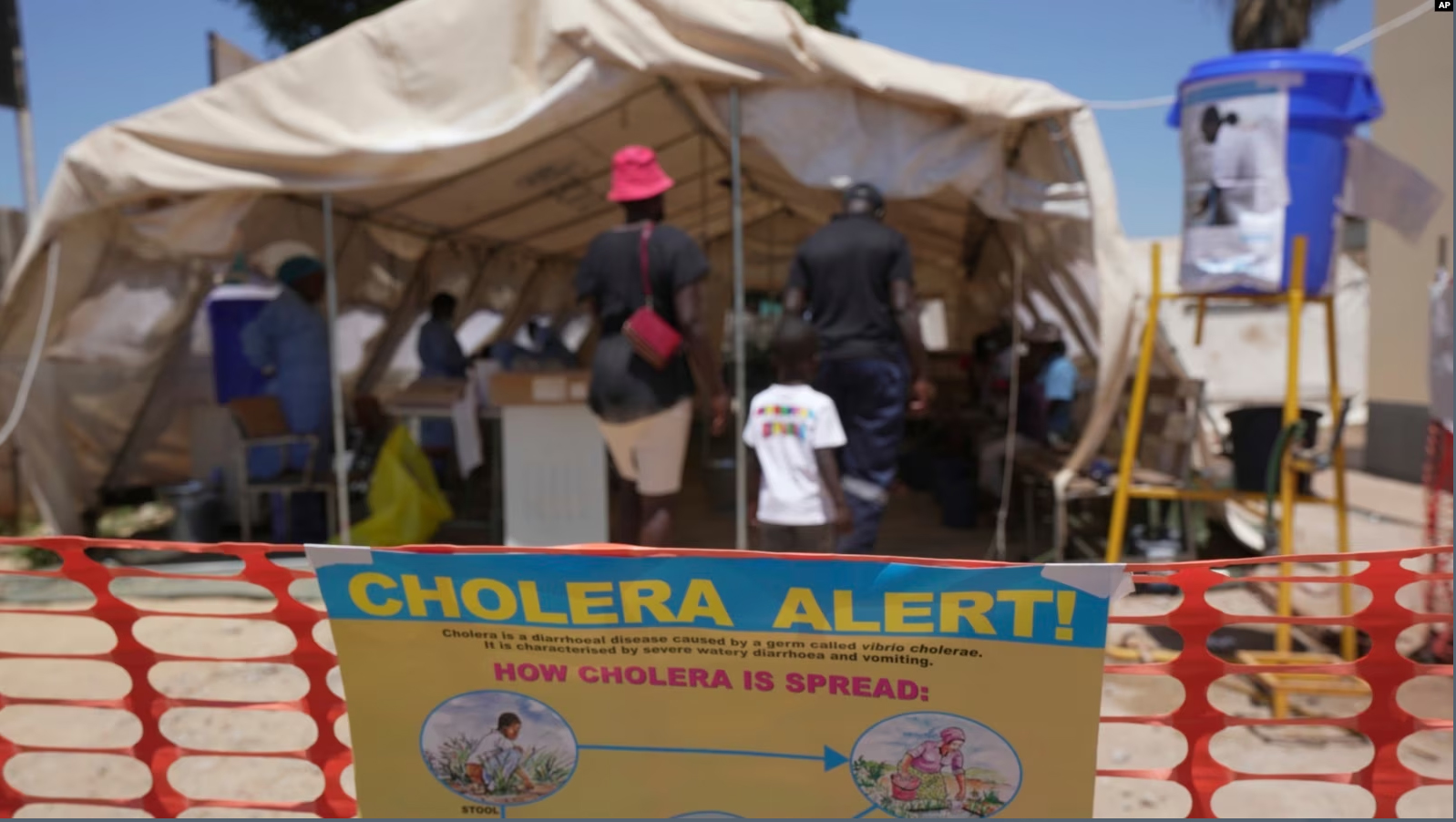
Zimbabwe’s Village Health Workers Persist in Cholera Battle

on February 9, 2024 in Cholera, News

The southern African nation is still battling an outbreak that began a year ago
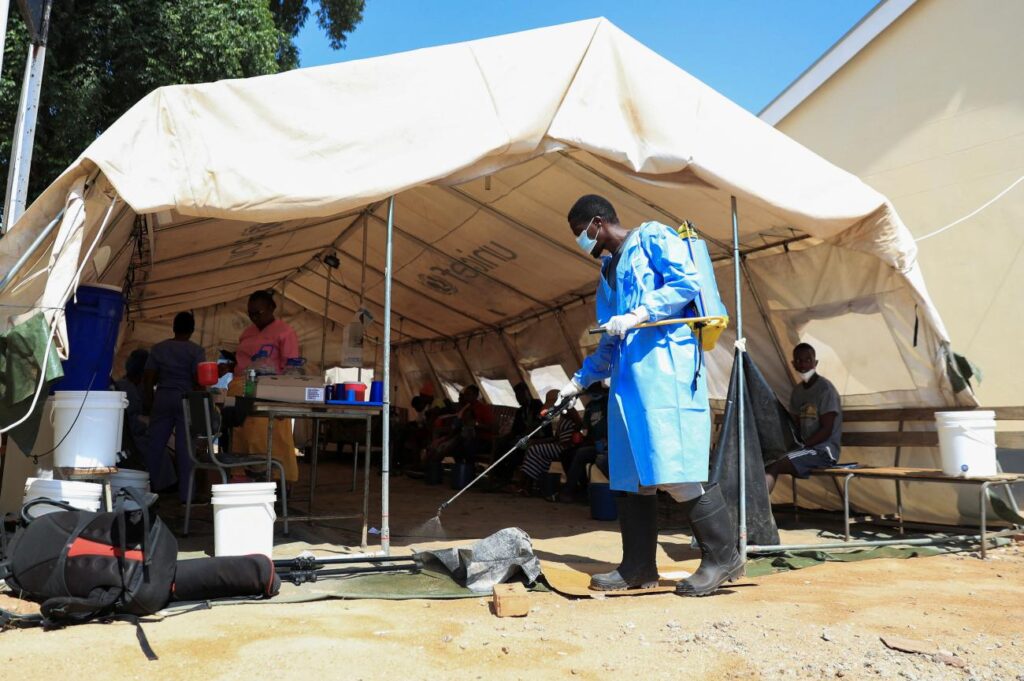
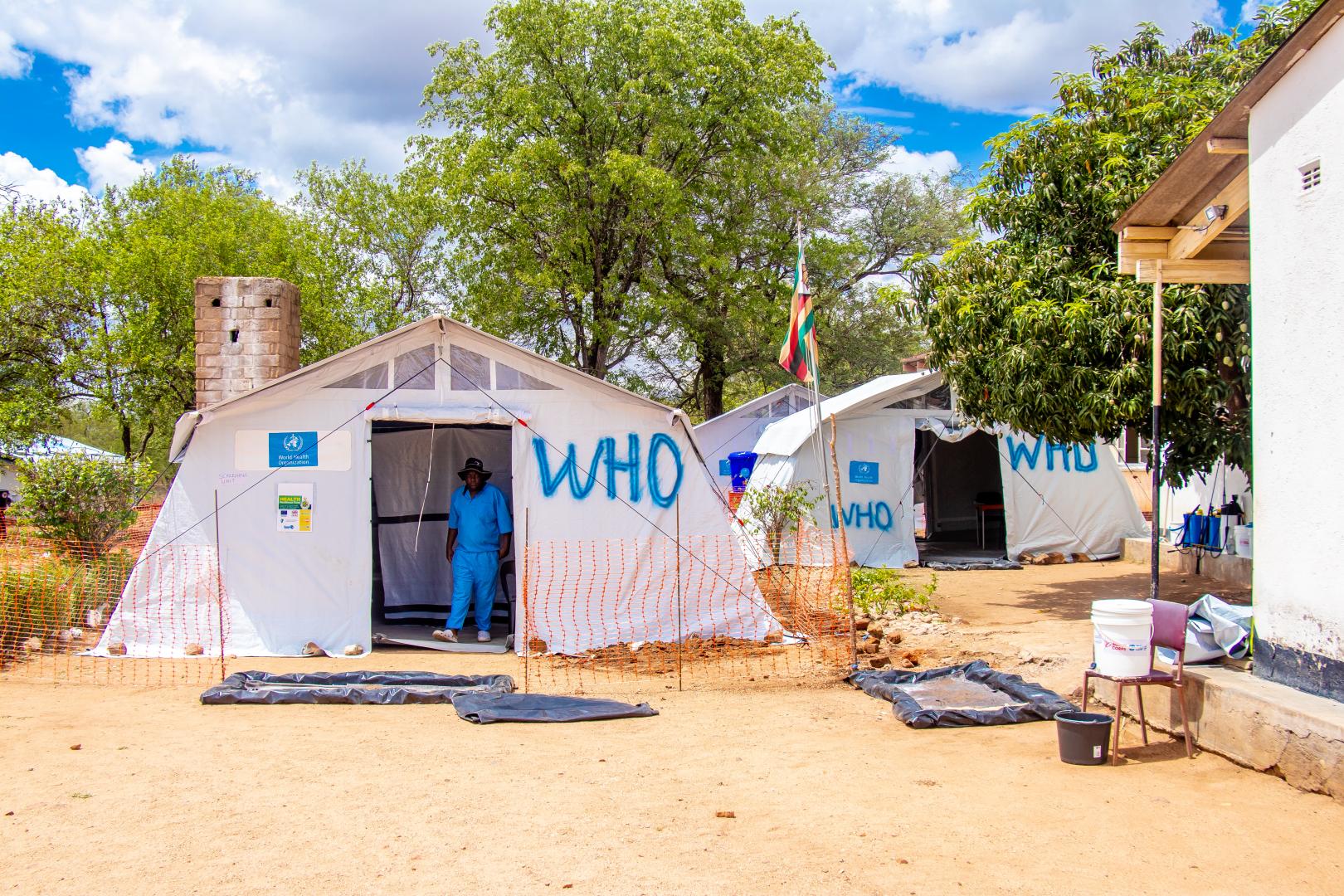
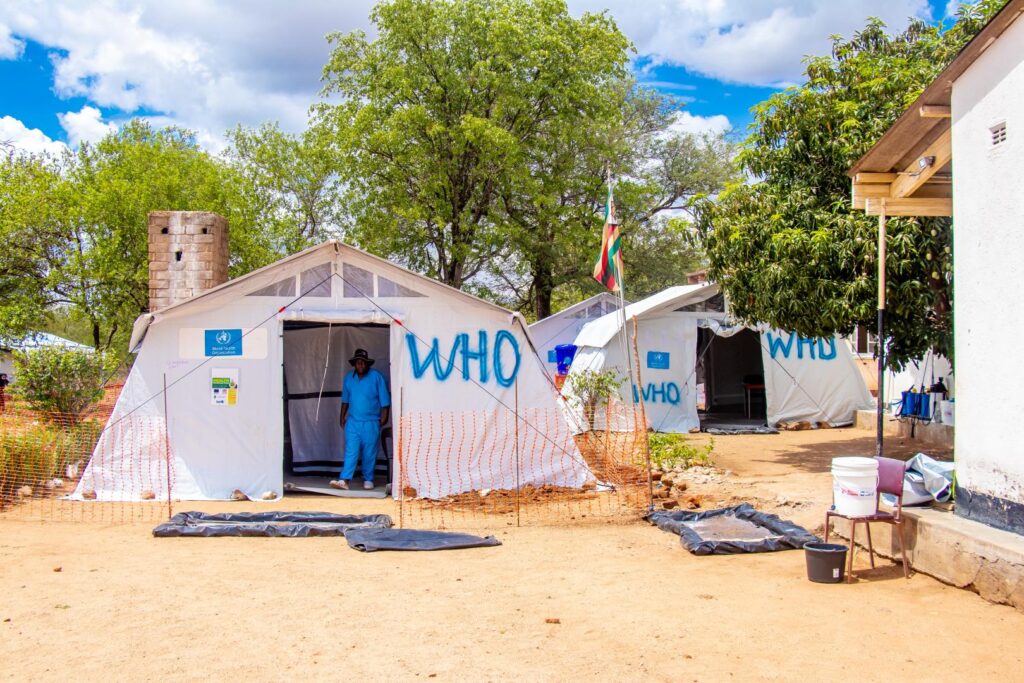
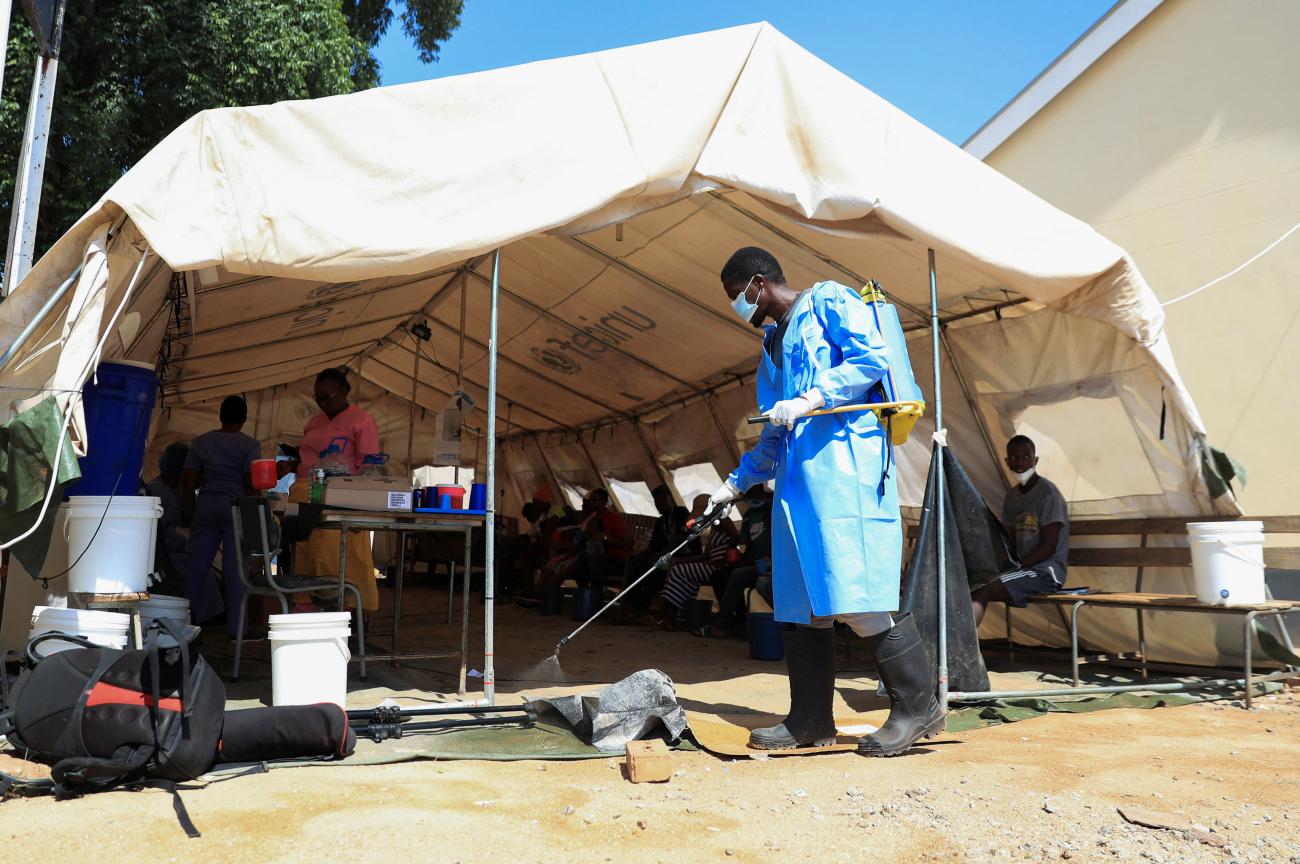
A health worker disinfects a cholera tent at Kuwadzana Polyclinic. in Harare, Zimbabwe, on November 24, 2023. REUTERS/Philimon Bulawayo

Every day patients trickle into the waiting area of an oral rehydration point manned by village health worker Sibongile Mukwananzi in Nyamadzawo village, a part of the Marange region, which lies about 183 miles (294 kilometers) from Zimbabwe’s capital, Harare. 

Here, patients showing cholera symptoms drink a homemade sugar-salt rehydration solution while waiting for transport to the Zvipiripiri clinic, the nearest treatment center for the acute diarrheal illness caused by a Vibrio cholerae bacteria infection of the intestine. 

The southern African nation has been battling a cholera outbreak since February 2023, ​​recording 22,790 suspected infections and 430 suspected deaths as of February 5, 2024, according to the country’s health ministry.

The Marange area and Buhera district, located in Manicaland Province, have been among the epicenters. 

Although the country’s response has involved all stakeholders, village health workers such as Mukwananzi are on the front lines.

Armed with training from professional medical practitioners, village health workers guide communities on how to prevent and contain the spread of the disease.

They are responsible for alerting the authorities when new cases emerge.

These workers have also taken on the roles of becoming trusted messengers to combat the area’s religion-fueled hesitancy toward medicine.  

Forty-two-year-old Mukwananzi had her first encounter with a cholera patient about two months into the outbreak.

Despite being a village health worker since 2020, she had no idea that the illness was cholera.  

“I attended to a patient who was vomiting and ferried him to the clinic where nurses told me the patient was infected by cholera,” Mukwananzi tells Think Global Health, seated on a rainy afternoon inside a retail store turned into an oral rehydration point.

“A few weeks later, people gathered for a funeral triggering multiple cholera suspected deaths.” 

The waterborne disease is caused by ingesting contaminated food or water.

Health workers say that it spreads easily in areas such as Marange and Buhera because of lack of access to clean water and resulting poor hygiene.   

Nyamadzawo village and its surrounding areas are home to people of the Apostolic sect, whose religious beliefs advocate against seeking health care.

Many people in this community are polygamous, one man having sired more than 100 children with 16 wives.  

“The majority of these people do not believe in science but rather that a sick person can be healed by prayers,” says Mukwananzi who is a mother of four and comes from the village.

“Of which that is not true.” 

Mildred Makore, a country director at the humanitarian organization Mercy Corps Zimbabwe, says that village health workers sensitise the community by promoting hygiene at funeral gatherings and by conducting active surveillance. 

“Activities at funerals include ensuring the provision of hand washing stations at strategic points and food safety during preparation. Above all, giving health education to the mourners, emphasizing avoiding hand shaking and rituals such as cleaning of the corpse,” says Makore, whose organisation is supporting efforts of village health workers in Marange. 
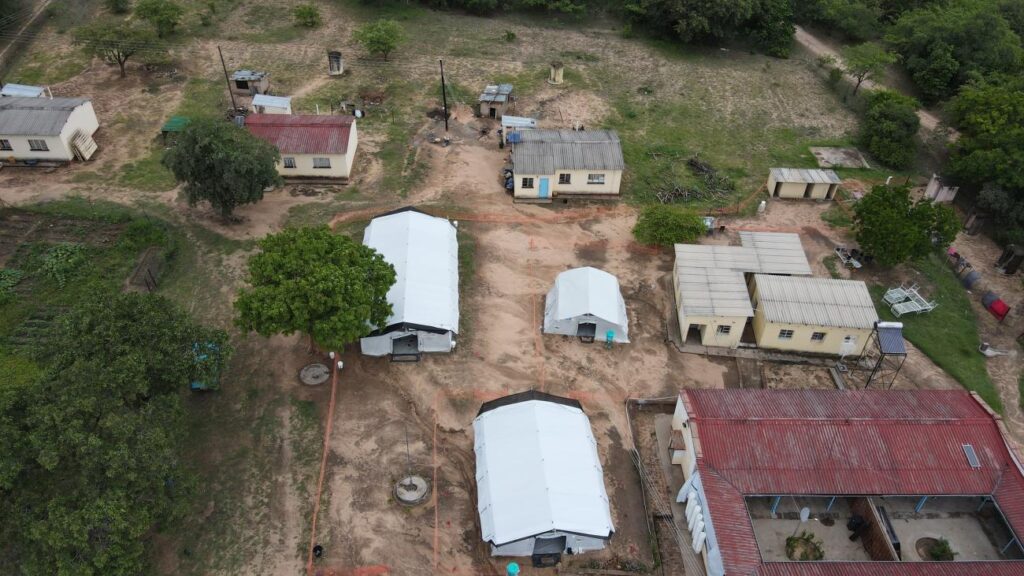
An aerial view of a cholera treatment center at Zvipiripiri clinic, in Marange, Zimbabwe, on January 19, 2024. Farai Shawn Matiashe

Bridging the Information Gap 

This is not the first time that Zimbabwe has been hit by a deadly cholera outbreak.​

From 2008 to 2009, more than 4,000 people died from cholera and nearly 100,000 people were infected across the country, according to the ​World Health Organization

Makore says that early response in affected areas to reduce the spread is one thing being done differently from the 2008 outbreak.

“Risk communication and community engagement are one of the strategies used in the response involving the participation of community members, village health workers, and religious and traditional leaders,” she says. 

“Awareness raising now uses technology like social media, radios, and television to disseminate information on the disease. Most of the rural areas now have community radios that disseminate information in local languages.”

Mukwananzi, who receives cholera updates and other critical information from nurses on a WhatsApp group, says that she will keep sensitising the community despite the risk of infecting her own family.

She also conducts door-to-door campaigns raising cholera prevention and treatment awareness. 

“I encourage them to visit the clinic for treatment, practice good hygiene, and make use of a WaterGuard to treat water or boil it,” she says.

WaterGuard, made of sodium hypochlorite solution, is used to treat water fetched from wells, rivers, and boreholes, making it safe for drinking in cholera hotspot areas.  

Mukwananzi works daily at the oral rehydration point but is always ready to assist her fellow villagers at night.

She says people are gradually becoming less hesitant and visiting the clinic when infected.

“The majority of cholera patients who agree to be admitted at the clinic survive,” she says. 

Itai Rusike, executive director at Community Working Group on Health, says that village health workers are the glue that connects Zimbabwe’s health-care system to communities.

“They are critical to health promotion, disease prevention, early diagnosis and referral, and helping people to stay on treatment and stay healthy,” he says.
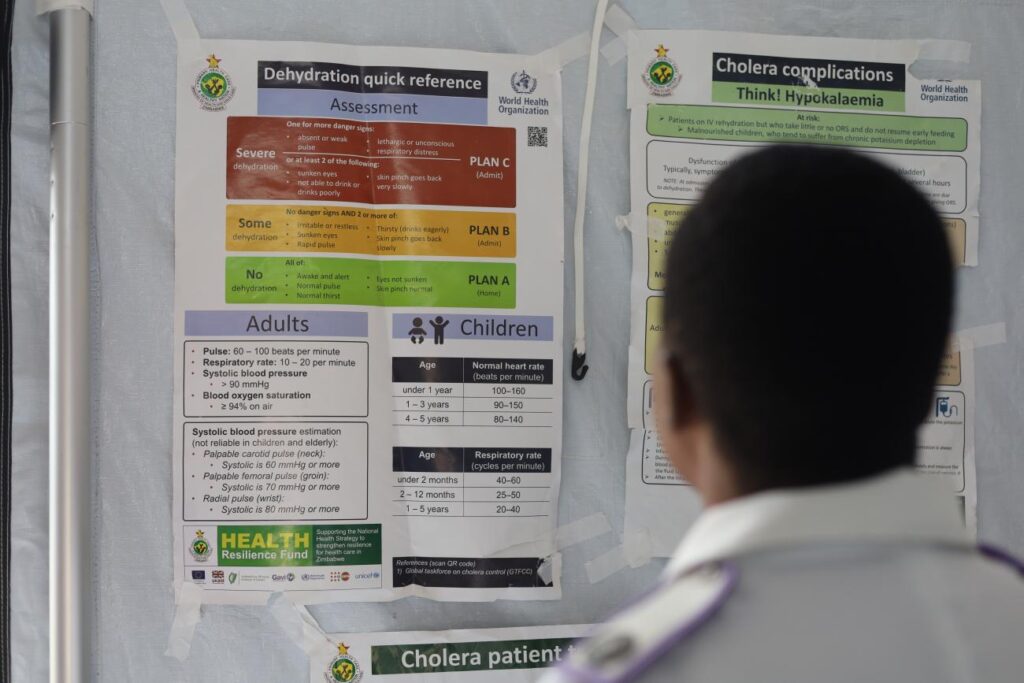
A nurse looking at a protocol management chat in one of the wards at Zvipiripiri clinic, in Marange, Zimbabwe, on January 19, 2024. Farai Shawn Matiashe

Nyasha Pukai, a village health worker, from Taguta village in Marange, says it is heartbreaking to see his neighbors succumbing to preventable and treatable diseases such as cholera.

“There is a family here that lost nearly 30 people in December last year. We have lost so many lives,” says Pukai, who is a member of an apostolic sect who was encouraged by his congregation to become a village health worker to get assistance from someone they trust. 

Both Pukai and Mukwananzi refer patients to the Zvipiripiri clinic for tests, diagnosis, admission, and treatment. At the clinic, patients are given antibiotics and intravenous liquids. They are expected to recover within 72 hours. 

Tajudeen Oyewale, a United Nations Children’s Fund (UNICEF) representative, says his organisation encourages community participation and engagement in cholera prevention and response.  

“This involves working with community leaders and local health workers to spread key messages about cholera prevention,” says Oyewale, whose organisation has provided supplies to 40 cholera treatment centers for the treatment of patients across the country as well as training, allowances, and bicycles for village health workers.  

In late January, the government began rolling out oral cholera vaccines as a temporary measure to affected communities in hotspots, including Manicaland province. 

“Hopefully, our loved ones will not die from cholera in the future,” Mukwananzi says. 
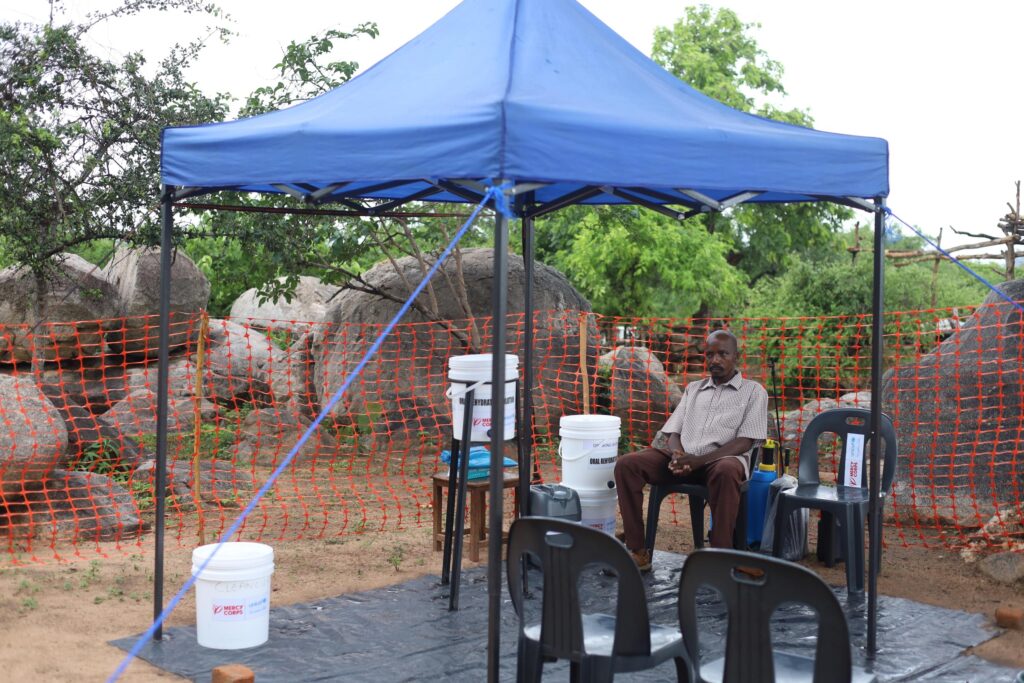
Nyasha Pukai, a village health worker, seated at one of the oral rehydration points in, Marange, Zimbabwe, on January 18, 2024. Farai Shawn Matiashe

SOURCE:: Think Global Health via link https://www.thinkglobalhealth.org/article/zimbabwes-village-health-workers-persist-cholera-battle


Zim launches door-to-door cholera vaccination campaign

on January 30, 2024 in Cholera, News

  • Zimbabwe will receive more than two million vaccine doses from UNICEF and the World Health Organisation.
  • Cholera has killed 452 people in the southern African country as of 24 January.
  • The disease is spread by contaminated food or water and often occurs in crowded areas with poor sanitation facilities.

Zimbabwe on Monday launched a cholera vaccination campaign to immunise more than two million people against the waterborne disease, amid an outbreak that has killed hundreds since early 2023.

Cholera had killed 452 people and infected a total of 20 446 in the southern African country as of 24 January, since the outbreak started in February 2023, according to health ministry statistics.

About half of the cases have involved children.

Zimbabwe will receive a total of 2.3 million vaccine doses from UNICEF and the World Health Organisation to be deployed to 29 of the hardest-hit districts.

More than 892 000 doses have already been dispatched, the health ministry said.

The cholera vaccine roll-out campaign was launched in Kuwadzana, a township about 15km from central Harare.

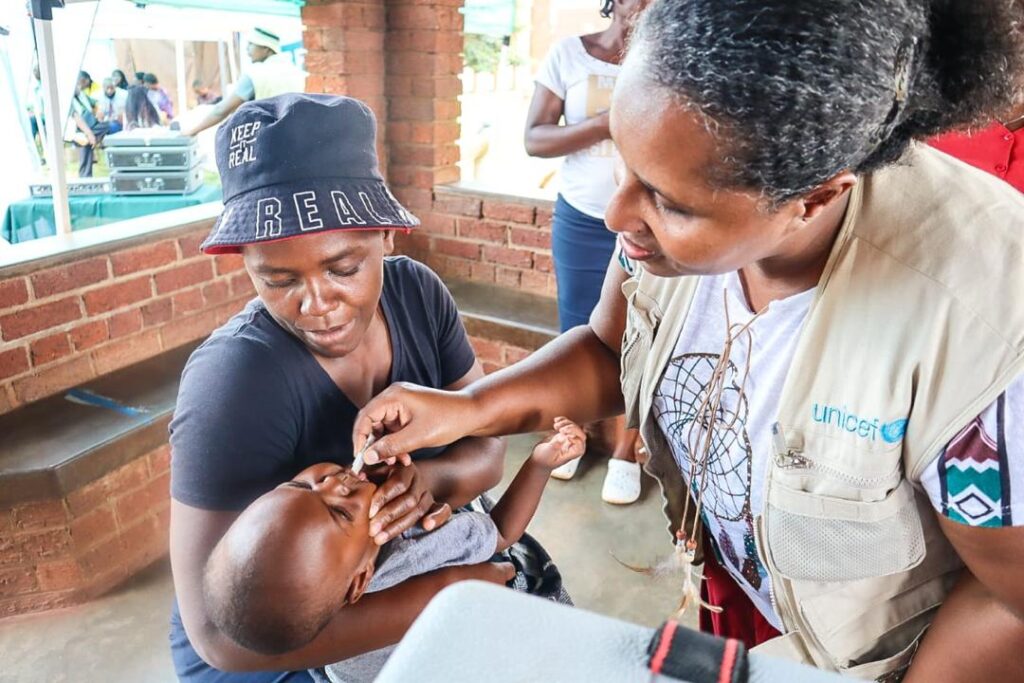
Health workers administered the first vaccines to schoolchildren amid calls for residents to participate.

They have also started going door-to-door offering vaccines to households.

Cholera is spread by contaminated food or water and often occurs in crowded urban areas with poor sanitation facilities.

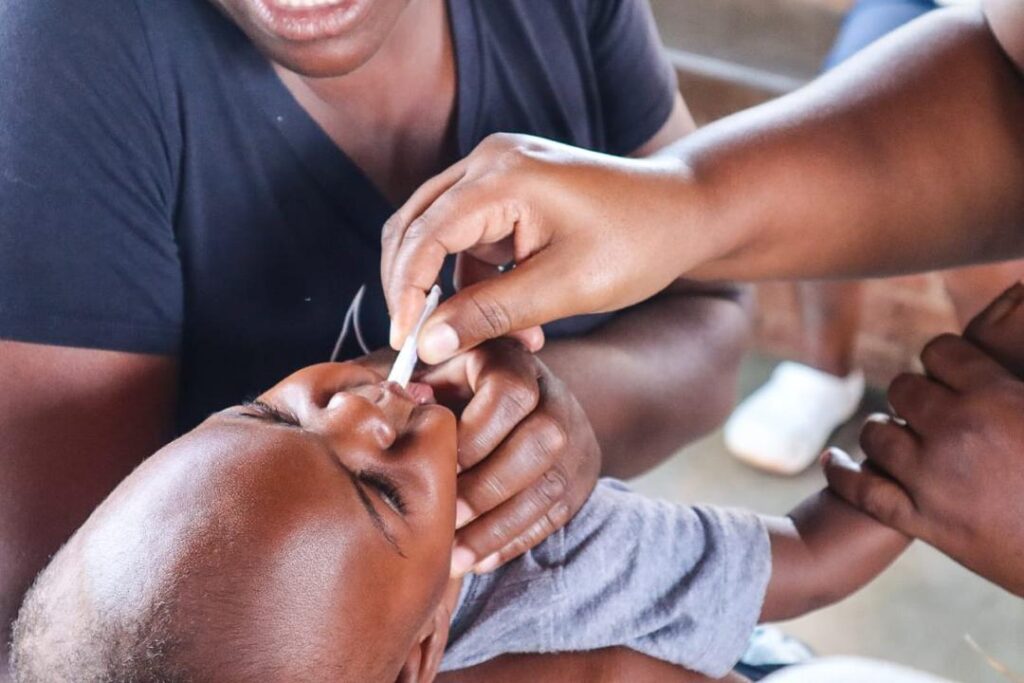
The campaign uses the Euvichol-Plus vaccine, produced by EuBiologics, which is administered orally and protects against cholera infections for at least six months.

In November, the Zimbabwean government moved to restrict public gatherings and food vending and monitor burials in areas affected by cholera after cases spiked.

“The introduction of the cholera vaccine is another tool to prevent the further spread of the disease,” the health ministry said.

SOURCE:: news24 via link https://www.news24.com/news24/africa/news/zimbabwe-launches-door-to-door-cholera-vaccination-campaign-20240129

PRESS RELEASE: Zim launches cholera vaccination to curb the spread

on January 30, 2024 in Cholera, News, Press Statements

Target is to vaccinate 2.3 million people in most affected districts

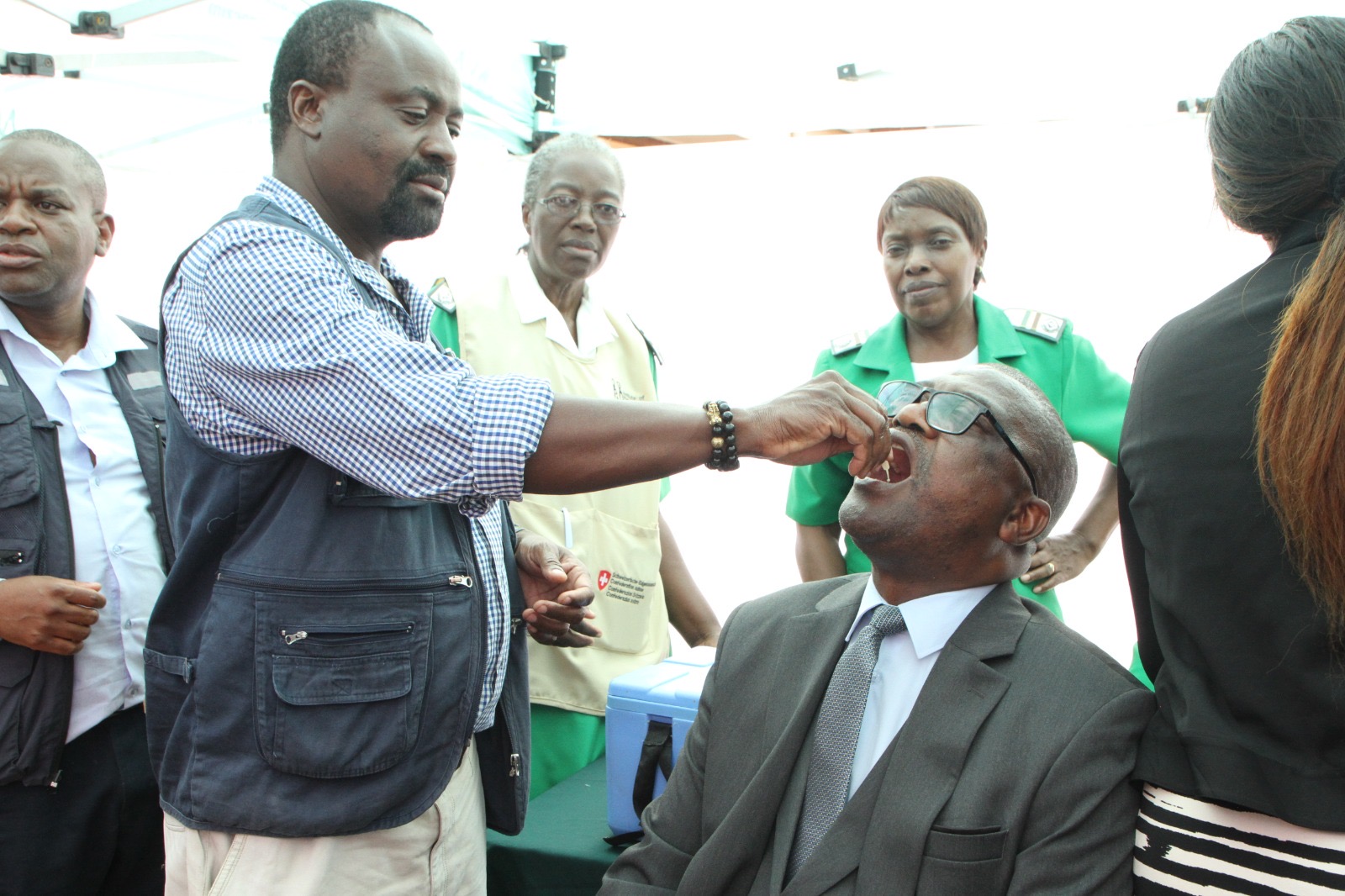
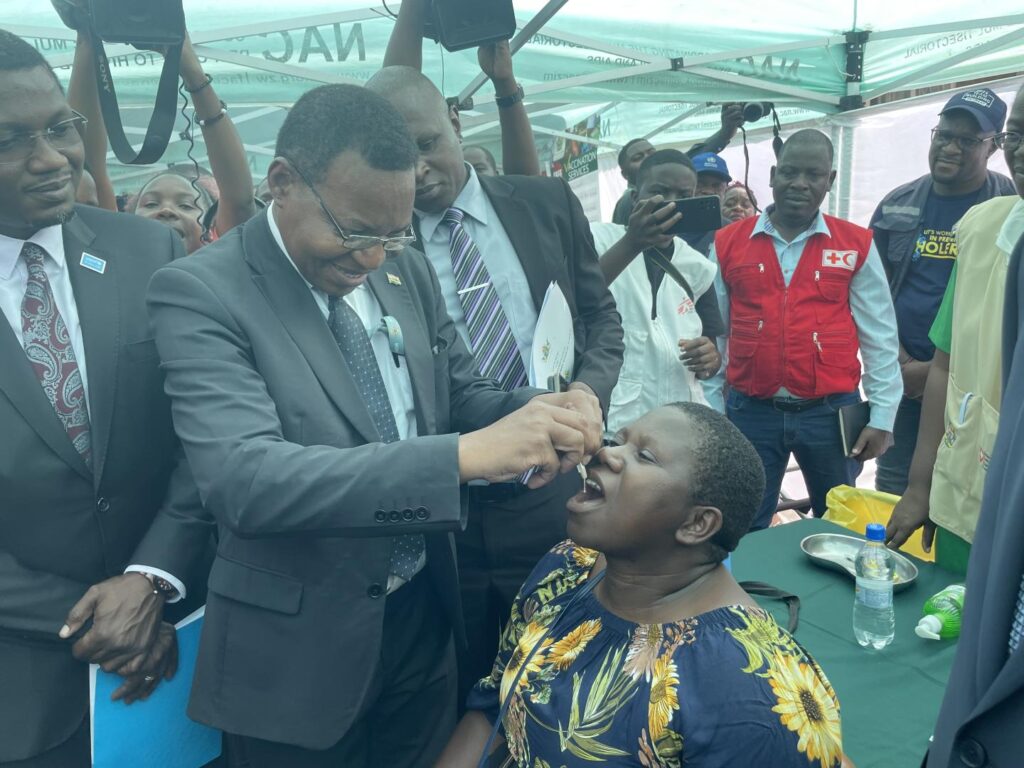
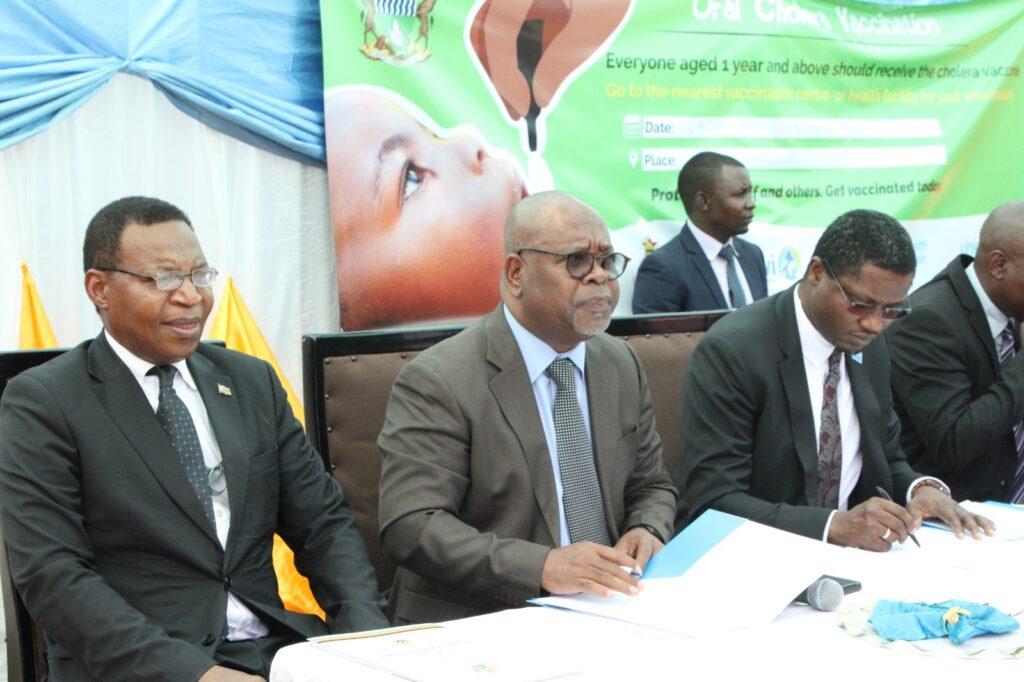
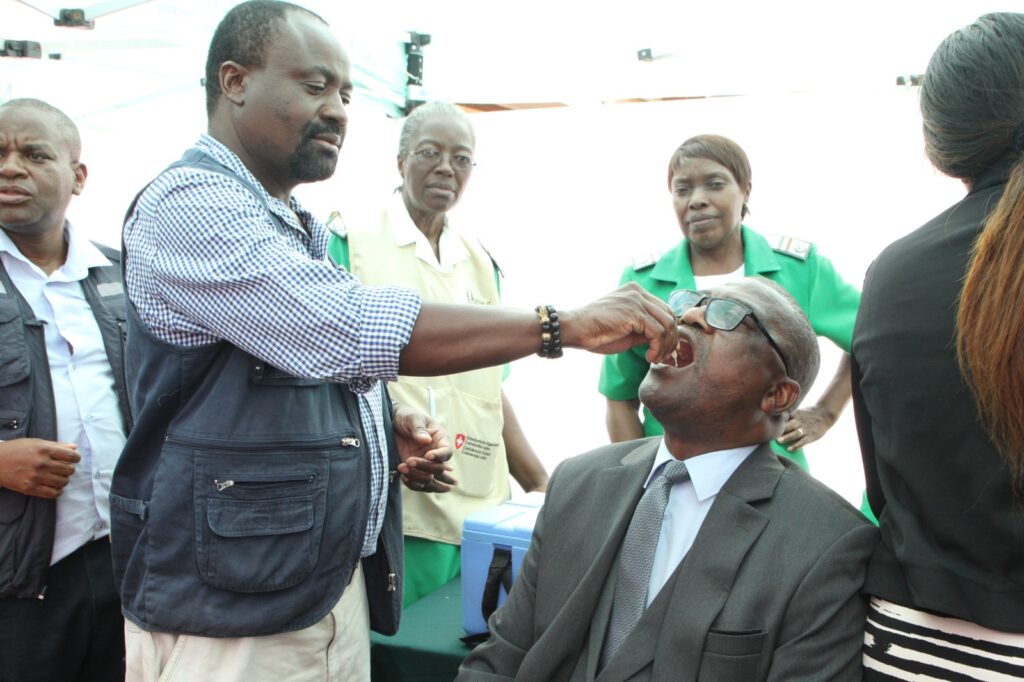
Harare, 29 January 2024 – Today, the Government of Zimbabwe launched a vaccination campaign against cholera, in collaboration with UNICEF and the World Health Organization (WHO). The first cholera vaccines were administrated by the Health and Child Care Honorable Minister Dr Douglas Mombeshora during an event in Kuwadzana, one of the most affected areas of the current cholera outbreak, in the presence of Dr Tajudeen Oyewale, UNICEF Representative, and Professor Jean-Marie Dangou, WHO Country Representative. These vaccines were made possible thanks to the financial support from GAVI, the Vaccine Alliance, whose commitment to global health equity has been instrumental in providing access to life-saving vaccines for Zimbabwe. The cholera vaccines are an additional strategy the Government is rolling out to contain the spread of cholera in Zimbabwe.

Zimbabwe has recorded more than 20,000 suspected cholera and more than 400 confirmed and suspected deaths, since the first cases were recorded nearly a year ago.

A multisectoral cholera response plan led by the Ministry of Health and Child Care Care in collaboration with other government ministries and supported by UNICEF, WHO and partners and donors, has been rolled out focusing on streamlining response co-ordination at all levels, treatment of infected people and prevention of the spread of the disease through improved access to safe water, sanitation, personal and food hygiene and the dissemination of preventive messages to population most at risk.

The introduction of the cholera vaccine is another tool to prevent the further spread of the disease.

The first three batches of 892,286 cholera vaccines arrived via air freight on January 25 and January 27 at Robert Gabriel Mugabe International Airport, from which they were immediately dispatched to be used in the most affected districts in the country.

More arrivals are planned in the days to come.

The cholera vaccine used in Zimbabwe is the Euvichol-Plus vaccine, produced by EuBiologics. It is an oral vaccine administrated by mouth. One dose of vaccine protects against cholera infections for a period of at least six months.

The cholera vaccination campaign in Zimbabwe is targeting 2.3 million people, aged one year old and above, living in 160 wards within 26 high risk districts in 7 provinces: Harare, Mashonaland West, Mashonaland East, Mashonaland Central, Manicaland, Masvingo and Midlands.

These districts are considered the main drivers for the outbreak.

The main operational strategy used in this campaign is house-to-house to minimize gatherings and further spread of the disease.

This is complemented by fixed vaccination points in all health facilities within the catchment area.

Each vaccination team is composed of three people, expected to vaccinate an average of 150 persons per day.

Ahead of the start of the vaccination, a comprehensive social mobilisation campaign was rolled-out to sensitize the population and generate demand for the vaccine. 

While the cholera vaccine provides additional protection against infections, it is important to highlight that it does not replace the other cholera prevention measures, like for instance regular hand washing under running safe water, drinking treated or boiled water, safe disposal of solid, liquid, and human waste, and observing food hygiene standards.

SOURCE:: WHO via ling https://www.afro.who.int/countries/zimbabwe/news/press-release-zimbabwe-launches-cholera-vaccination-curb-spread

Ramping up response to curb Zim cholera outbreak

on January 29, 2024 in Cholera, News

FORTY-SIX-YEAR-OLD Goodluck Moyo* from Chitungwiza, a town just outside the country’s capital, Harare, started feeling unwell after his day shift at work.

“I suspect it was the water I drank while at work,” he says.

“I got worse rapidly. I was rushed to the 24-hour clinic in my area, where I was put on a drip.”

He was later referred to the cholera treatment centre at Chitungwiza General Hospital for further treatment.

Zimbabwe is responding to a cholera outbreak that has seen cases reported in all its 10 provinces.

Harare, Manicaland and Masvingo provinces are the worst affected. In the week ending on 21 January 2024, a total of 1499 new suspected cholera cases were reported from all the  provinces.

This was a 20% decrease from 1875 cases reported in the previous week.

Outbreak control efforts are being stepped up.

Treatment centres have been established in hotspot locations, public awareness campaigns on the risks of the disease are ongoing, while disease surveillance, prevention as well as water, sanitation and hygiene services are being improved to avert further spread of the disease.

“In the fight against cholera, collaboration is key. By working together with governments, communities and other partners, WHO leverages its expertise and resources to support a holistic response that tackles the disease comprehensively, from improving access to clean water and sanitation to promoting hygiene practices and building long-term resilience,” said Professor Jean-Marie Dangou, WHO Representative in to Zimbabwe.

In December 2023, World Health Organization (WHO) delivered a 22-metric ton consignment of cholera kits, which included medical supplies and equipment and personal protective equipment enough to manage 600 severe and 1,400 mild cases.

The consignment has been used to establish and upgrade cholera treatment centres in areas experiencing high numbers of cholera cases, including Chitungwiza cholera treatment centre.

The upgrades include improved sanitation systems, expanded treatment facilities and access to clean water – all critical elements in the fight against cholera.

The investment in infrastructure is a vital step towards building a more resilient healthcare system, better equipped to handle future outbreaks.  

“I am now feeling so much better. I really appreciate the support I have received here,” says Moyo of the upgraded facility.

Two treatment centres have been established in Manicaland and one in Masvingo.

In Harare, two polyclinics have also been set up as part of decentralisation efforts as well as a push to decongest Beatrice Road Infectious Diseases Hospital, which has been the mainstay of the cholera and infectious disease response.

“Ideally cholera cases should be managed at source, but people have been coming to Beatrice Road Hospital. As a result, the hospital is overwhelmed,” says Dr Prosper Chonzi, Harare City Health Services Director. 

“We are happy that there is now this drive to decentralize because cholera patients should be managed in their communities. It is also good for us as a system because decentralization promotes good outcomes as it eliminates competition for time and space at referral hospitals.”

In Zimbabwe, the first case of cholera was reported in February 2023, with over 20 000 people and 370 deaths registered as of 23 January 2024. 

WHO is working closely with the Zimbabwean government to implement comprehensive response strategies.

This includes strengthening surveillance systems, raising public awareness about hygiene practices, strengthening case management and ensuring access to safe water and sanitation for vulnerable communities. 

“We appreciate the intervention by the Ministry of Health and WHO. This intervention is a great is critical especially for our community where most of our church members have not really embraced medical interventions.  With continuous engagements and education, we hope that all affected by cholera will make use of the centres set up in our community,” says Chief Barnabas Mafararikwa of Mafararikwa village in Manicaland province.

To further bolster its response, Zimbabwe is set to receive more than 2.2 million doses of the oral cholera vaccine following the approval by the WHO International Coordinating Group on Vaccine Provision earlier this month.

The first batch of 892,286 doses of the vaccine are expected in the country by 25 January 2024 and the campaign is expected to commence a few days later in 26 districts.

*Named changed to protect identity

SOURCE:: WHO via link https://www.afro.who.int/countries/zimbabwe/news/ramping-response-curb-zimbabwe-cholera-outbreak

Zimbabwe Hopeful UN Cholera Vaccines Will Contain Outbreak

on January 26, 2024 in Cholera, News

ZIMBABWEAN health authorities — battling a cholera outbreak that has infected about 20,000 people and killed more than 370 — say they hope donated vaccines will ease the spread of waterborne disease now affecting 60 of the country’s 64 districts.

Zimbabwean Health Minister Douglas Mombeshora told reporters in Harare on Wednesday that the country had recorded 20,121 suspected cholera cases and 376 deaths — six of them since Tuesday.

He said the World Health Organization and the United Nations Children’s Fund had secured 2.3 million cholera vaccine doses for the country, with nearly 900,000 of them to be administered next week.

“The vaccination campaign is expected to start from the 29th of January in [a] phased approach to the hot spots,” he said.

“This is because the doses are not enough to cover the whole country. And then roll on to the other affected districts as we receive more vaccines. The challenge is that there is a shortage of vaccine in the world because cholera is not in Zimbabwe alone. So, all other countries that have reported cholera are also getting the same vaccine from the same source. So, it’s now controlled by the WHO. Otherwise only the rich countries will wipe out the vaccines before others get them.”

Mombeshora said 37 African countries had confirmed cases of cholera. The WHO’s Africa office did not confirm the number Wednesday.

Garbage in most urban areas in Zimbabwe, such as Harare, goes uncollected for days, weeks or even months, creating a fertile breeding ground for cholera

In a statement to VOA, Dr. Paul Ngwakum, regional health adviser for UNICEF in eastern and southern Africa, said the cholera outbreak “remains a serious public health concern and continues to impact children’s lives in the region. An unprecedented surge in cholera cases is being recorded in the region due to many factors, including extreme climatic events such as droughts, cyclones and flooding … With porous borders and high population movements, cholera is spreading fast.”

Mombeshora is urging Zimbabweans to accept the cholera vaccine.

“This is not a new vaccine and it has been used all over the world,” he said.

“The only reason why we do not have it enough is because it is only manufactured on demand. Therefore, it’s the same vaccine and it’s very, very safe. We did not receive an adverse report in our past use of it. I have had a cholera vaccine before, years ago, nothing to worry about.”

Dr. Prosper Chonzi, Harare’s director of health services, says now that there is vaccine, people must not ease up on hygienic practices.

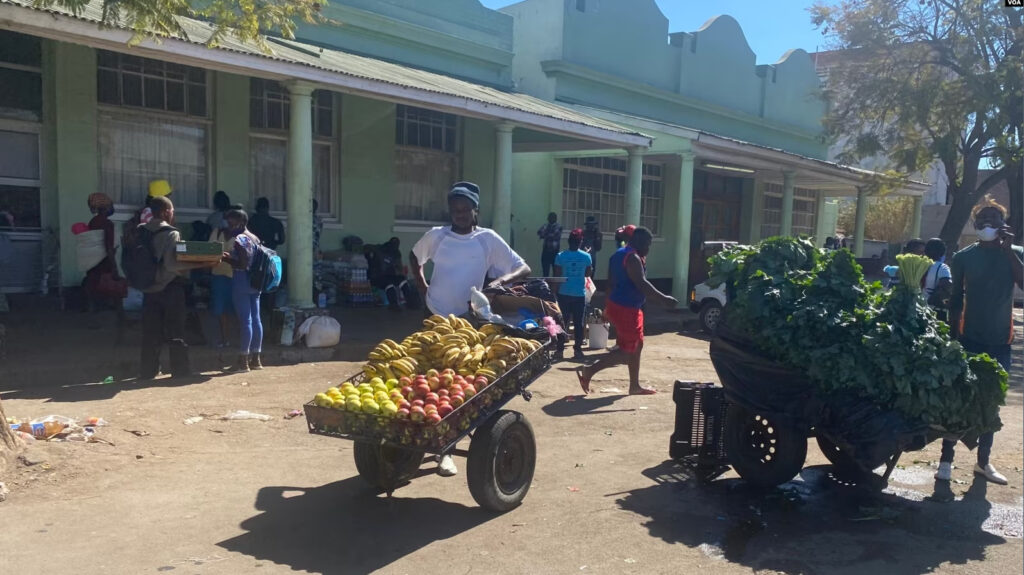
Chonzi said he was not happy that Harare is still full of vendors selling uninspected fruits and vegetables.

Vendors have remained on the streets of Harare, selling uninspected vegetables and fruits which public health authorities say is hindering efforts to contain Zimbabwe’s cholera outbreak

“I think the general economy is playing against us,” he said.

“We have been doing these hide-and-seek games, chase after vendors, it has not been working. At least if we clean up for now, then we come up with medium- to long-term plans to maintain the clean environment that is there. As the director of health, I am not happy with the vending situation in the city. It is playing against what we want to achieve as we try to contain the outbreak. If you buy food from uninspected premises, the chances of you contracting not only cholera, but typhoid, dysentery and other diarrhea, are very high.”

Zimbabwe’s moribund economy is forcing citizens to venture into vending as a source of income as jobs are hard to come by, with some estimates putting unemployment at about 85%.

Experts say that is making the fight against a cholera outbreak difficult with the country recording 1,000 new cases every week since the beginning of the year, according to the United Nations.

SOURCE:: VOA via link https://www.voanews.com/a/zimbabwe-hopeful-un-cholera-vaccines-will-contain-outbreak/7455663.html