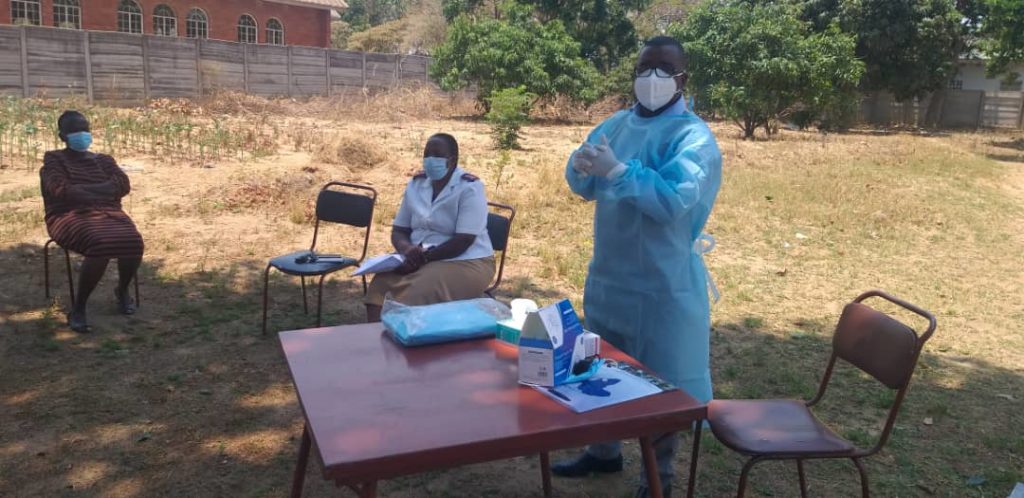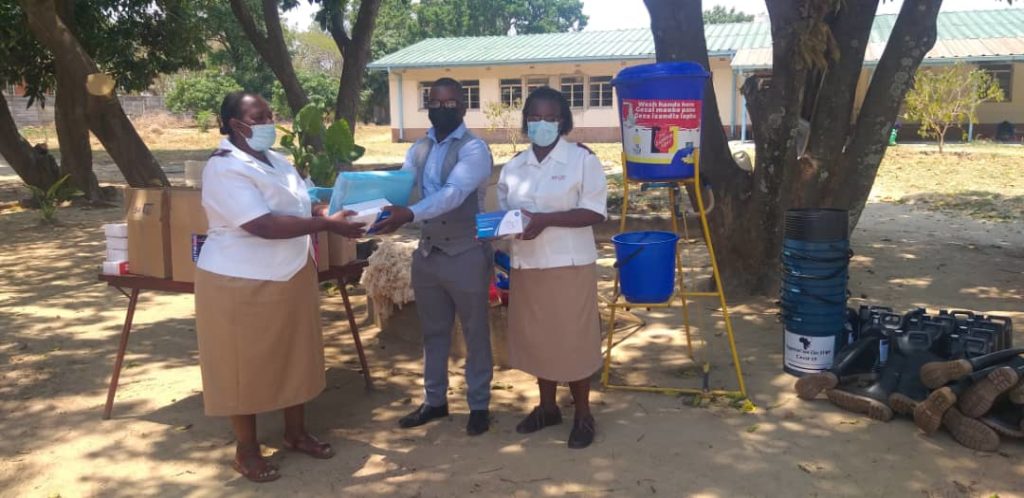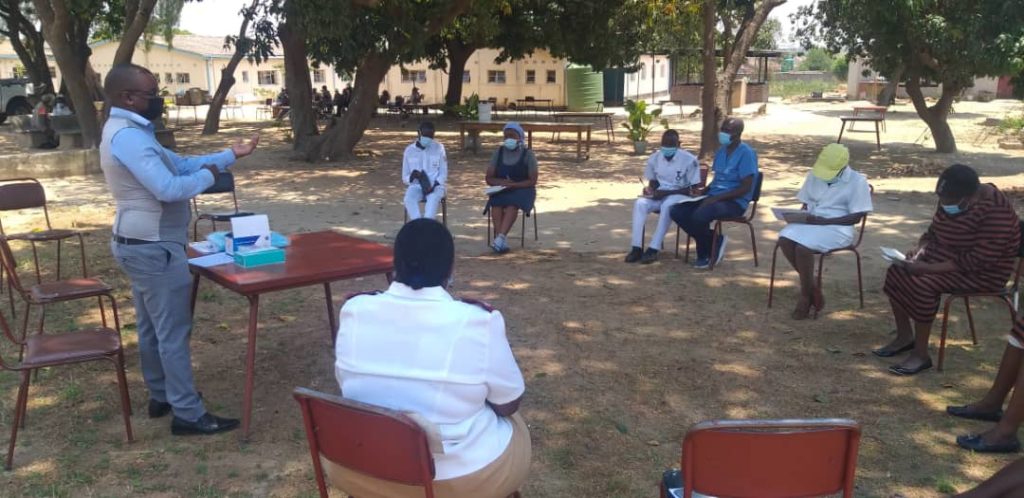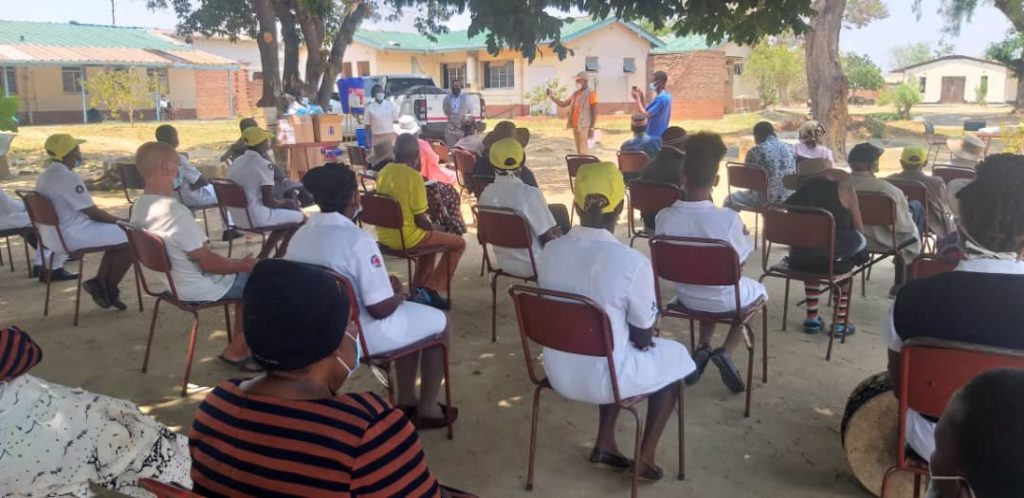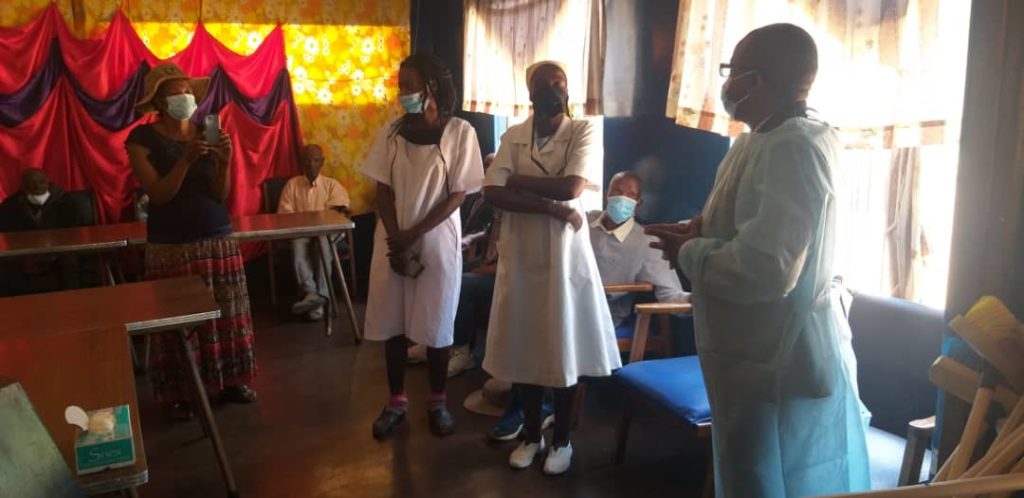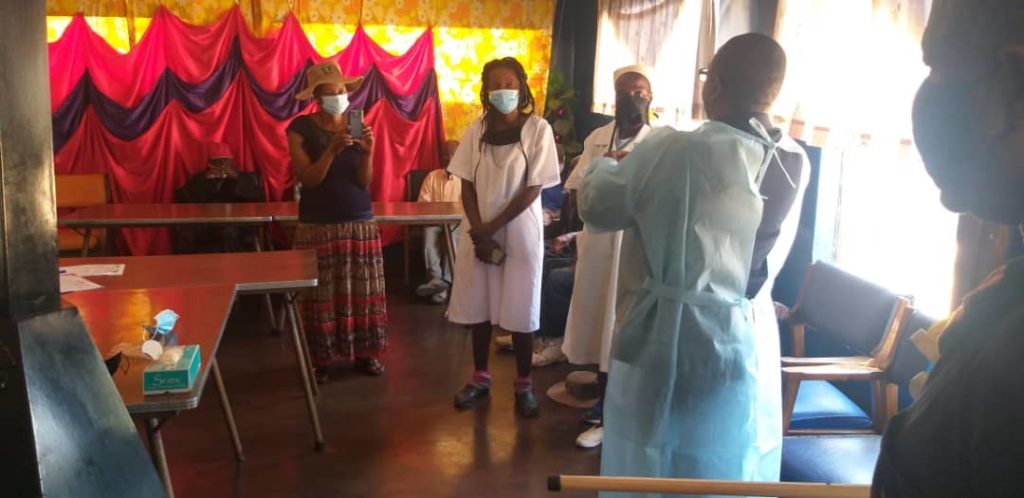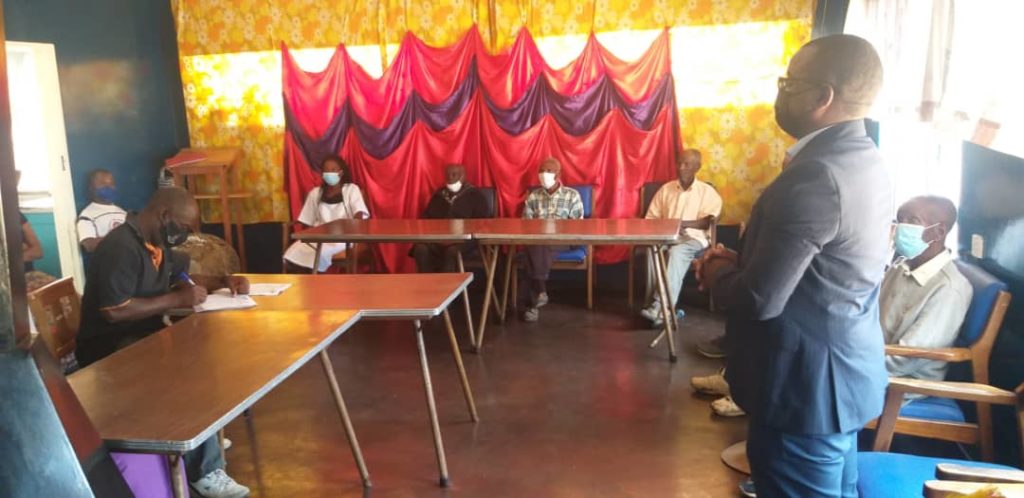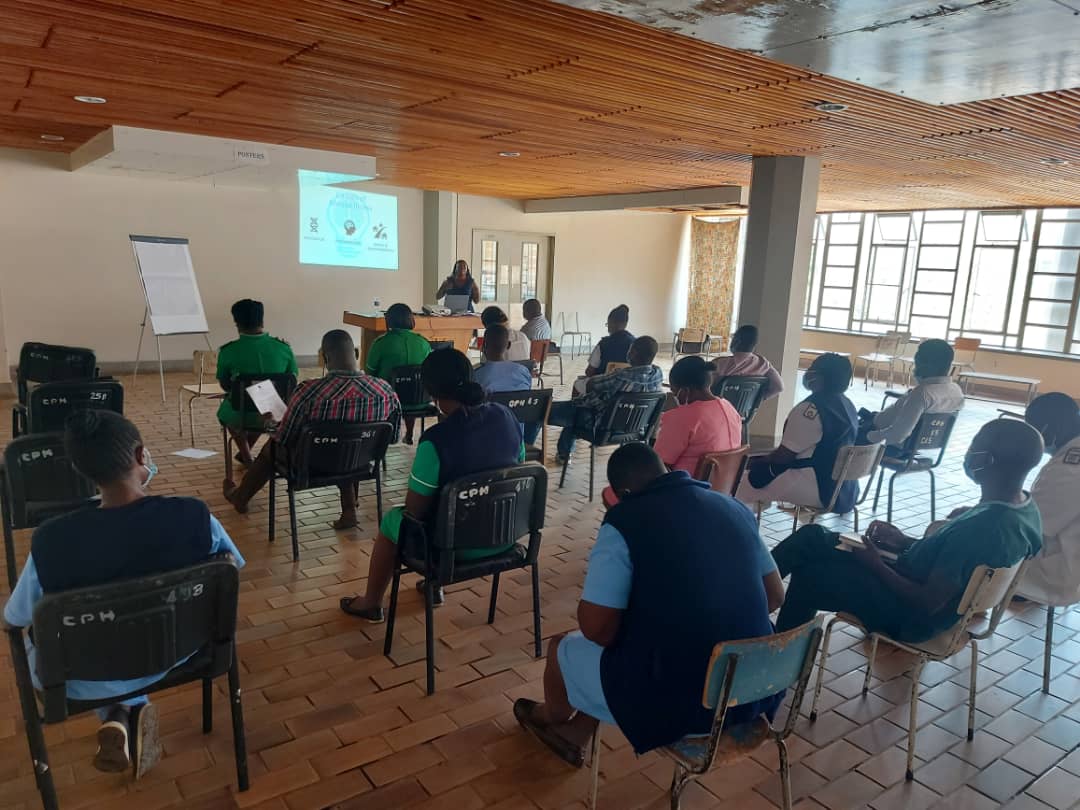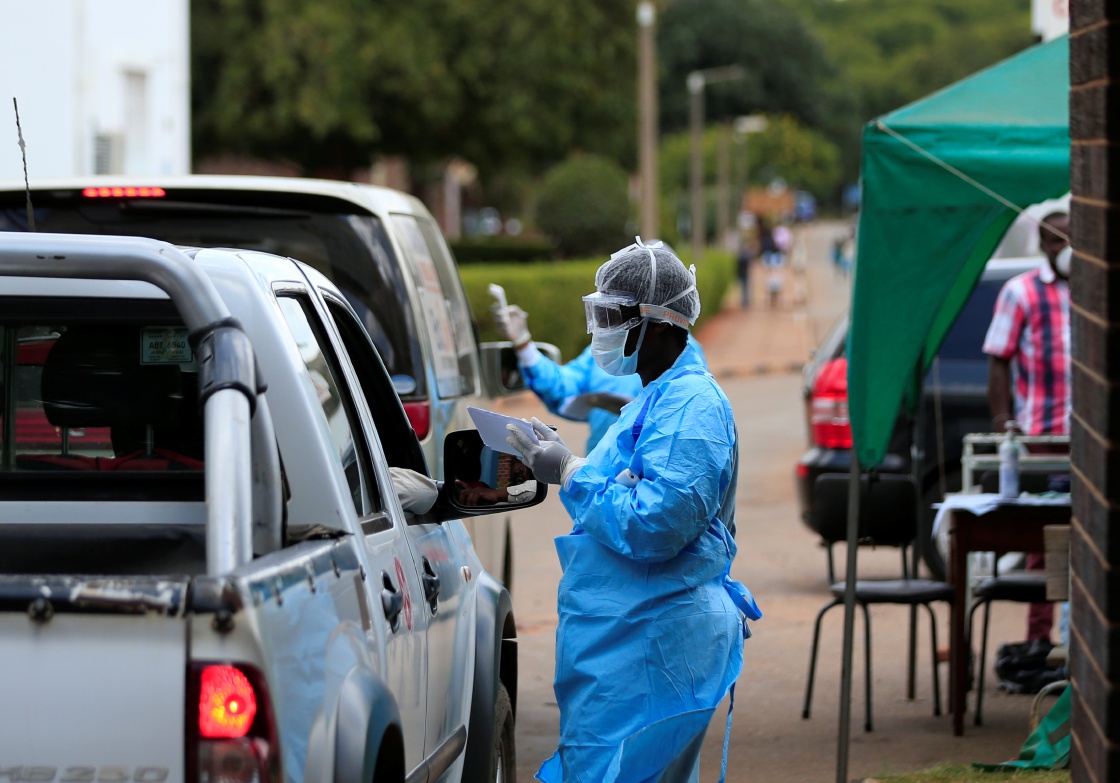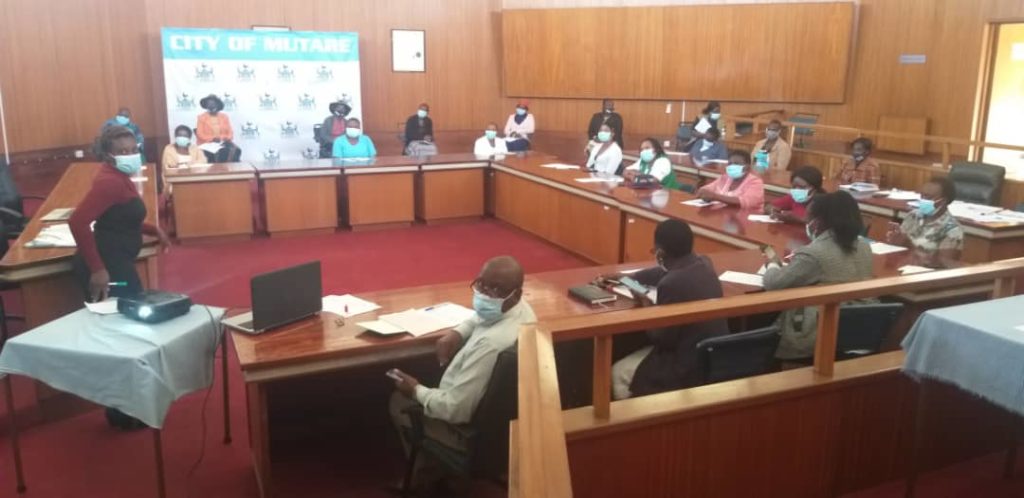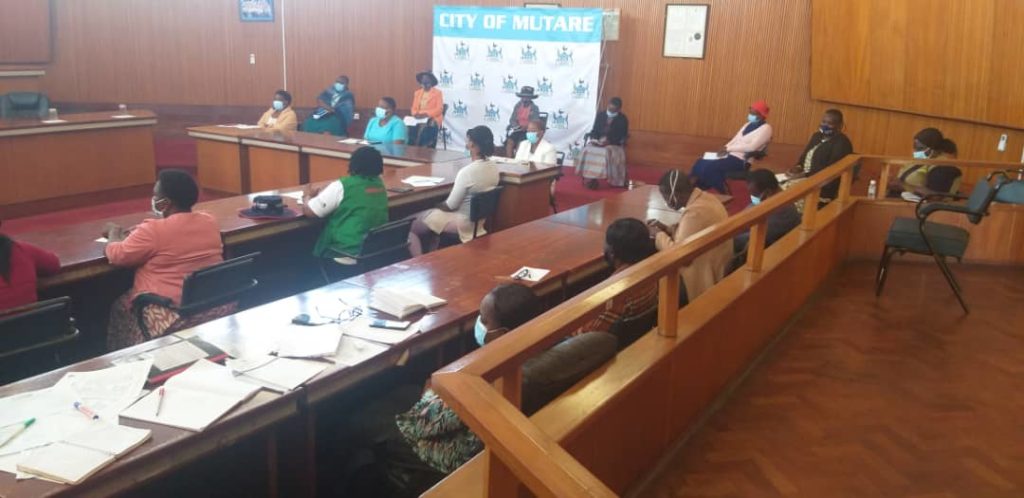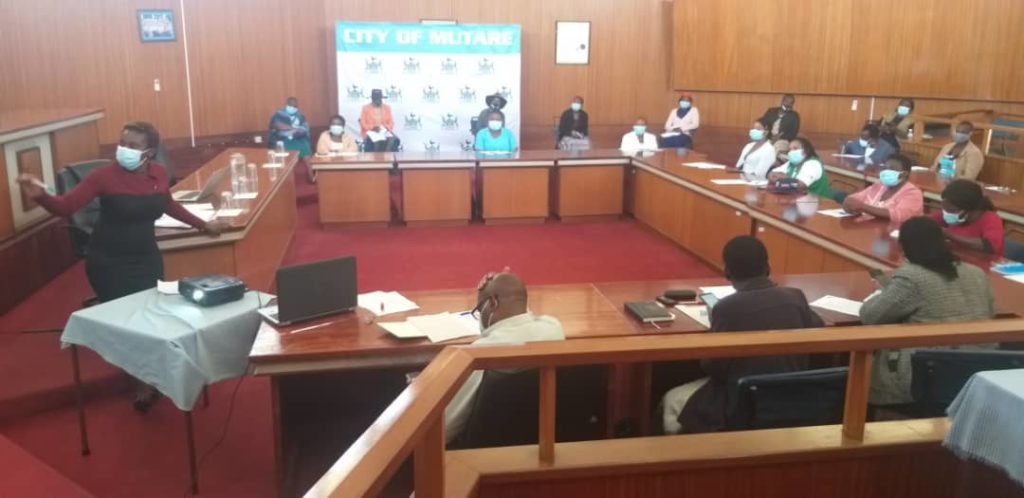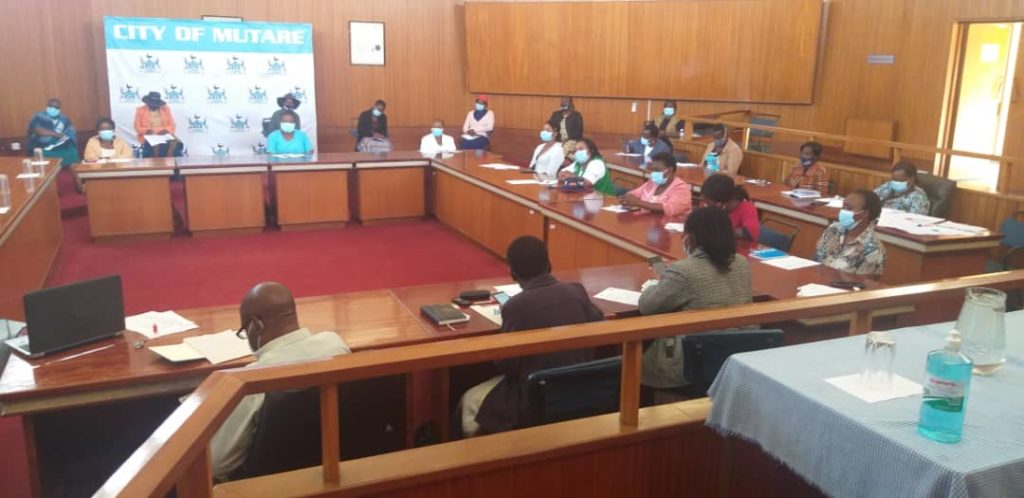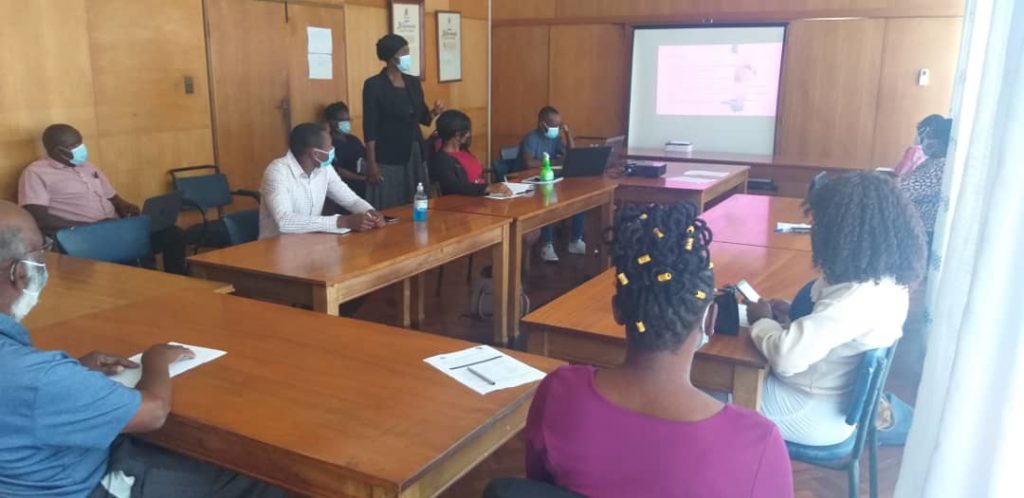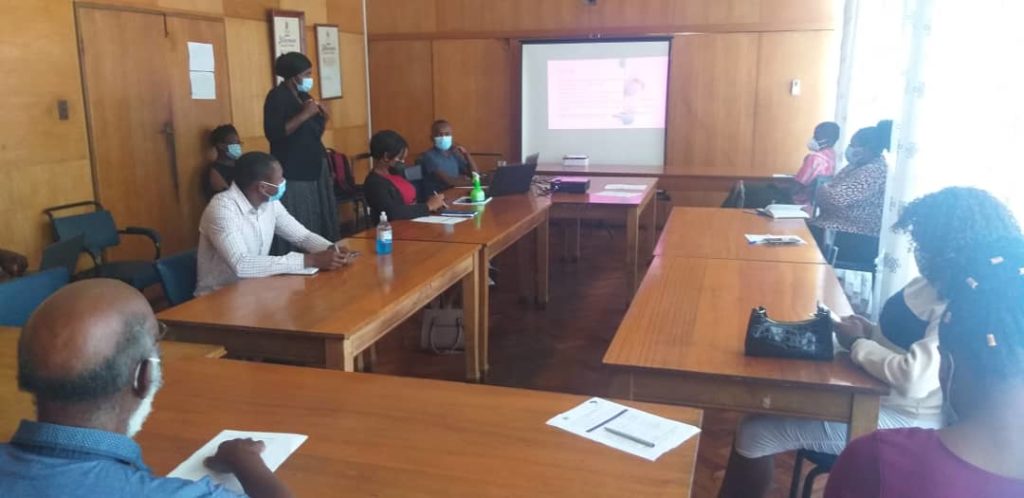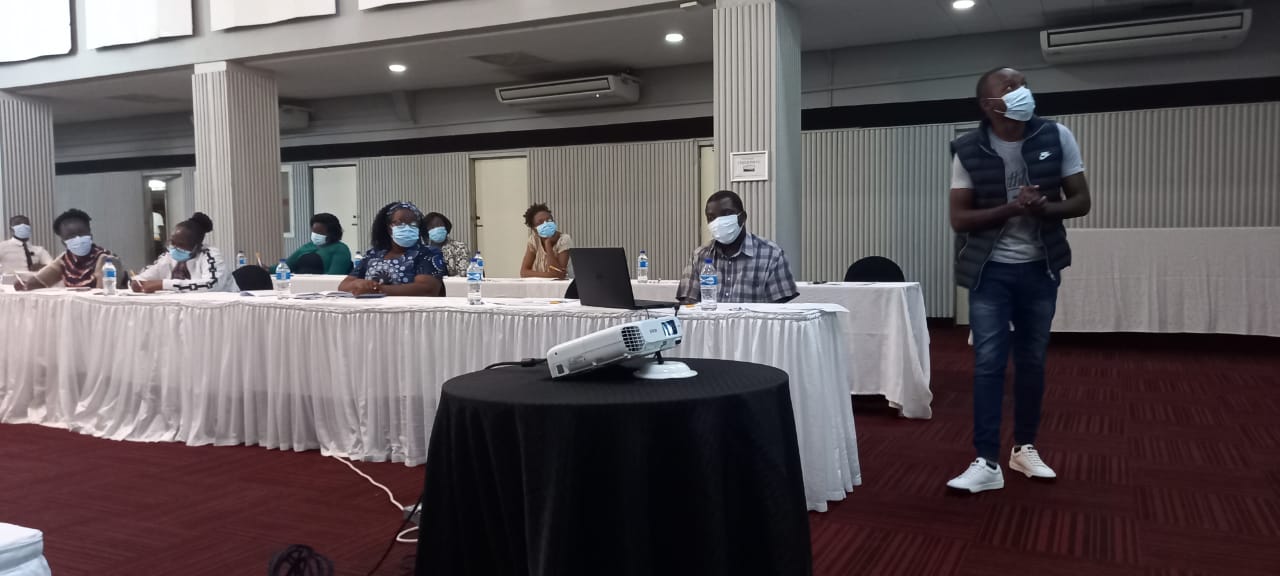
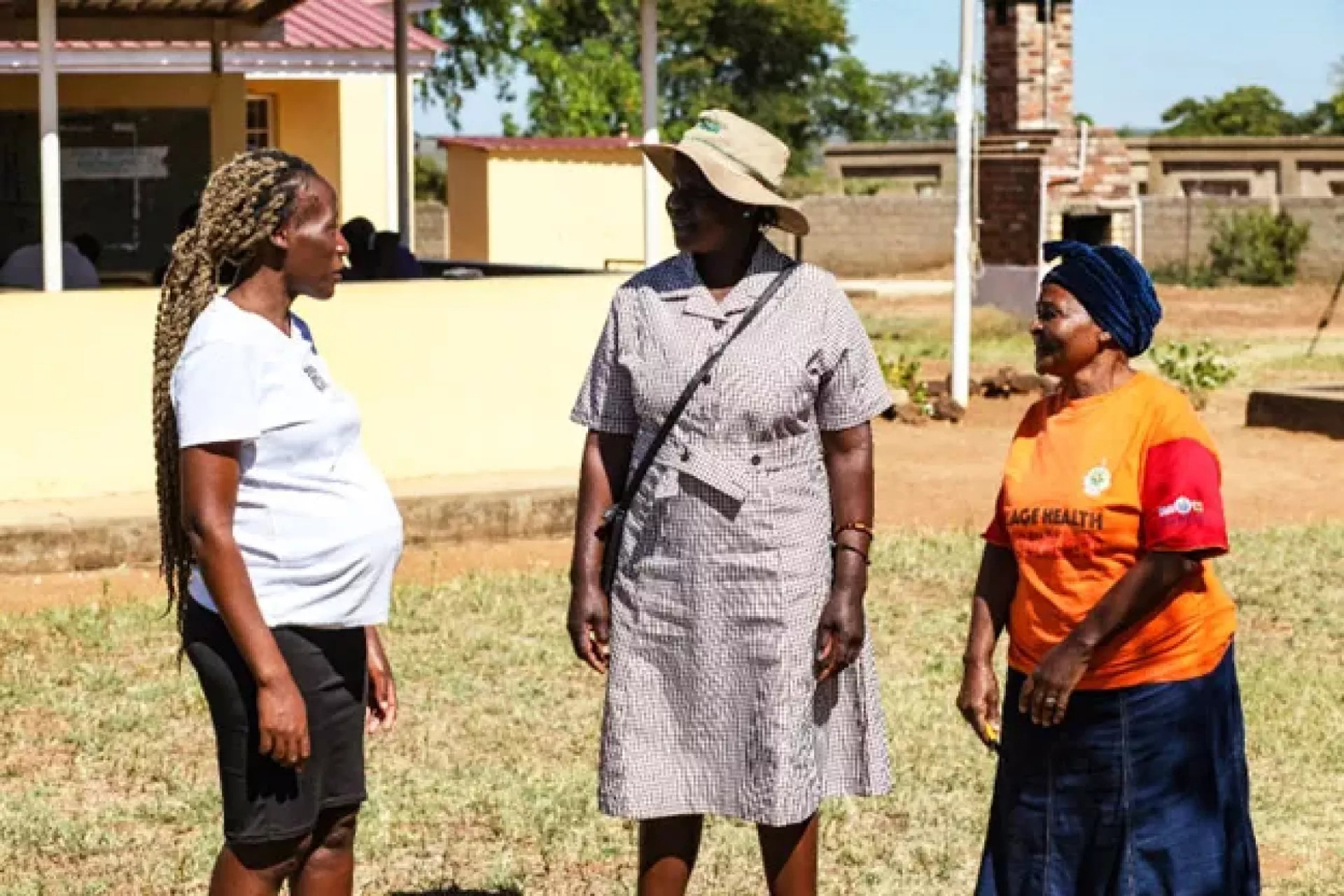
Village Health Workers engage community influencers to drive demand for health services

on July 17, 2024 in Health and Wellbeing, News, Uncategorized

‘It’s a turnaround.’ A rural hospital credits village health workers and community influencers for transformation in uptake of services
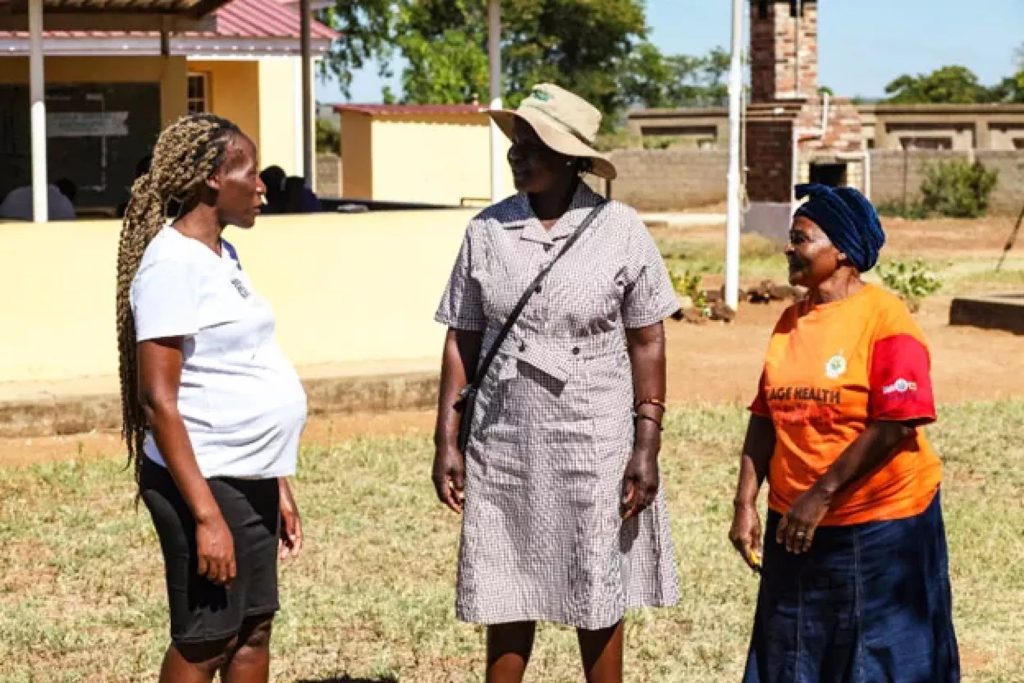
Umguza, Zimbabwe – In a tiny office at Mbembesi rural health facility in Matabeleland North’s Umguza district, Thembinkosi Sibanda, a midwife, took stock of the numbers in the facility’s birth register. A contented smile followed.

Seven deliveries from the hospital’s maternity wing for the month. Only a single home delivery.

These are numbers she would hardly have imagined two years ago.

“We would usually record one or two deliveries here but most pregnant women would deliver in unsafe conditions at home,” said Sibanda, whose facility, surrounded by hard-to-reach rural and resettlement areas, now records between eight and ten births a month.

“It’s a turnaround,” she marveled, and, as if speaking to herself, added, “Job well done.” 

Yet, Sibanda refused to take responsibility for the change.

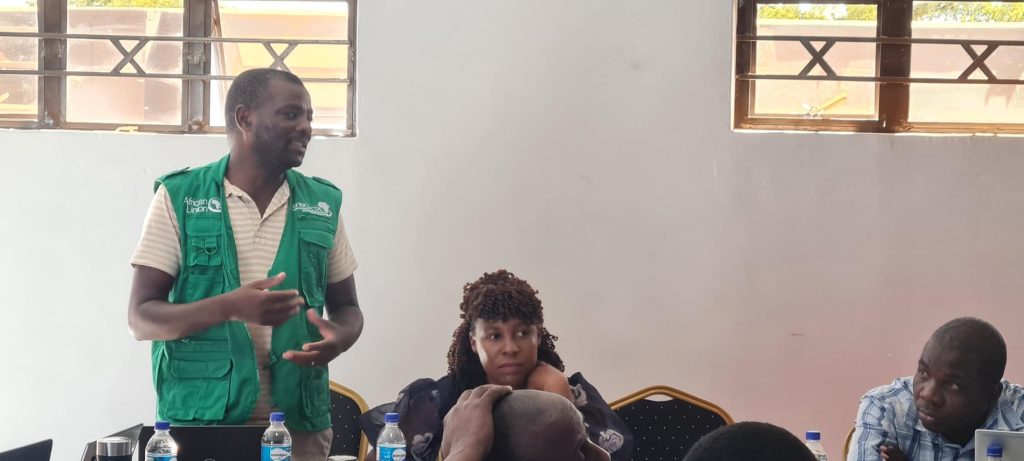
“They are the real heroes, the credit goes to them,” she said, pointing to a group of village health workers (VHWs), local traditional and religious leaders and young people sitting in a shed for an advocacy meeting.

VHWs have forged a transformative partnership with community influencers to increase demand for, and access to primary healthcare services as well as engender improved water, sanitation and hygiene practices.

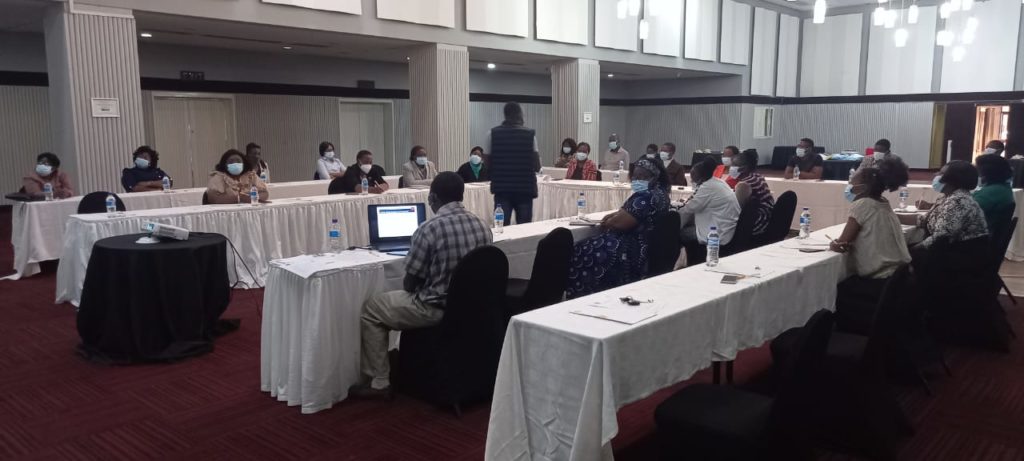
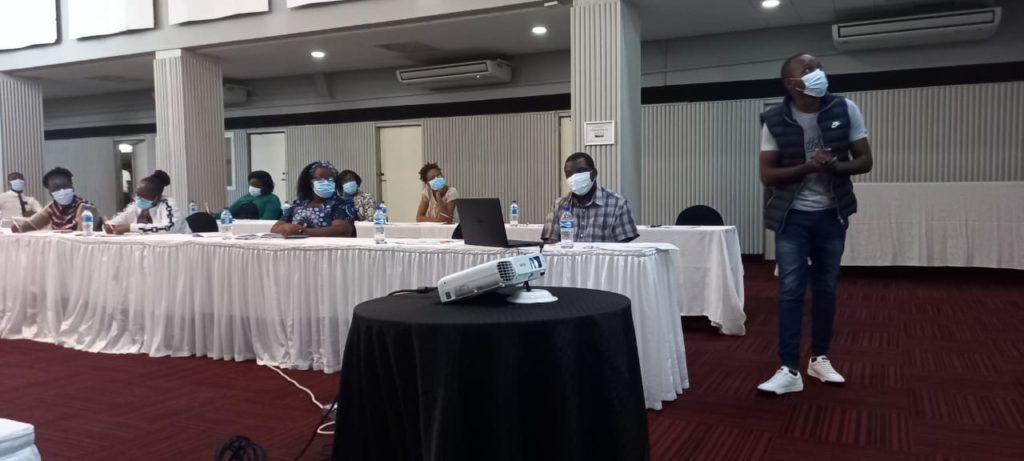
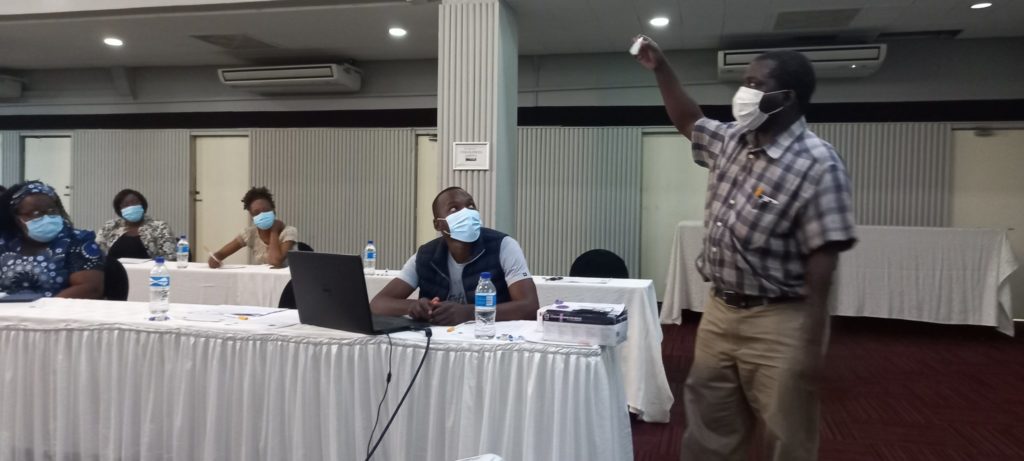
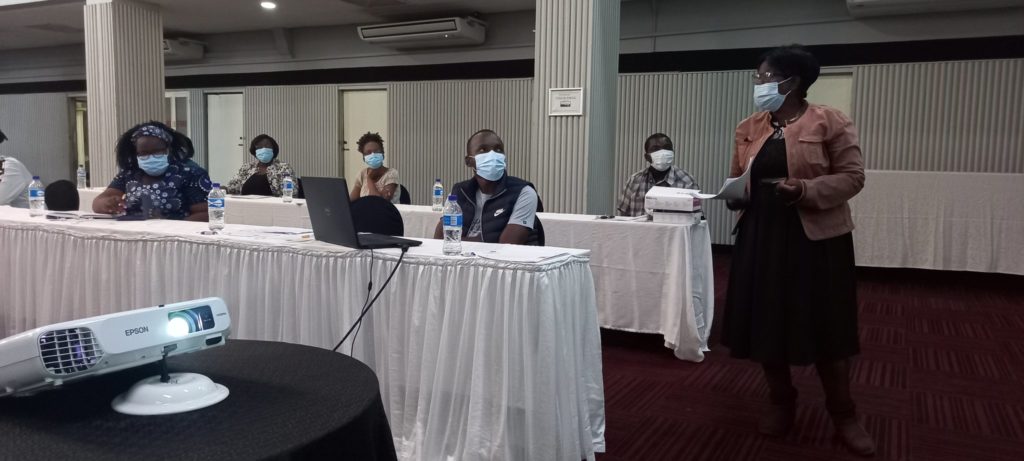
As part of interventions to strengthen primary health care services such as immunization, HIV services, non-communicable disease screening and treatment and health education, over 400 VHWs in 11 districts across several provinces recently underwent refresher training on how to intensify demand for services management and treatment of minor ailments at household level.

One of the results of those sessions, conducted by the Health and Child Care ministry in partnership with UNICEF and with funding from Gavi, the Vaccine Alliance, with funds from the Government of France, is the increased active participation of influential, authoritative, and trusted members of the community in amplifying the work of VHWs.

Authorities held community advocacy meetings with 1,500 key influencers who are trusted members of the community and included VHWs, interfaith and traditional leaders as well as young people such as peer educators to boost demand for COVID-19 vaccination, HPV vaccination, Vitamin A Supplementation and other vaccines amid successive outbreaks of measles, polio and cholera.

The meetings, done at ward and village level in all the 11 districts involved in the project, also discussed issues like demand for neonatal and postnatal care, HIV testing and treatment, COVID-19 self-testing, adolescent health services and how to intensify awareness campaigns.
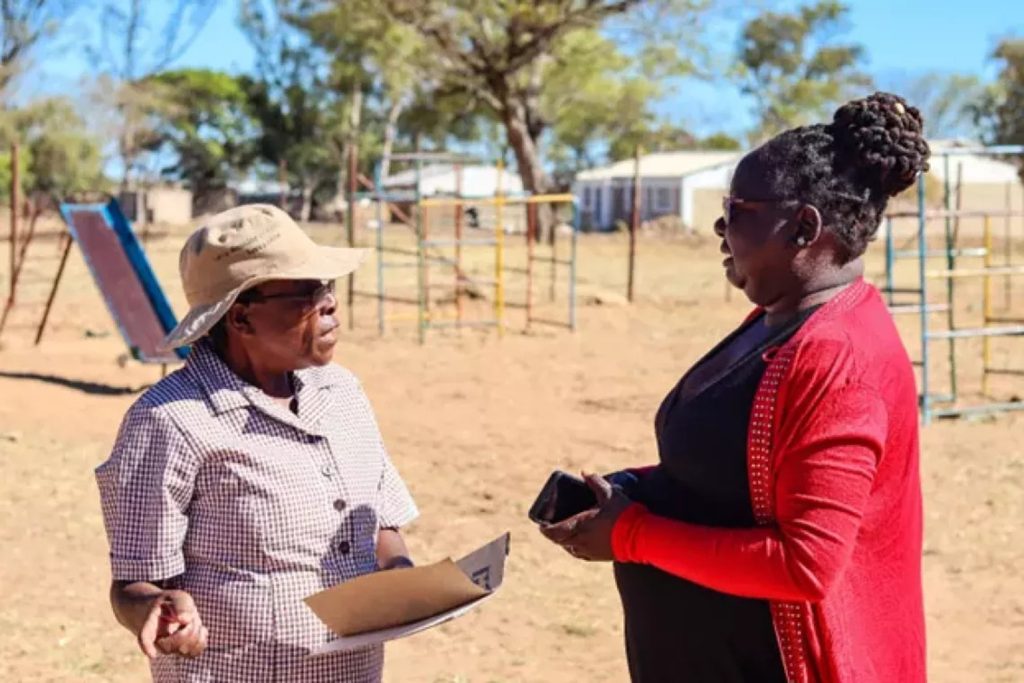
Village health workers regularly attend refresher training sessions and cascade the information to community influencers who have become key partners in mobilisation and amplifying awareness campaigns

This kind of strengthening of primary health care support has contributed to increased referrals for vaccine hesitant groups and other children facing multiple deprivations.

The VHWs embarked on a journey to update their integrated village registers to record and account for every child in their respective communities and geo coding using ODK on their smartphones.

Out of the 3,879 zero children identified in 2023 in Umguza District, 3,685 – representing 95% – were successfully followed up and vaccinated. 

Out of the 9,165 zero dose children identified in 2022 in the urban areas of Harare, Bulawayo, and Chitungwiza, 8,706, representing 95%, were successfully tracked and vaccinated.

The VHWs also recorded 24,424 under immunised children, with the majority referred or accompanied for vaccination.

Health authorities say they are roping in community influencers into some of their regular programmes to sustain the successes.

“Nowadays we also invite the influencers to the monthly meetings that we ordinarily have with Village Health Workers. They have become dependable partners for village health workers in mobilisation and awareness campaigns,” said Sibanda, the midwife at Mbembesi health facility.

Faith leaders have become key pillars in intensifying awareness and uptake of vaccines and other modern medicines among denominations whose doctrines undermine health seeking behaviours.

Traditional leaders such as village heads in the highly patriarchal community are now treating Village Health Workers, who are mostly female, as part of their inner circle.

Sheila Ncube is one of the 19 VHWs providing a link between Mbembesi hospital and people in hard-to-reach communities that are part of the facility’s catchment population of over 8,000 people scattered across the vast district.

With settlements opening up in the area, she needs her village head to point her to new inhabitants, who often lack basic water, sanitation and hygiene infrastructure and are also unfamiliar with health services offered in the area.

“The village head is the one who carries the word when I want people to gather for awareness sessions at a central point or when I am mobilising for campaigns such as vaccination. He is the one who helps me identify pregnant women in the village, he is my eyes and ears,” said the 70 year-old.

One of the village heads at the advocacy meeting, Lucky Sibanda, thinks the compliments belong to the VHWs, whom he describes as his mentors. Sibanda said he was previously indifferent to the services of Village Health Workers – until COVID-19 struck.

“They saved my community,” he said, referring to the VHWs.

“They educated people on prevention and treatment and many people ended up overcoming their fear of vaccines.”

When his local Village Health Worker approached him for help to mobilise for measles, polio, cholera vaccines following the outbreaks, Sibanda gladly obliged.

“The Village Health Worker is now my chief whip. She is always by my side when I hold functions. I have made it a rule that no gathering proceeds before she speaks about health,” said Sibanda. He reckons he is also turning into a campaigner, thanks to his increased interactions with VHWs and health workers.

Ongoing mentorship and coaching that has reached 2,200 health workers and Village Health Workers on issues such as integrated service delivery, data collection, consolidation, analysis and reporting also cascades to community members such as traditional leaders, turning them into cadres.

“She teaches me whatever she would have learned from the workshops she attends. She has equipped me with information so much that nothing escapes me anymore, HIV treatment defaulters, sanitation and hygiene red flags, underweight children and pregnant mothers. I alert her as soon as I notice something amiss,” he said.

Heavy with pregnancy, 28-year-old Polite Ndlovu is one of those grateful for the intervention after being nudged by her village head and Village Health Worker to register her pregnancy at the hospital.
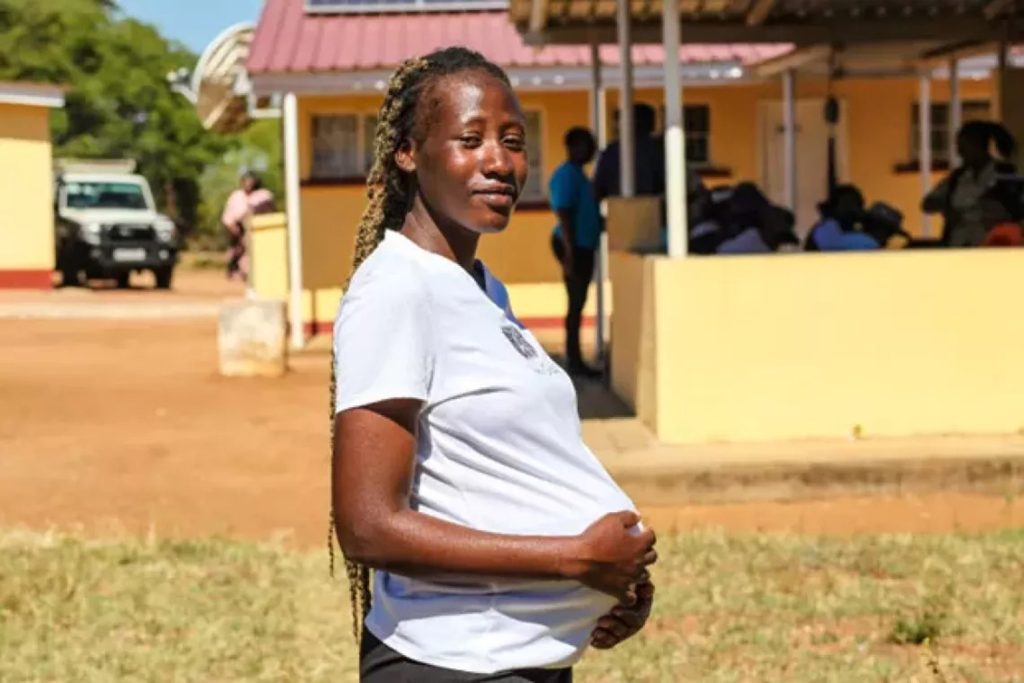
Pregnant women such as Polite Ndlovu are increasingly accessing quality neonatal and postnatal care at health facilities due to awareness spread by Village Health Workers and community influencers

“I planned to go but I was procrastinating but they warned me and other pregnant women in the village about the dangers,” she said.

“I went to the hospital the following day,” added Ndlovu on the grounds of Mbembesi hospital, where she had gone for a routine check-up.

SOURCE:: unicef via link https://www.unicef.org/zimbabwe/stories/village-health-workers-engage-community-influencers-drive-demand-health-services
Enhanced cholera surveillance data in Zimbabwe improves accountability and focused response

on July 15, 2024 in Cholera, Health and Wellbeing, News, Uncategorized

Kadoma – During an active cholera outbreak, compiling and reporting high quality data on suspected cases – such as age, sex, location, symptoms onset, laboratory test results and treatment response – is crucial. This provides decision-makers with timely and accurate information to guide the cholera response.

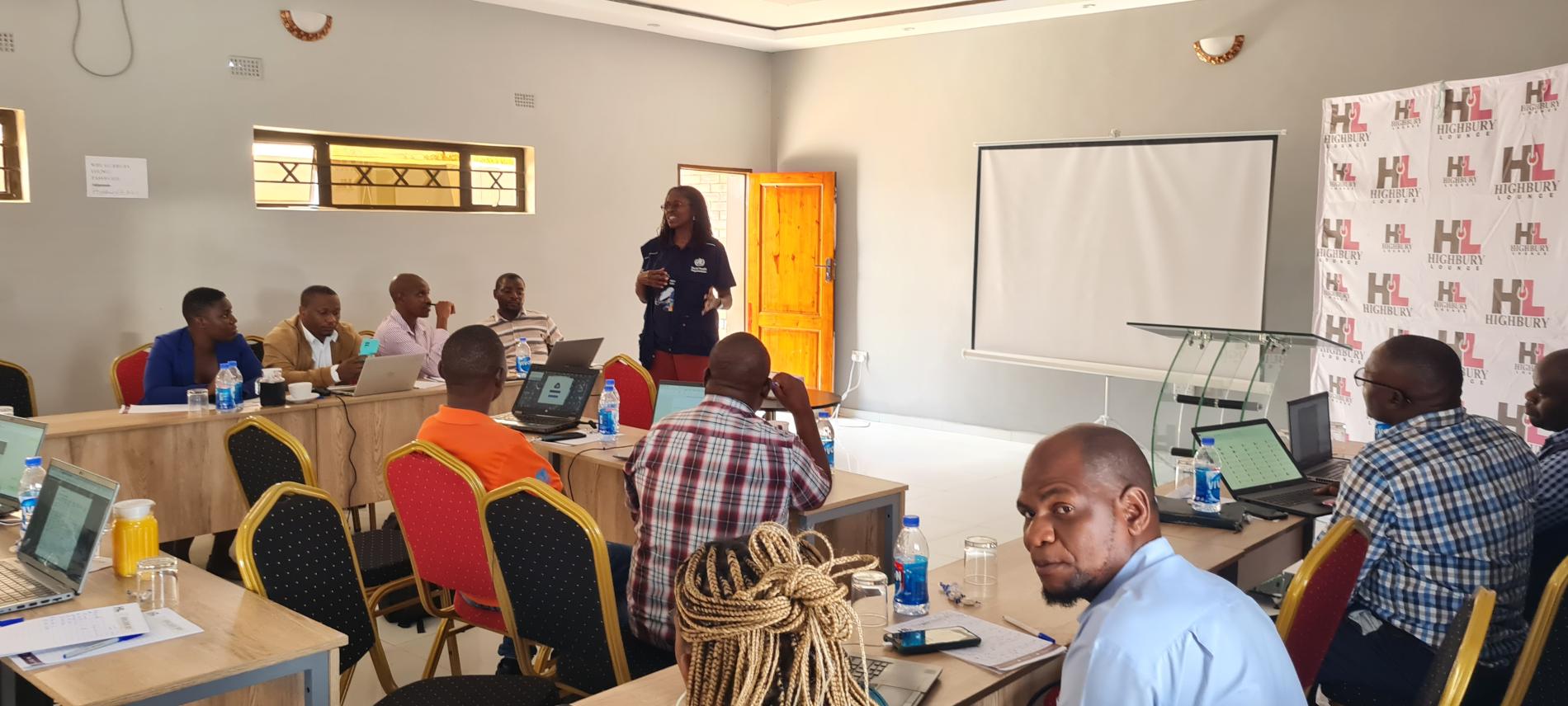
To enhance reporting systems and cholera surveillance in Zimbabwe, the World Health Organization supported the Ministry of Health and Child Care (MoHCC) to conduct a data harmonization workshop in Kadoma.

The workshop aimed to address data quality gaps and update the missing cholera data across all provinces, including essential information like the effective utilisation of partner-donated resources such as cholera testing kits.

The WHO Data Harmonisation guidelines, which delineate surveillance data monitoring processes, were instrumental technical resources utilised by WHO to steer the data harmonization exercise.

Previously, data reported on cholera cases had missing information on laboratory tests conducted by healthcare workers across the country.

This shortfall undermined accountability and failed to accurately reflect the dedicated efforts of healthcare staff.

“We were putting in the hard work, but the data wasn’t reflecting that,” says Janet Jonga, manager for epidemiology and disease control at MOHCC.

“Now, we can showcase the impact of our efforts and this improved data will be instrumental in securing the resources needed to respond to outbreaks swiftly and save lives.”

Mr Jonathan Yadini, district health information officer for Hwange District commended the exercise and noted, “Previously, data from Laboratory and Surveillance was being reported separately in parallel data flow streams, leading to discrepancies in the data. This harmonisation exercise has promoted collaboration to ensure that cholera data is now accurately and comprehensively tracked through the health information database, enhancing epidemic monitoring.”

The harmonisation exercise was made possible with WHO support and enhanced data collection, with the line list completion rates soared from 70% to 95%, providing a much clearer picture of cholera transmission across the country.

Updating of laboratory data offered a comprehensive view of utilized resources, promoting better allocation.

The newly introduced district-level epidemiological curves with the up-to-date data helped to pinpoint areas experiencing challenges and enabled a more targeted community response.

Funding for this activity came from the UN Central Emergency Response Fund (CERF), and the Health Resilience Fund, (HRF supported by EU, GAVI, UK and Ireland).

WHO’s efforts have been focused but not limited to providing enabling factors to ensure early detection through equipping surveillance officers with skills for and enhanced testing of suspected cholera cases through provision of testing kits.

HO is also providing funding  to ensure that data collected is transmitted daily and reflected in the situational reports of the MoHCC to promote timely information dissemination and action.

Supportive supervision visits are being undertaken periodically providing on the job mentorship.

The country now has a unified database of cases and deaths by district for the first time, enabling quick identification of areas of interventions.

This has promoted data driven decisions and interventions.

“Following this support, the MOHCC SITREP now features district level analyses thereby highlighting the situation in hotspot districts for attention,” said Mr Trevor Muchabaiwa, data manager at WHO Zimbabwe.

SOURCE:: WHO via link https://www.afro.who.int/countries/zimbabwe/news/enhanced-cholera-surveillance-data-zimbabwe-improves-accountability-and-focused-response

Amid Zimbabwe’s Mass Exodus, Meet the Doctors and Nurses Who Stayed Behind

on June 16, 2024 in Health and Wellbeing, News, Uncategorized

Those who remain must navigate a crumbling health care system — and the moral, physical and mental costs that come with it.

HARARE, ZIMBABWE — At five months pregnant with her second child, Vimbai started bleeding. She suspected a miscarriage and rushed to a public clinic for help. The attending midwife didn’t examine her, says Vimbai, who chose to use her middle name for fear of stigma.

“The only thing they did was [give] me cotton wool.”

To Vimbai’s shock, the midwife wrote “attempted abortion” on her consultation card and referred her to the nearest public hospital about 20 kilometers away (nearly 12.5 miles). But Vimbai was in too much pain to make it all the way. “I thought I was going to die.”

A friend recommended a nearby clinic operating illegally in someone’s home. “I had a conviction that this was the only immediate option,” she says.

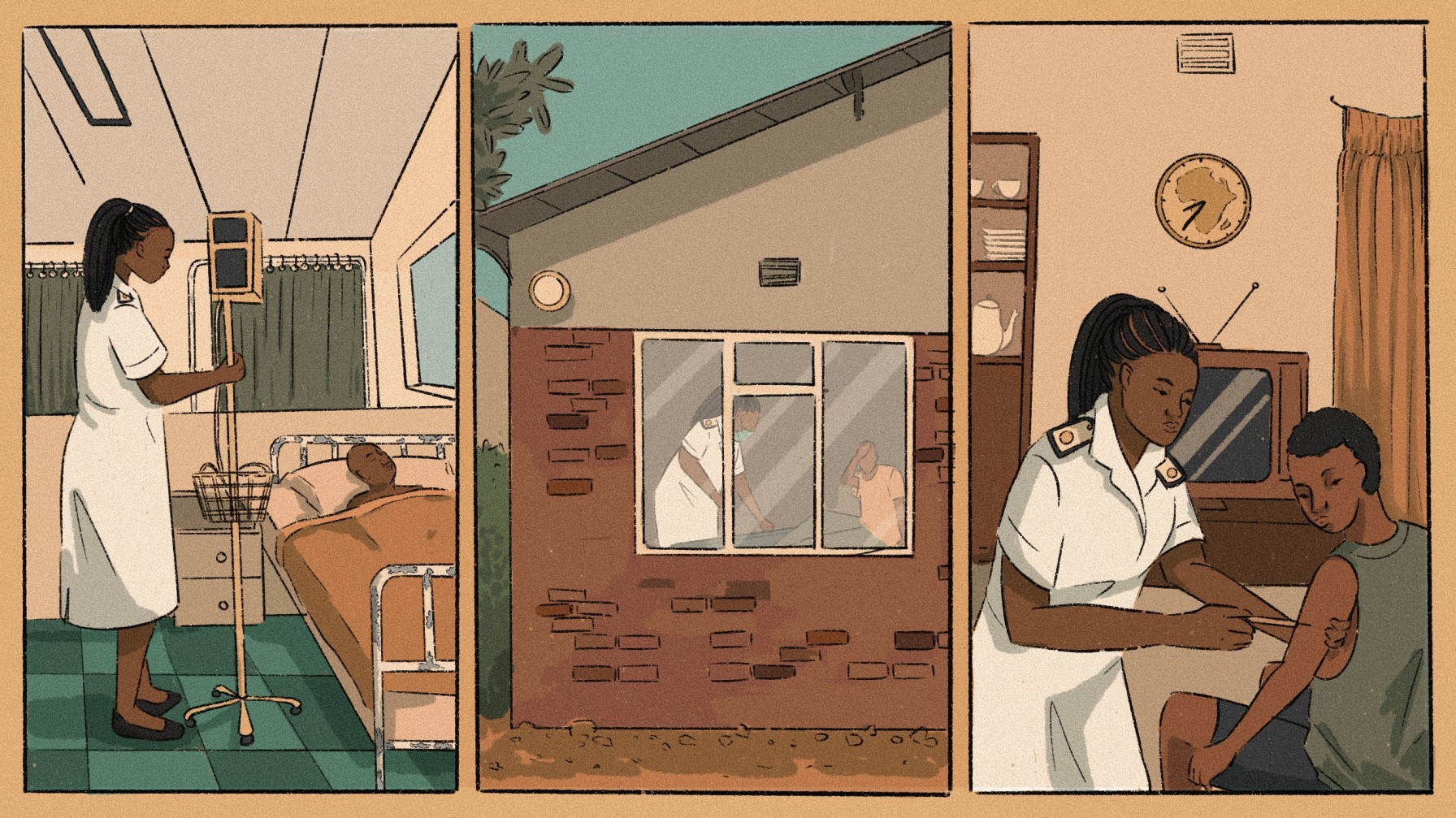
Although the bed was uncomfortable, the home clinic was well equipped. There was a drip stand, boxes with cannulas, drugs and medical supplies stored in a tiny spare bedroom. The setup surprised Vimbai.

There were other patients too. Their murmurs seeped through the walls. Somewhere, a child coughed. Vimbai also noticed something else. She knew the nurse who operated the backyard clinic. He worked as a midwife at the public clinic where she had been first treated after the bleeding incident. To Vimbai, this meant he was qualified. It reassured her a little.

They confirmed she was having a miscarriage, put her on intravenous therapy along with some injections and he cleaned her womb, she says. Overall, the experience was friendlier, and the midwife followed up afterward.

“The hideout clinics are saving a lot of people in the communities [where] we live,” she adds.

Zimbabwe’s health care system has been crumbling under the strain of years of economic and political instability, which started in the late 1990s. Health worker salaries have not been spared by inflation and currency challenges.

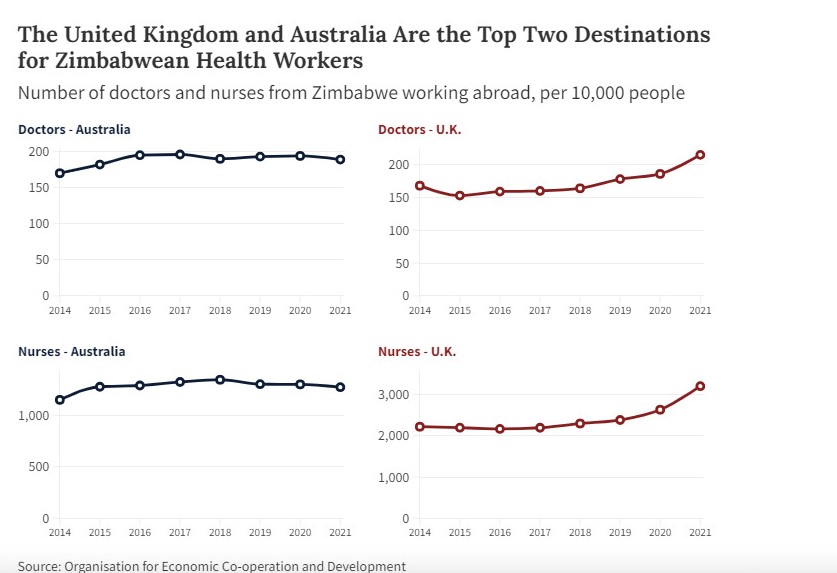
As a result, many professionals have migrated to seek better opportunities abroad. In 2019, the United Kingdom’s National Health Service employed 4,049 Zimbabwean health care professionals, including doctors, nurses and clinical support staff, making Zimbabwe the second-largest African contributor to its workforce after Nigeria, according to a statement provided to Global Press Journal by Zimbabwe’s Health Service Commission spokesperson, Tryfine Rachel Dzvukutu.

But not everyone leaves.

In late 2022, the country had 1,724 doctors and 17,245 nurses, Dzvukutu says, serving a population of over 15 million.

These doctors and nurses grapple with various challenges, among them poor salaries and high workloads. To navigate this, some take part-time jobs in other health centers while others operate illegal clinics such as the one Vimbai visited.

“Sometimes we resort to these hideout clinics not because we want to but because of the service we get at the public facilities,” Vimbai says, her voice tinged with discontent.

A MORAL DILEMMA

Gladys, who has been a health worker for 20 years and asked to use only her first name for fear of retribution, says that sometimes she offers services to people in her community outside of work, especially those who might need minor assistance, such as dressing wounds.
“I do charge for rendering that service,” she says. The cost ranges from 10 United States dollars or more per week, depending on what patients can afford.

In comparison, the clinic where she works charges 1 dollar a day for minor services such as wound dressing. But Gladys says her fees are typically lower than the overall costs a patient would incur, including transportation. Other times, she says she doesn’t charge if she sees that the person cannot afford to pay.
There has been an increase in these practices, even though it is illegal, says Simbarashe James Tafirenyika, president of the Zimbabwe Municipalities Nurses and Allied Workers Union. It’s also unethical, since the workers offering these services don’t have sterile equipment or other necessities, which is risky, he adds.
The Health Professions Act prohibits health institutions from operating without registration. Doing so is an offense liable to a fine, imprisonment up to two years or both.

(Gamuchirai Masiyiwa/Global Press Journal)

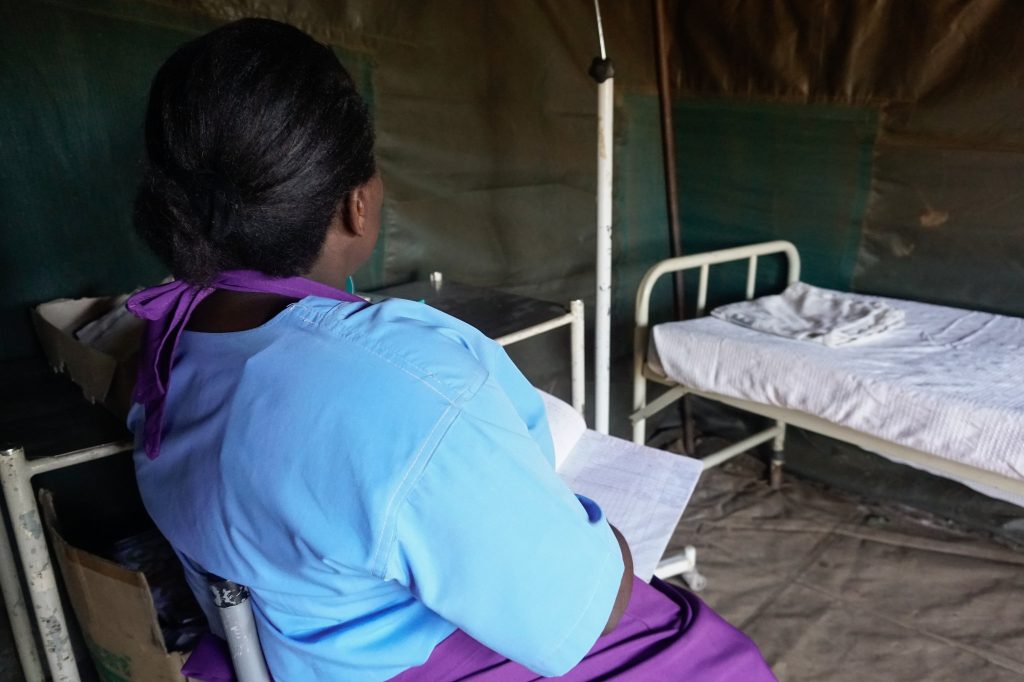
Gladys, who asked to use only her first name for fear of retribution, reviews her notes in a public clinic in Harare, Zimbabwe. To supplement her income, she occasionally provides services at patients’ homes.
Gladys doesn’t think she is bending the rules or posing any additional risks to patients; if they visit the clinic, she is still the same person who will assist them, she says.

However, she says those who operate more robust backyard clinics put people at high risk due to a lack of sterilised equipment. It is a criminal offense, she says, given the potentially fatal consequences, such as bleeding to death following an abortion.

Rueben Akili is a program officer with the Combined Harare Residents Association, an organization that advocates for the rights of residents. He confirms health care workers are operating illegal clinics in various high-density suburbs of Harare.

“It is an issue which we have noticed for the past five years due to the continuous deterioration of health service provision. They offer a range of services such as maternal health care provision, treating of sexually related diseases and to some extent general health care,” he says. He sees it as a worrying trend as it puts people’s lives in danger.
In a written response to Global Press Journal, Stanley Gama, the head of corporate communications for Harare City Council, says the council isn’t aware of illegal clinics but will carry out investigations and enforce the law. He adds that health workers, like every citizen in Zimbabwe, haven’t been spared by the challenges of the struggling economy.

Gladys says her salary at the public clinic where she works is low. In March, the government paid her ZWL$6 million (about US$195). (At the time Global Press Journal interviewed sources for this article, the Zimbabwean dollar was still the standard currency in Zimbabwe. The country has since transitioned to a new currency, called Zimbabwe Gold.)
Gladys also receives an allowance of US$112. The total amount she receives varies each month depending on the exchange rate.
To make ends meet, Gladys takes extra shifts or works as a substitute nurse at private institutions. She prefers shifts at private institutions.

The government clinic pays her US$4 for a full day of work, from 7am to 7pm, and converts the payment to local currency at the prevailing exchange rate.

The government also taxes this overtime pay. But the private health facilities pay her more money for fewer hours, at 20 US dollars for a day that ends at 4:30 p.m.

While extra work means more money, Gladys is always exhausted. She ends up working about 53 hours per week, well above the recommended 45 hours for health care workers.

“The body needs to rest. When you get home, all you want to do is sleep — you can’t do things that you would normally do like cooking, assisting your child with homework. We are overwhelmed,” says the mother of two. Her social life suffers too.

She knows colleagues who have quit the public clinic to work in private institutions and others who have immigrated abroad. Around 2017 and 2018, the public clinic had 22 midwives, she says. Now, it has 14.

She considered leaving Zimbabwe for better opportunities abroad, but when she wanted to start the process, the government stopped issuing certificates of good standing.

Without one, she would only be able to work as a care worker, which pays less than a professional nurse.

(Gamuchirai Masiyiwa/Global Press Journal)

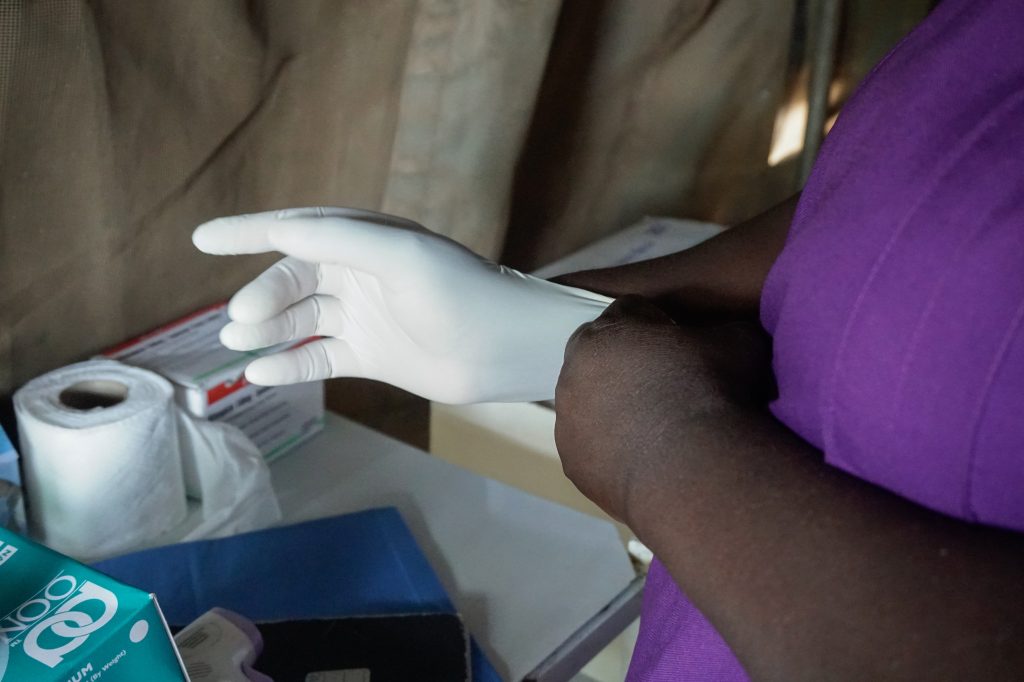
As Zimbabwe’s health care crisis worsens with a mass migration of health care workers in search of better opportunities and low pay for those who remain, Gladys occasionally takes on extra shifts at her workplace or in private clinics.

The solution for Gladys is for the government to employ more workers and offer better pay.

Although health care workers left behind like Gladys are finding solutions — sometimes illegal — to navigate the challenges of a crumbling health care system, these arrangements are unsustainable, says Tafirenyika, the union president.

“What they are doing is bad and we do not recommend it at all, but they are looking for survival skills,” he says. He blames the local councils, which employ public health workers. The solution, he says, is to ensure an adequate health care workforce and offer them good pay.

Gama says the Harare City Council has been recruiting more health workers. He did not provide any figures.

Enock Dongo, president of the Zimbabwe Nurses Association, agrees Zimbabwe’s health workers are overwhelmed. The union is pushing the government to improve health workers’ pay and welfare, he says.

“It’s not only money that can solve the issues we are facing, but there are also many non-monetary benefits that they can provide like housing, land, farms, among others,” he says.

Although some health workers operate illegal clinics or take extra shifts to sustain their livelihood, others take up side gigs. Moyo, who prefers to use his clan totem for fear of retribution, is a nurse at a public hospital in Harare. He says his low pay gives him sleepless nights.

It is so low that he couldn’t add his fourth child to his medical insurance.

“I was told that my income was too low to have another dependent added on my insurance. I can’t even afford health care for my child,” he says.

In February, his salary inclusive of allowances was ZWL$3,6 million (US163 ) plus a foreign currency component of US$270.

According to the latest Zimbabwe Statistical Agency report on poverty, the minimum monthly income needed in March for one person stood at ZWL$916 255,50 (US$41,54). A family of six requires about US249 for food and non-food items to be above the poverty line.

Like Gladys, Moyo tried taking extra shifts at private clinics. He says lately they have been hard to come by. “Because of the economic situation in our country, the private health institutions are not getting as many clients as they used to,” he says.

In 2023, he registered a consulting agency to assist students with their applications to private nursing schools in Zambia.

“If I enrol 10 students, I get 20% commission. But because my company is fairly new, last year I managed to enrol three students and I was paid US$200,” he says.

Despite the challenges, Moyo still wants to advance in his career.

“I recently completed my bachelor’s degree in nursing science, majoring in training, because I have a passion to teach. And if conditions of service improve, I intend to work in a nursing school locally,” he says.

Although he could have relocated, he had someone close to him who was not well and he chose to stay. Home is best, he says. But those who leave are simply forced by circumstances.

SOURCE:: Global Press Journal via link https://globalpressjournal.com/africa/zimbabwe/amid-zimbabwes-mass-exodus-meet-doctors-nurses-stayed-behind/

ZADHR supports HCWs’ health & mental well-being

on October 21, 2021 in COVID-19, News, Uncategorized

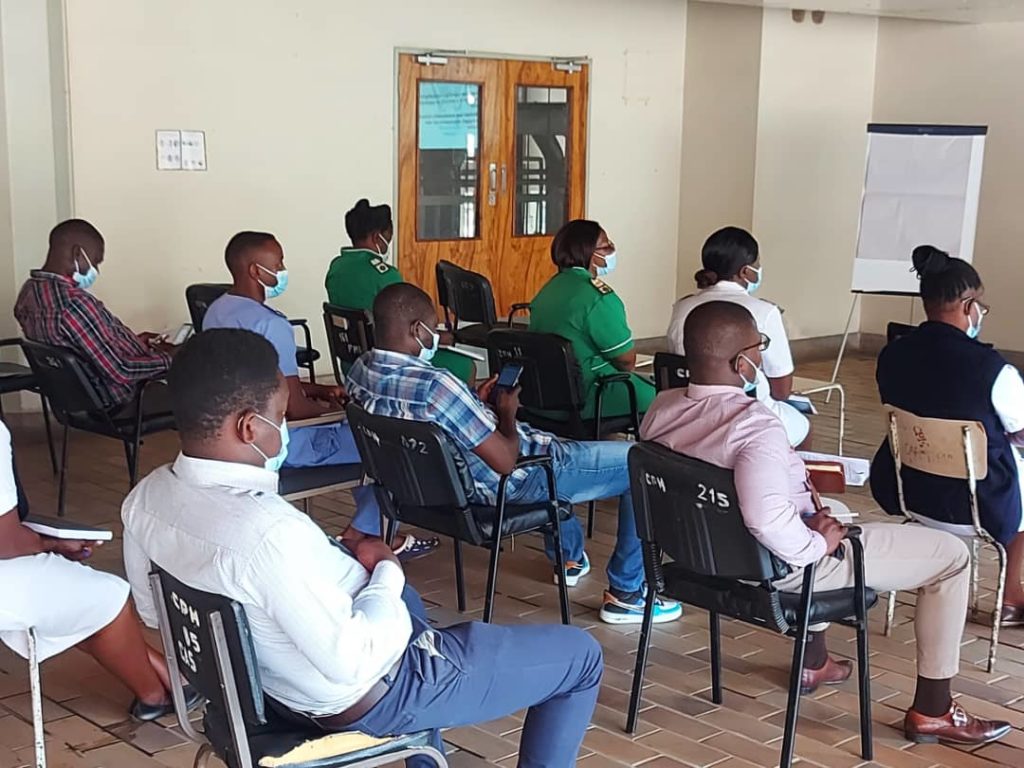
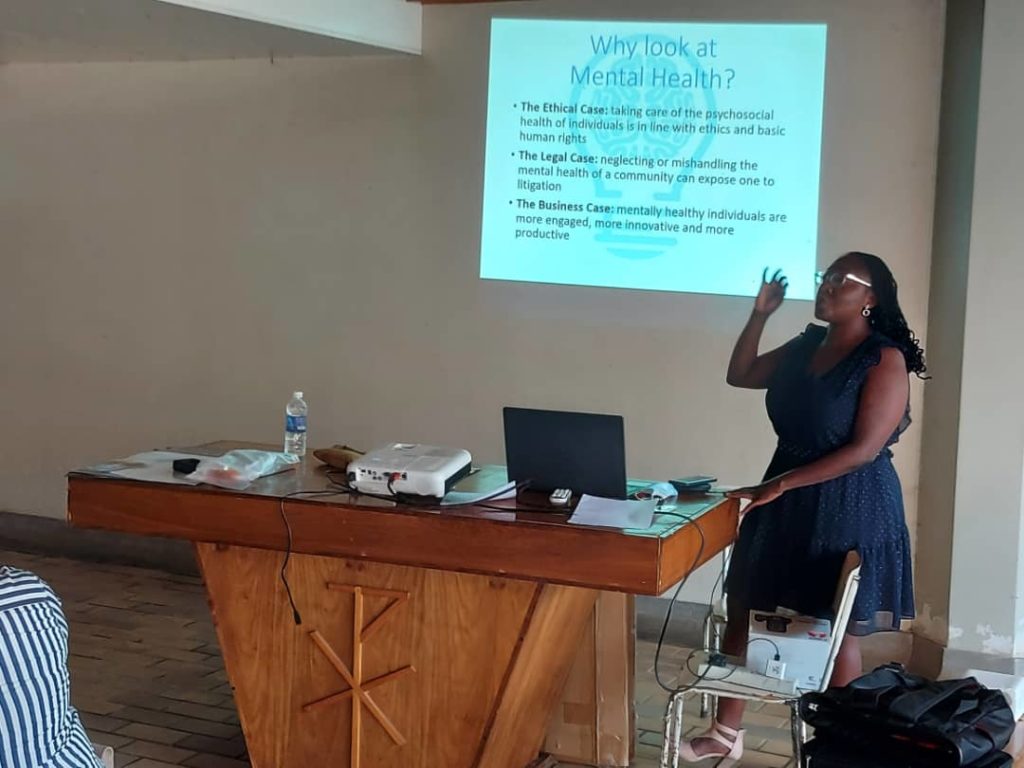
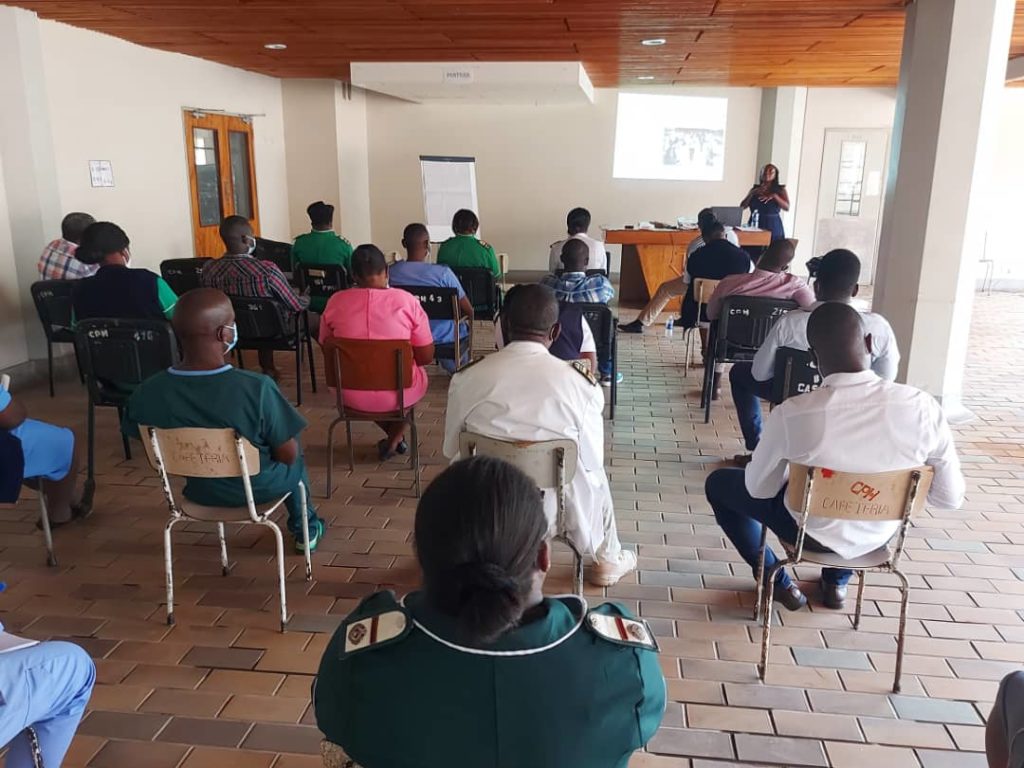
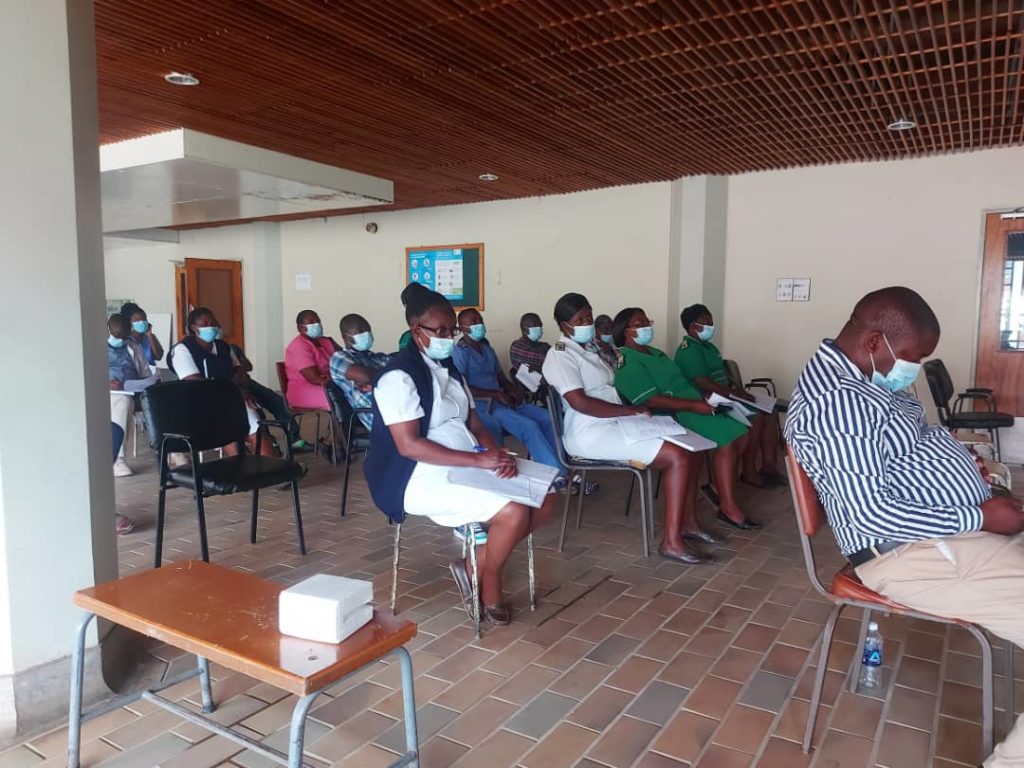
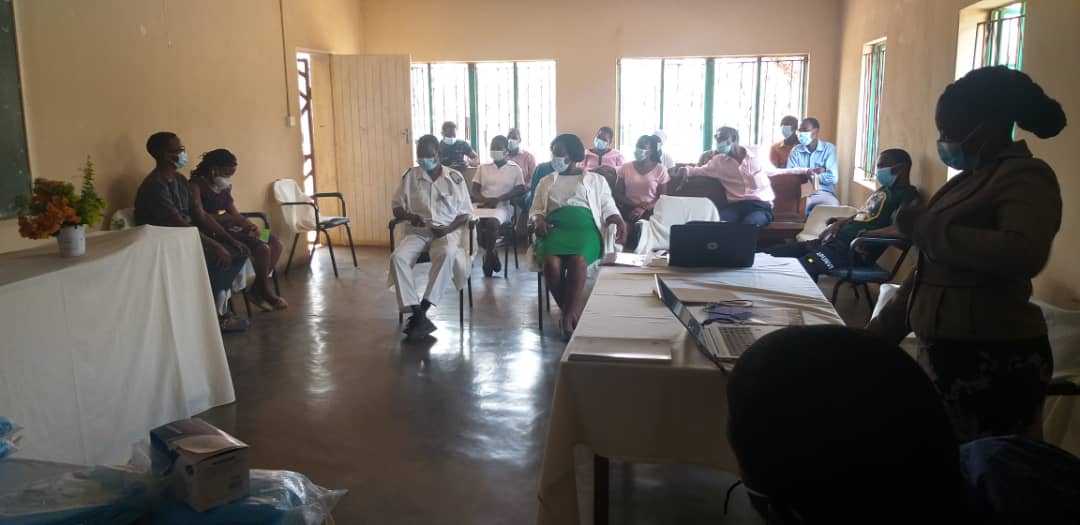
Healthcare workers are at risk too. Supporting the health and mental wellbeing of healthcare workers in a time of COVID-19. Below, nurses at Chinhoyi Provincial Hosp attending a Zimbabwe Association of Doctors for Human Rights (ZADHR) and Zimbabwe Nurses Association workshop yesterday on capacitating cadres on identifying, treating and referring mental health patients as part of ZADHR’s efforts in continuously building resilience among cadres.

78 health workers succumb to Covid-19

on October 9, 2021 in COVID-19, News, Uncategorized

AT least 23 doctors, 30 nurses and 25 other professionals in the health sector have succumbed to the COVID-19 pandemic since its outbreak in the country last year, Vice-President and Health minister Constantino Chiwenga has said.

Chiwenga said this on Wednesday during the commissioning of Kwekwe Infectious Diseases Hospital, where he paid tribute to frontline workers who risked their lives in the fight against COVID-19.

“While these figures paint a grim picture, let us take pride in that Zimbabwe has dedicated health professionals,” he said.

“I would like to take this opportunity to pay tribute to the 23 doctors, over 30 nurses and more than 25 health cadres who lost their lives fighting the pandemic.”

Chiwenga said government was committed to improving the working conditions of health personnel in the country, adding that the issue of salaries, incentives, transport and accommodation (of health workers) was being “seriously looked into”.

Turning to the 25-bed health facility, Chiwenga said it would not only help in the fight against COVID-19, but other infectious diseases.

“This is critical infrastructure in the fight against the COVID-19 pandemic,” he said.

“I am pleased with this development which is worth emulating and replicating in all provinces as we strive to contain the spread of the pandemic and other infectious diseases.”

Chiwenga added: “The facility will not only cater for COVID-19 patients, but will also cater for all other infectious diseases that the Kwekwe community would suffer from.”

The health centre was once a Kwekwe City Council-owned beerhall. In 2019, the local authority resolved to turn Garandichauya Bar in Mbizo Section 3 into an infectious diseases hospital.

The hospital was built at a cost of $16,9 million from devolution funds as well as council resources.

https://www.newsday.co.zw/2021/10/78-health-workers-succumb-to-covid-19/

ZADHR takes health workers’ Antigen testing training to Bulawayo

on August 26, 2021 in COVID-19, News, Uncategorized

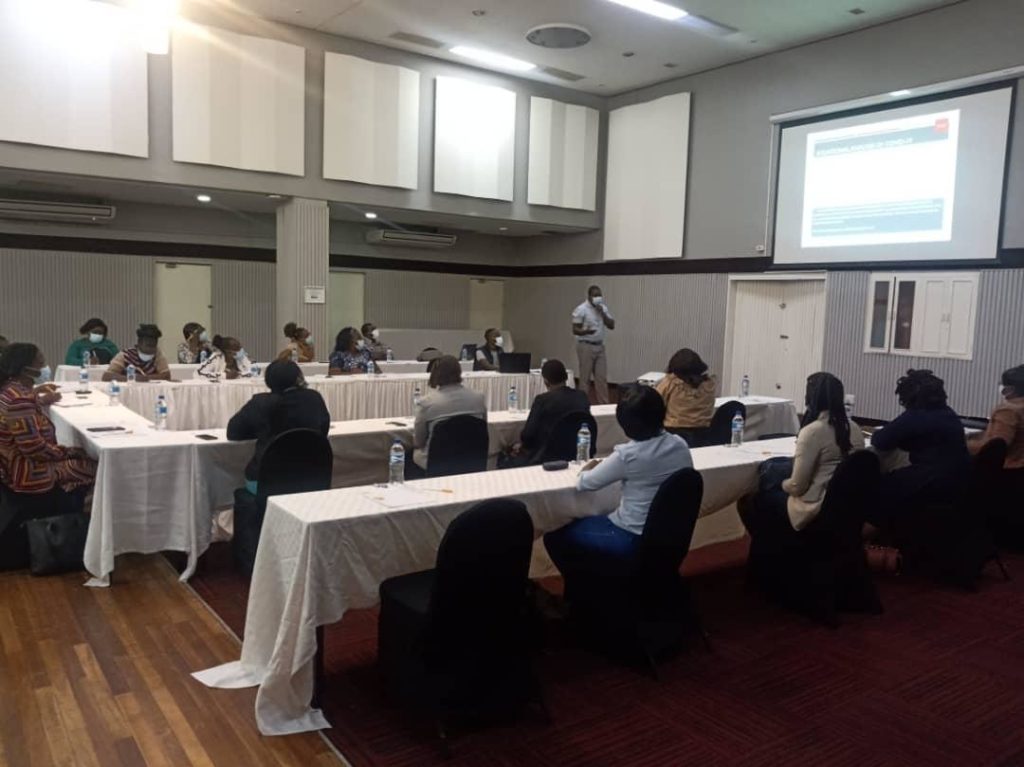
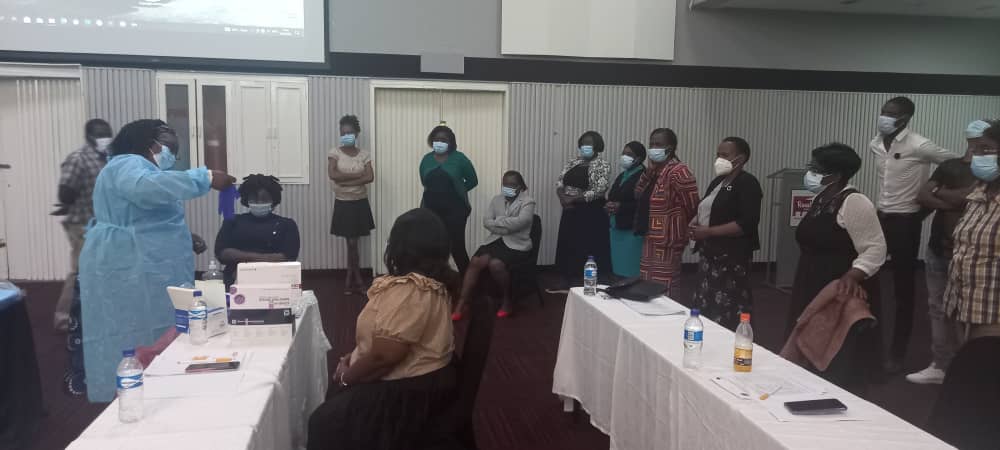
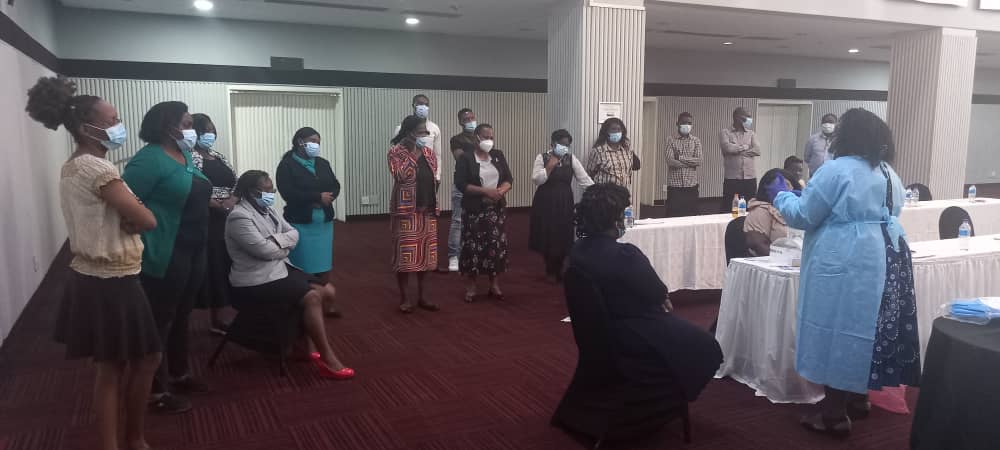
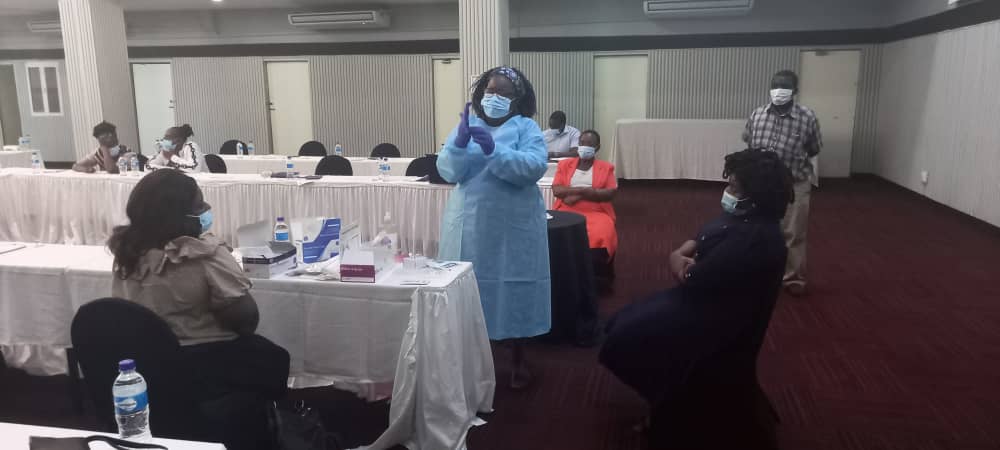
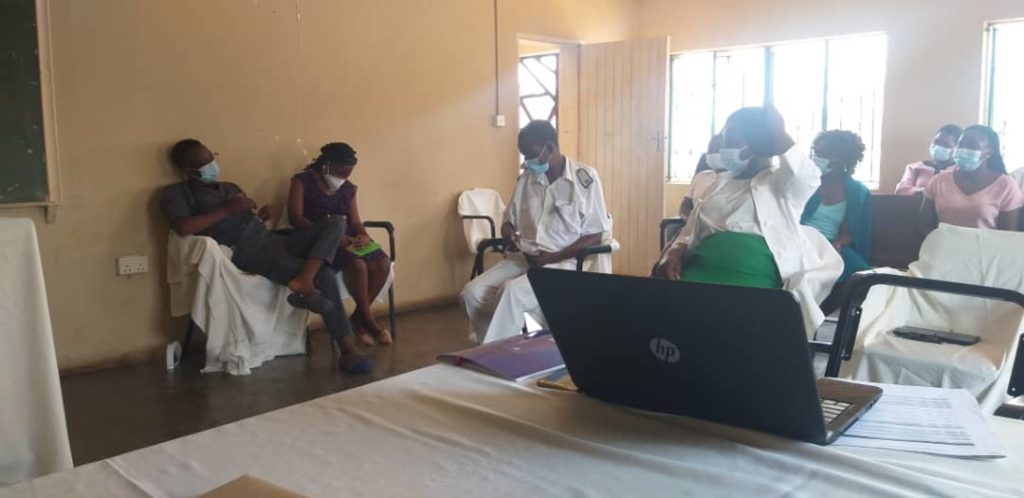
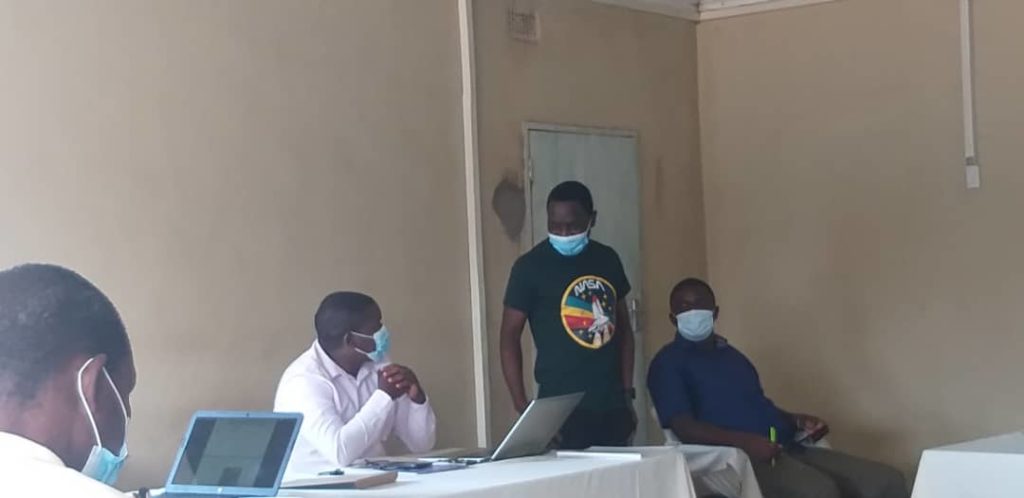
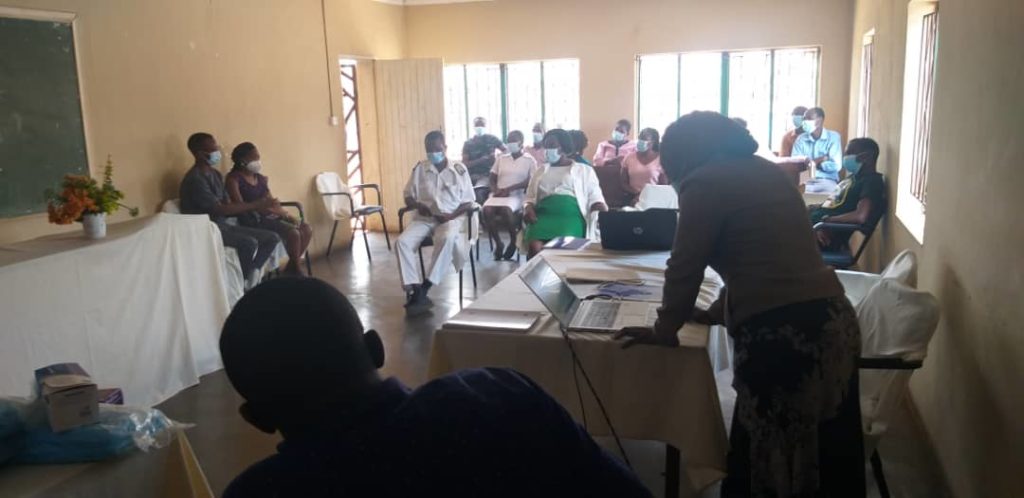
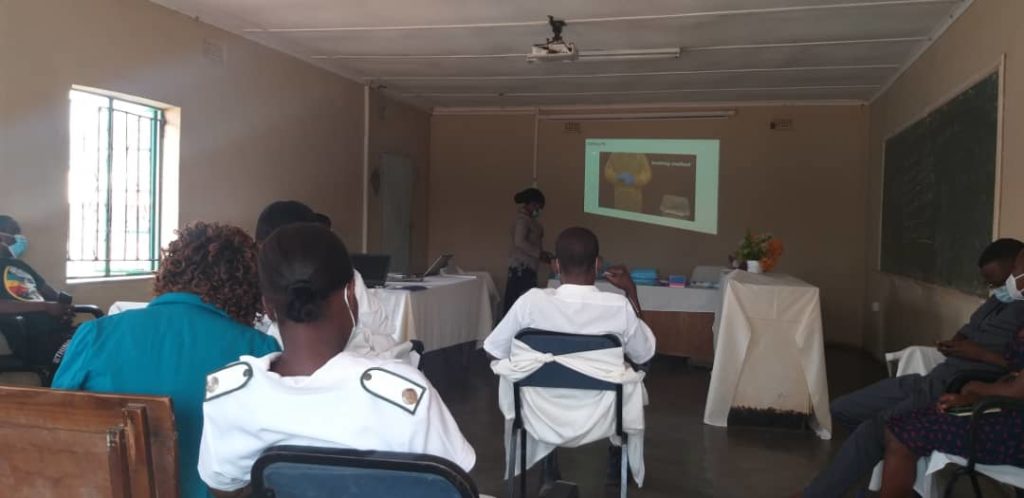
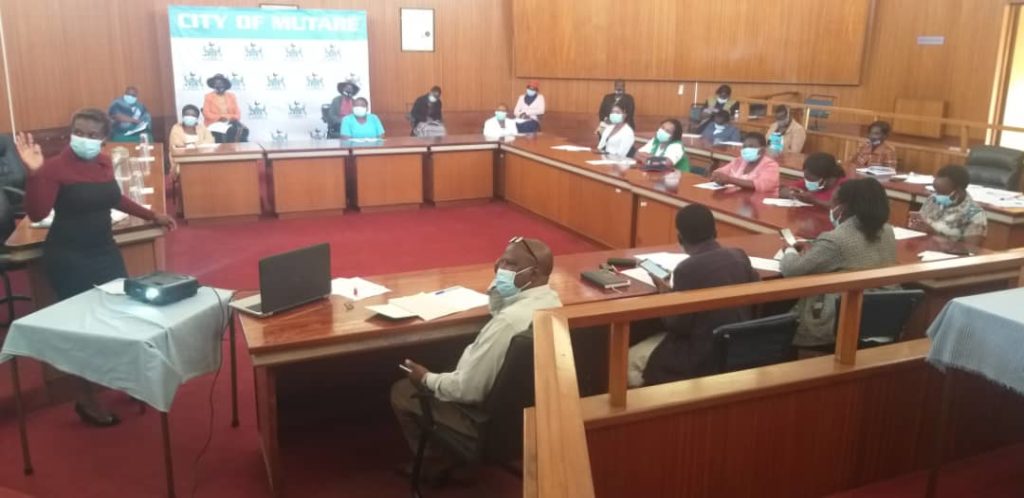
On August 26, 2021, ZADHR was in Bulawayo as it continued with its support in enhancing health care workers’ capacity building in COVID-19 diagnostics and testing.

ZADHR member Dr Brian Mbanje makes a presentation on #Covid19Zim safety & infection, prevention & control during a joint training workshop conducted by the City of Bulawayo health department and ZADHR on #COVID19 response & preparedness capacity building
Mr Bhekimpilo Nyathi from the @CityofBulawayo
makes a presentation on #Covid19Zim sample collection and sample testing during the #Covid19Zim Antigen Rapid Diagnostic Testing training
Mrs Regina Bhebhe from the National TB Reference Laboratory makes a presentation on #Covid19Zim record keeping and data use during the #Covid19Zim Antigen Rapid Diagnostic Testing training workshop
Dr Hillary Sigauke from Byo City makes a presentation on #Covid19Zim background and testing options during the #Covid19Zim Antigen Rapid Diagnostic Testing training
Scenes from the Antigen RDT testing training practical during the workshop. Thanks to Bulawayo City Health for making it possible.

Scenes from the Antigen RDT testing training practical during the workshop.

Scenes from the Antigen RDT testing training practical during the workshop.