El Nino-induced drought in Zim puts children at risk of malnutrition
By Doctors For Human Rights on July 18, 2024 in Health and Wellbeing, News
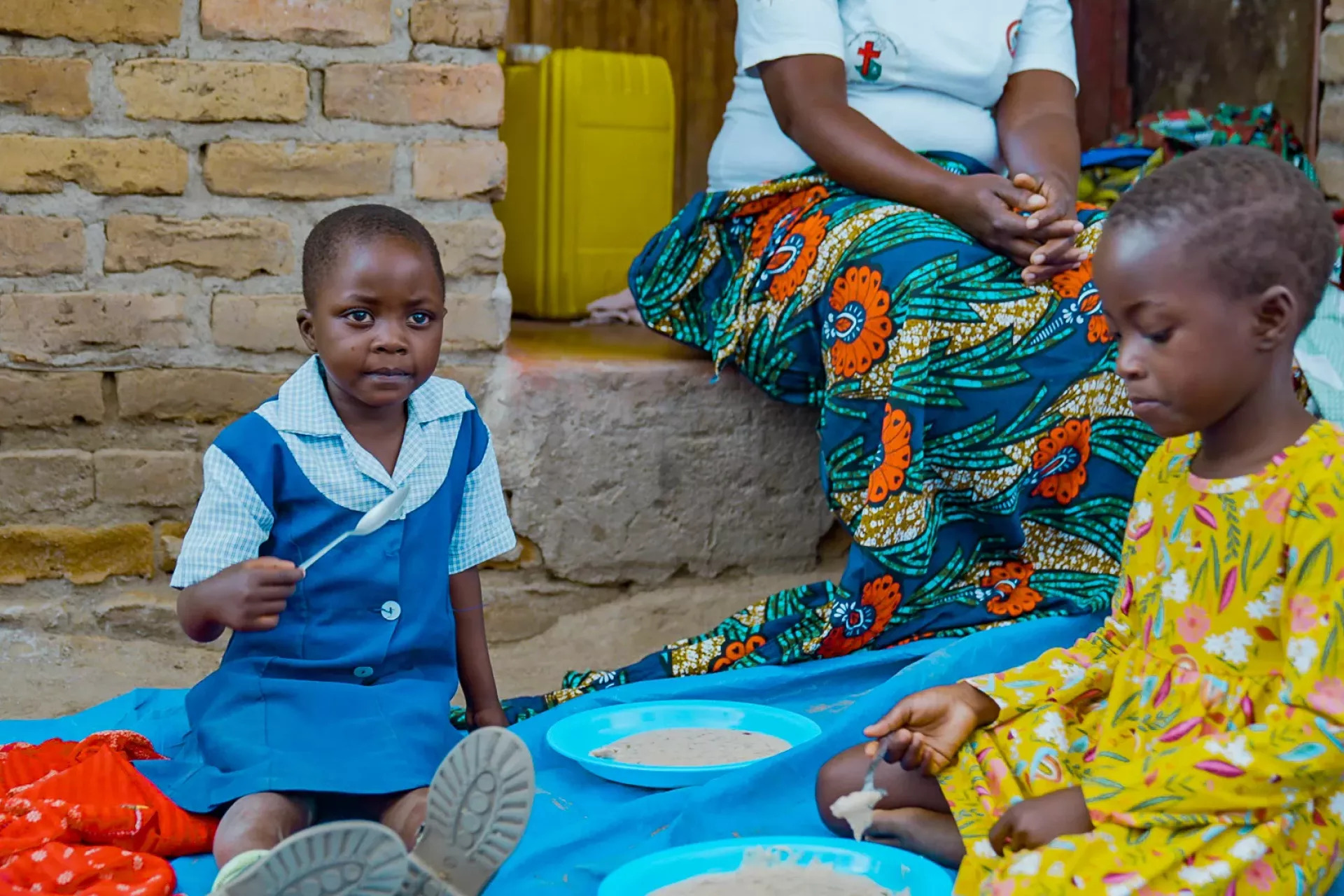
UNICEF is supporting community-based platforms to ensure children continue to get a diversified and nutritious diet
UNICEF is particularly concerned about the vulnerability of children. Decreased access to clean water and a poor diet heightens the risk of malnutrition and diarrhoeal diseases among children and impacts their rights to education and protection with the full effect of these intersecting factors expected to manifest only later. Hence there is a need for a front-facing preventive strategy to avert excess deaths in the months to come.
UNICEF is urgently appealing for US$84,9 million to fund its emergency response aimed at assisting children and women affected by the El Nino crisis in Zimbabwe.
This funding will provide life-saving interventions to 1,34 million people, including 866 000 children, amidst a complex humanitarian crisis exacerbated by water and food shortages.
As part of its El Nino response, UNICEF is supporting the scaling-up of community-based platforms such as Care Groups to promote life-saving interventions and to contribute to avoiding malnutrition among children.
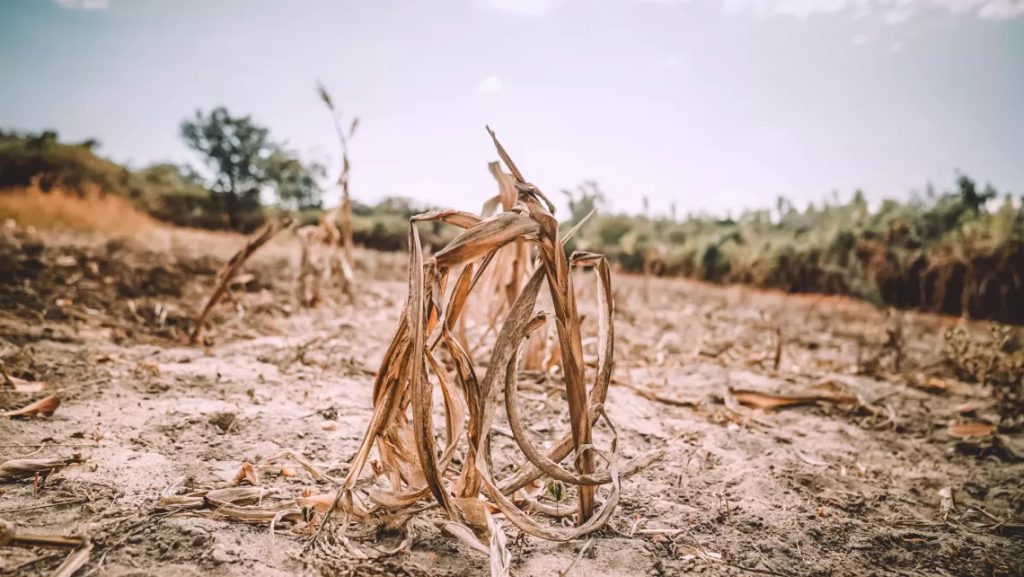
Zimbabwe is facing the impact of a strong El Nino event which started in December 2023 and has caused above-average temperatures and below-average rainfall, with a “historic” mid-season dry spell.
This El Nino is being compared in severity to the 2015-16 El Nino.
The El Nino induced drought resulted in an extremely poor harvest. Over 60 per cent of the crops planted this season were lost.
The effects of this El Nino are expected to impact child nutrition until well into 2025.
The challenges created by El Nino in Zimbabwe came at a time when the country was also faced with public health emergencies related to cholera and polio, putting Zimbabwe into a complex, multi-dimensional humanitarian crisis.
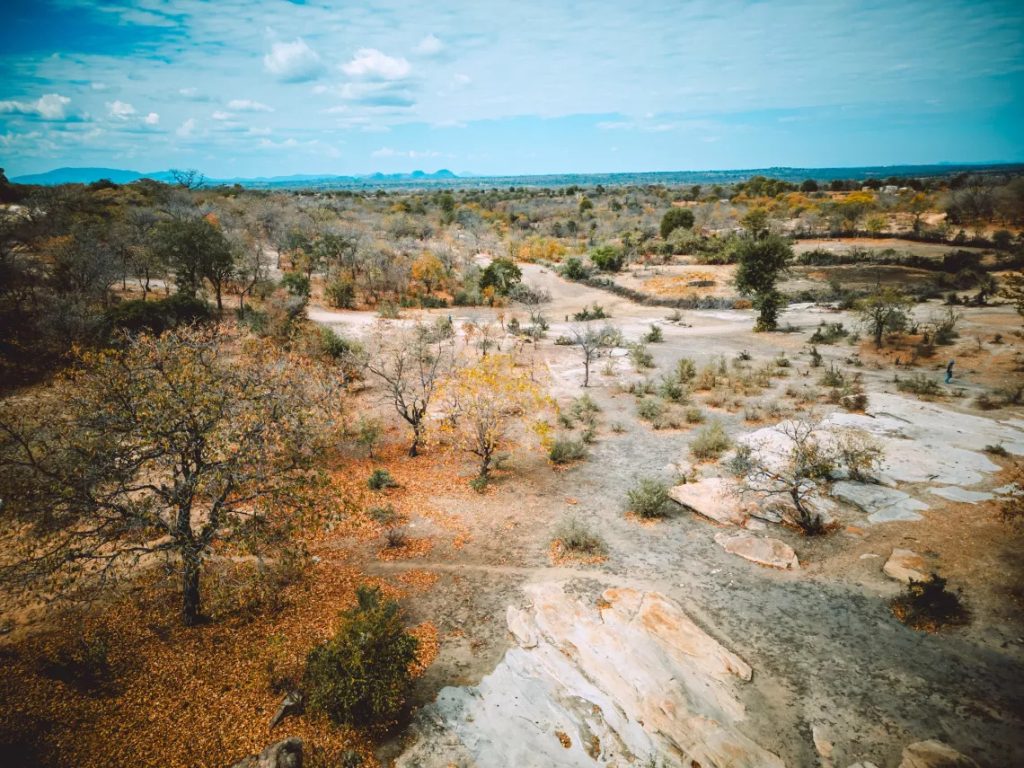
During the El Nino induced drought in Zimbabwe, a total population of 7,6 million people urgently requires life-saving and life-sustaining humanitarian assistance and protection support, as well as livelihood support, so that they may recover their losses, rebuild resilience, and access basic services.
The drought increases the risk of malnutrition, infectious diseases, maternal complications, and gender-based violence.
An estimated 1,4 million people require nutrition assistance, while 1,8 million learners are at risk of educational disruption due to the drought, potentially leading to increased school dropouts and child protection issues.
A total of 29 high-priority districts – mainly in all the eight rural provinces which include Matabeleland North and South, Mashonaland East, Central and West, Midlands, Masvingo and Manicaland – have been identified at most affected by the drought.
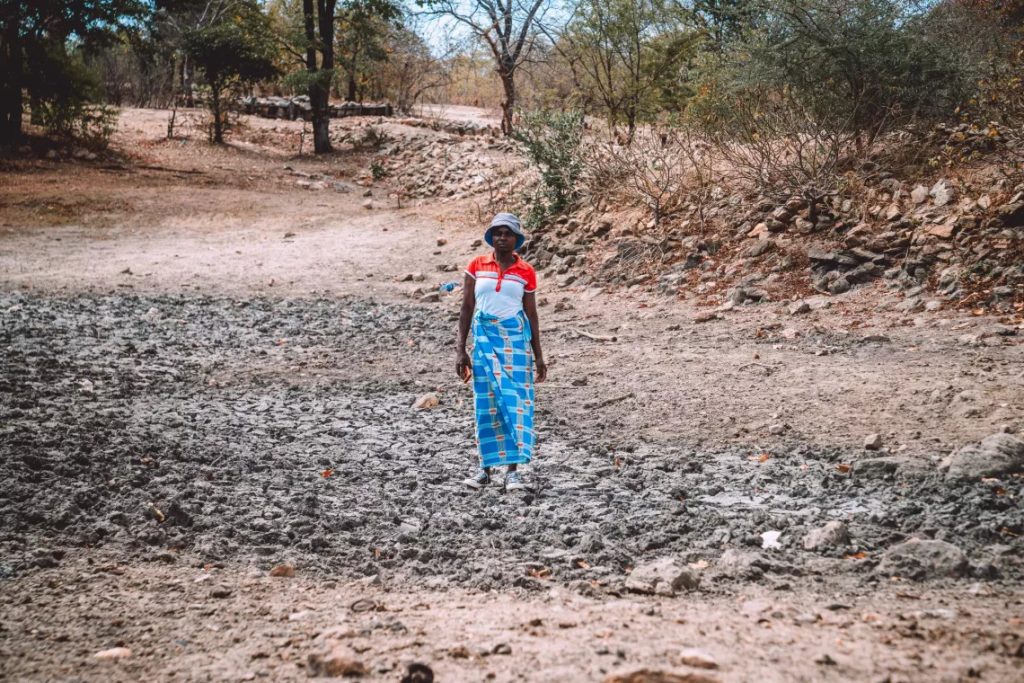
Picture from a farmer in Mudzi District, Mashonaland East Province, which has been impacted by the drought.
The water source for the community garden has completely dried up. Local communities are struggling to get access to food and water.
Most at-risk populations of the El Nino induced drought are children under five years, pregnant and lactating women, and adolescents.
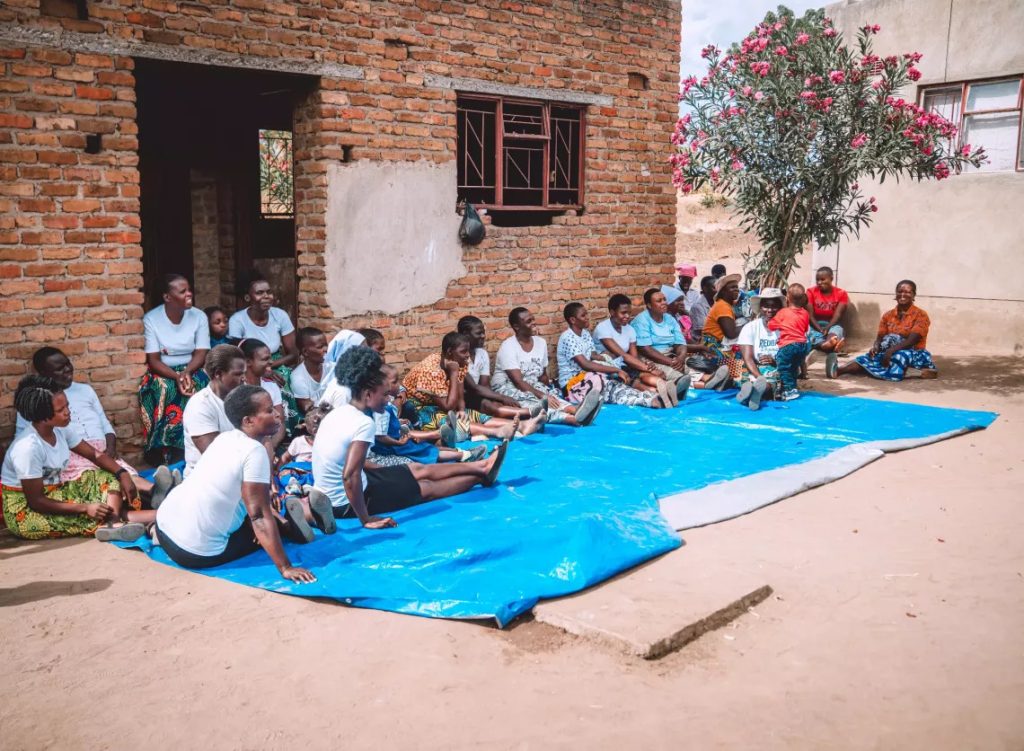
CAPTION: A group of ladies who form a care group, run by a community-based lead mothers, deliver a holistic package of counseling and support.
UNICEF is working with the Government and partners to protect diet diversity and child feeding practices and to avert a rise in child malnutrition.
UNICEF and partners are expanding and strengthening the national multi-systems community-based model for the prevention of all forms of malnutrition, with care groups as the delivery platform.
Care groups, run by a community-based lead mother, deliver a holistic package of counseling and support including for health, nutrition, child development, water, sanitation and hygiene, and are linked to other forms of support available in the district including social protection (cash and food distributions), agricultural support and income generation activities.
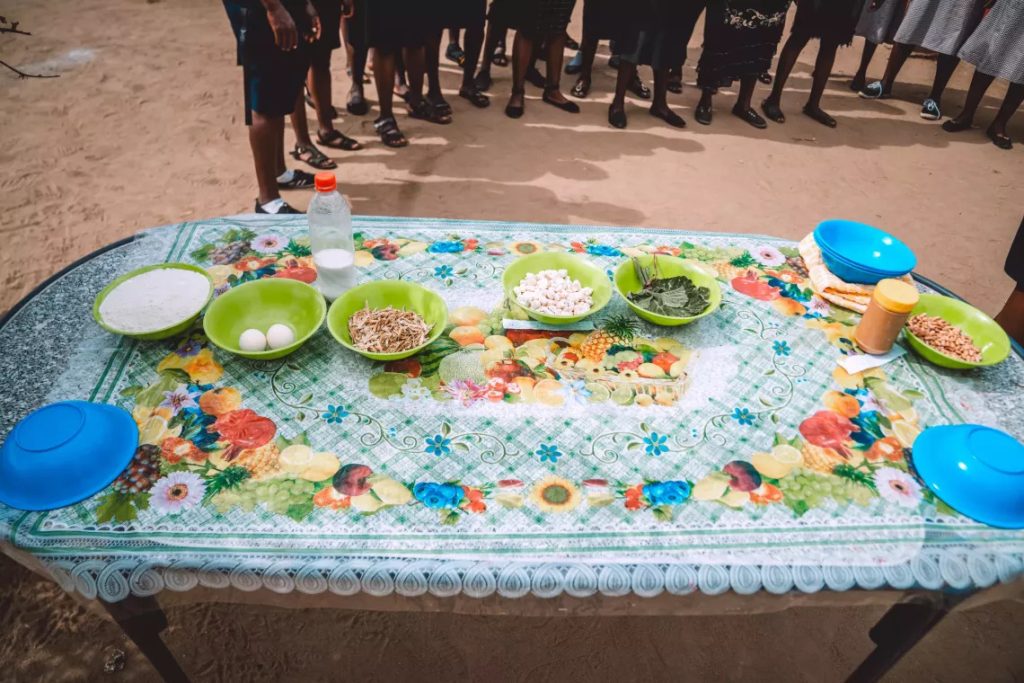
CAPTION: Table showing locally available aliments in Mudzi District. In Care Groups mothers learn to prepare diversified and nutritious food using ingredients that remain available locally during the drought period – shown above are pumpkin leaves, baobab, eggs, milk, peanut butter and small dried fish.
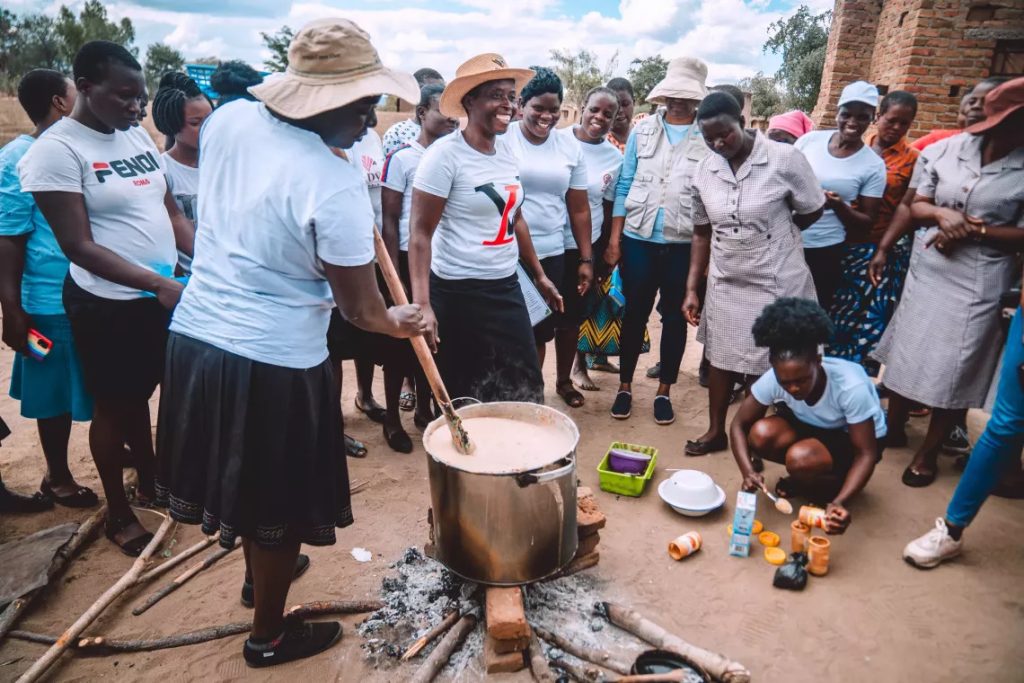
CAPTION: Mothers belonging to a Care Group in Mudzi District are preparing a nutrient-dense porridge with locally available food to give to their young children to prevent malnutrition. Every week the mothers meet and discuss how to take care of their children, and ensure they remain healthy during the drought period their community is faced with. Through Care Groups the Ministry of Health and Child Care, UNICEF and partners distribute multiple micronutrient powders to add to children’s porridge and provide messages and counselling on good nutrition practices and behavior for caregivers of children younger than five years. Moreover, Care Groups teach mothers how to measure the mid-upper arm circumference (MUAC) of their children to screen them at home for early identification, referral and quality treatment of children with malnutrition.
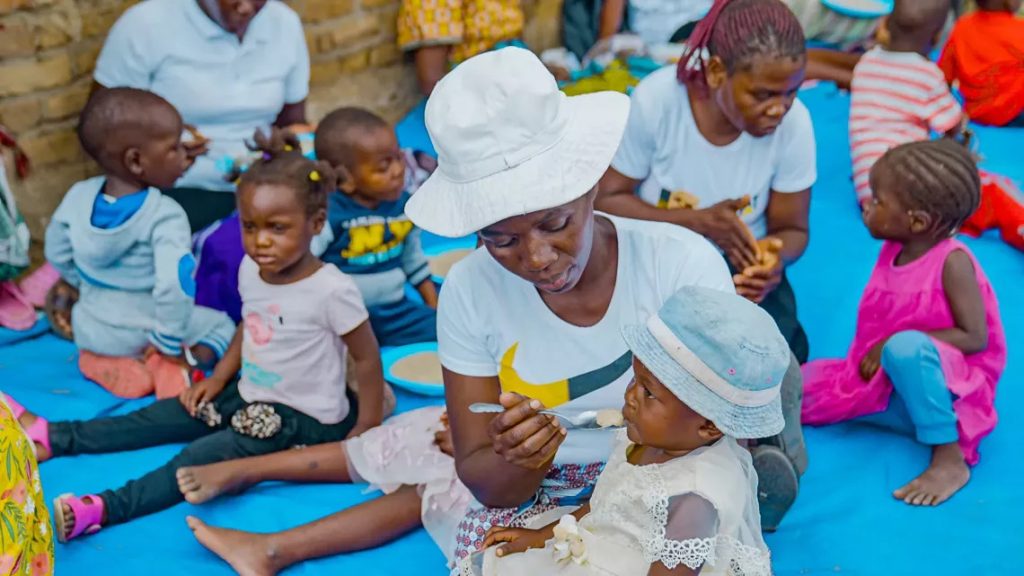
UNICEF and its partners are preventing malnutrition among children and providing children suffering from malnutrition with high-quality treatment services. The case fatality rate for untreated severe malnutrition in children is more than 20%.
Any malnutrition increases the risk of death from common childhood illnesses such as respiratory infections and diarrhoea.
It is therefore crucial, especially in a drought year, to improve prevention of malnutrition and to ensure sufficient life-saving treatment services are in place for every child that needs them.
The programmes, developed by UNICEF, the Government of Zimbabwe and partners to prevent and treat malnutrition among children in districts affected by the El Nino-induced drought, are supported by United Nations Central Emergency Response Fund (CERF), the Health Resilience Fund, funded by the European Union, the Governments of Ireland and the United Kingdom and Gavi, the Vaccine Alliance, and internal UNICEF funds.
SOURCE:: Unicef via link https://www.unicef.org/zimbabwe/stories/el-nino-induced-drought-zimbabwe-puts-children-risk-malnutrition